Temperature22 – 28 °C
Natural range
- Upper Madeira River basin
- Bolivia area
- Brazil area
CatfishConservation status: Least concern LC
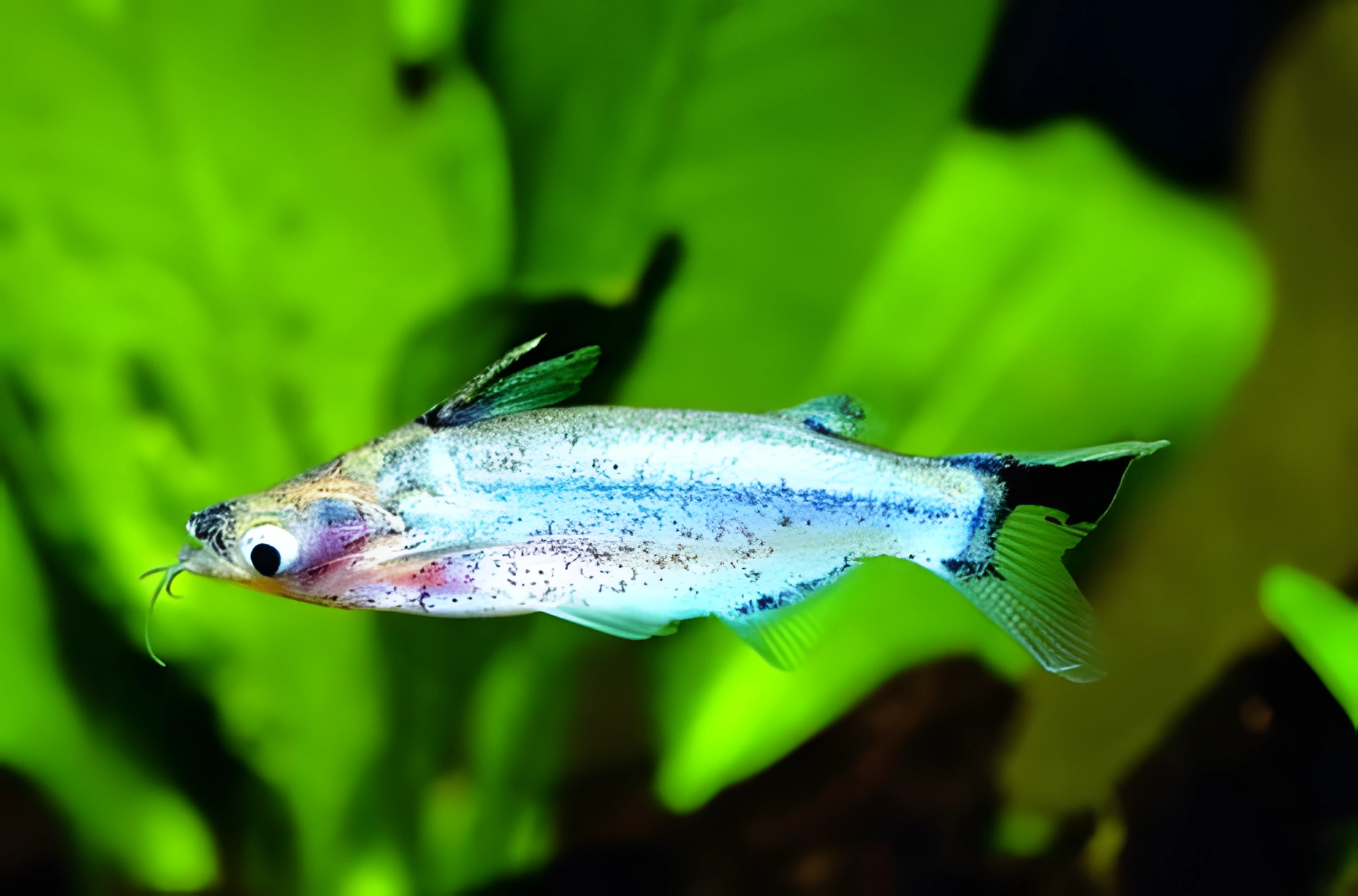
Entomocorus benjamini, also known as the Sleeping Catfish, belongs to the family Auchenipteridae, or Driftwood Catfishes. It received this unusual name due to its behavioral characteristics: being nocturnal, this catfish prefers to remain motionless during the day, hidden on the bottom.
- Required aquarium volume
- 50 L
- Size in aquarium
- 7 cm
- Temperature
- 22 – 28 °C
- Temperament
- Peaceful (regular)
Parameters
Water pHSlightly acidic (6) – Neutral (7.5)
Water dHMedium hardness (10) – Hard (12)
Water salinityno salt (freshwater)
Size in aquarium7 cm
Lifespan1 years
TemperamentPeaceful (regular)
Toward small fishnot a predator
Required aquarium volume50 L
Lightingdimmed
Substrateany (no restrictions)
Water flowmoderate
FeedingPlant-based (algae, vegetables)
CareBoth solitary and in group (flexible)
Description
Adults reach approximately 7 cm in size. The fish's coloration is quite modest, dominated by various shades of gray. The caudal fin is forked, and the other fins are short. An important feature of this catfish is its large eyes, which, along with highly sensitive barbels, play a key role in finding food in low light conditions or complete darkness.
Habitat
The species inhabits South America, primarily the upper Madeira River basin in Bolivia and Brazil. In nature, it lives in freshwater bodies of the tropical zone. Members of this family are predominantly nocturnal, spending the daylight hours in shelters or among vegetation.
Behavior and Compatibility
This fish is distinguished by its peaceful and calm disposition; it coexists well with its own kind and with other non-aggressive species of similar size.
Care and Maintenance
For keeping a single catfish, an aquarium of 50 to 60 liters will be required. The decor can be quite simple. It is important to provide both open areas for free swimming and secluded spots of appropriate size, for example, created from natural driftwood. This species is undemanding and successfully adapts to conditions with a wide range of pH and GH values. The comfortable water temperature for the Sleeping Catfish is within 22–28°C. Aquarium care includes standard procedures: weekly partial water changes with fresh water, timely removal of organic waste, and maintaining equipment in working order.
Diet
In its natural habitat, the catfish's diet mainly consists of small invertebrates, primarily insects, as well as zooplankton and various aquatic and terrestrial plants. In a home aquarium, it is recommended to prioritize protein-rich foods. These can be dry foods — flakes or pellets — as well as fresh or frozen earthworms or bloodworms. Information sources: wikipedia.org, fishbase.in
Breeding and Reproduction
Based on available sources, a separate block cannot be compiled: the data is insufficient or contradictory. The entry can be updated later when verified information becomes available.
Diseases
Based on available sources, a separate block cannot be compiled: the data is insufficient or contradictory. The entry can be updated later when verified information becomes available.
How to choose
When purchasing, choose active individuals without visible damage to the skin and fins. It is important to consider that this is a crepuscular species, so in the store, the fish may appear passive or hide in shelters. It is recommended to avoid specimens with signs of emaciation or unnatural behavior, and to clarify the keeping conditions with the seller before purchase.
Frequently asked questions
The essentials: size, tank volume, water parameters and care
How big does Sleeping Catfish get?
An adult reaches 7 cm in length. Plan the tank around the maximum size: the fish quickly outgrows a cramped setup.
What size aquarium does Sleeping Catfish need?
The minimum recommended volume is 50 L. A smaller tank speeds up nitrate build-up and raises stress levels.
What water parameters does Sleeping Catfish need?
Temperature 22–28 °C, pH 6–7.5, hardness 10–12 dGH. Stability matters more than exact values: sudden swings are harder on the fish than a small deviation from the ideal.
How long does Sleeping Catfish live?
Around 1 years when kept properly. Lifespan depends directly on tank volume, water quality and a varied diet.
Is Sleeping Catfish aggressive?
Temperament: peaceful (regular). Keep this in mind when choosing tank mates.
How many Sleeping Catfish should be kept together?
Recommended setup: both solitary and in group (flexible). Ignoring this is a common cause of stress and disease.
What does Sleeping Catfish eat?
Diet type: plant-based (algae, vegetables). Feed small portions that are finished within a couple of minutes — overfeeding does more harm than underfeeding.
What is the scientific name of Sleeping Catfish?
The scientific name of the species is Entomocorus benjamini, family Driftwood Catfishes (Auchenipteridae).