Temperature18 – 24 °C
Natural range
- India area
- Bangladesh area
- Ganges-Brahmaputra Delta area
CatfishConservation status: Least concern LC
Other scientific names: Erethistes jerdoni
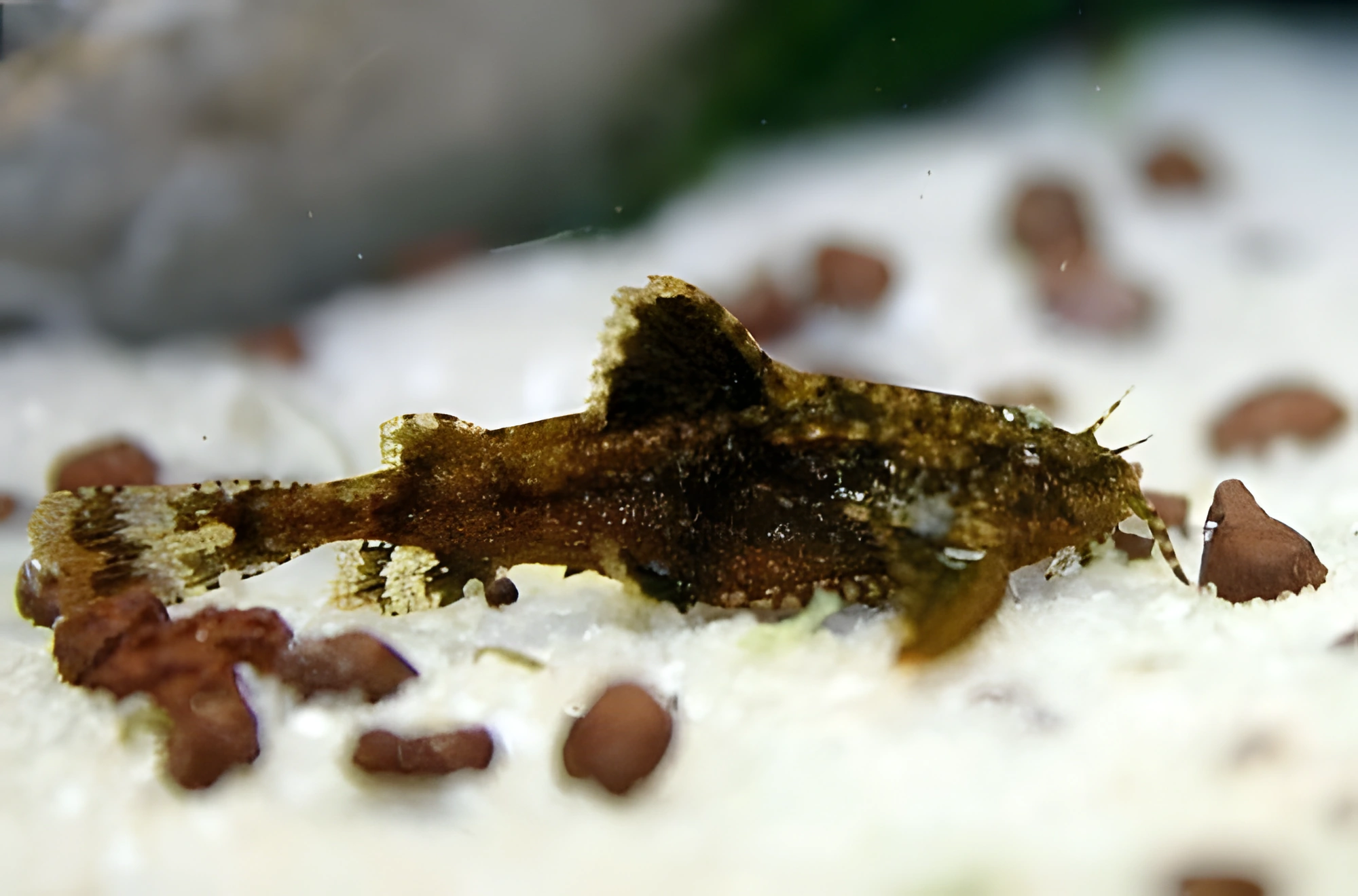
Hara jerdoni, also known as the Anchor Catfish or Asian Stone Catfish (scientific name Hara jerdoni), belongs to the family Erethistidae. This species of catfish is remarkably miniature, reaching only 3 cm in length. It is perfectly suited for nano-aquariums, coexists easily with most other fish of similar size, requires simple care, and is quite undemanding. These fish can be confidently recommended to beginner aquarists.
- Required aquarium volume
- 20 L
- Size in aquarium
- 3 cm
- Temperature
- 18 – 24 °C
- Temperament
- Peaceful (regular)
Parameters
Water pHSlightly acidic (5.6) – Neutral (7.5)
Water dHMedium hardness (8) – Hard (15)
Water salinityno salt (freshwater)
Size in aquarium3 cm
Lifespan5 years
TemperamentPeaceful (regular)
Toward small fishnot a predator
Required aquarium volume20 L
Lightingdimmed
Substratesandy (regular, light)
Water flownone or stagnant (no flow)
FeedingAny (universal)
CareBoth solitary and in group (flexible)
Description
Adults reach approximately 3 cm in length. Their coloration ranges from light to dark brown tones. The pectoral fins are noticeably large, somewhat resembling wings, and have small spines at their tips. Distinguishing males from females is quite difficult, as sexual dimorphism is weakly expressed.
Habitat
The natural habitat of this species is within modern India and Bangladesh. These catfish prefer small rivers and streams where the current is very slow and the substrates are soft.
Behavior and Compatibility
This active and peaceful fish fits well into a community of other small and friendly species, such as Danios, Rasboras, Neon Tetras, and others. Given the small size of the catfish, it is not advisable to house them with large fish, especially other benthic catfish species, to avoid competition for food in the bottom layers.
Care and Maintenance
For a small group of these catfish, the optimal tank volume starts from 20 liters, while a single specimen can be kept in a nano-aquarium or even in a regular three-liter jar. When setting up the aquarium, provide plenty of hiding places, which can be created using driftwood or various decorative elements (such as ceramic pots, sunken ships, castles, etc.). The choice of plants depends on the aquarist's preferences or the needs of other aquarium inhabitants. The substrate should be soft, sandy. Adding oak or Indian almond leaves to the bottom will not only give the aquarium a more natural look but also tint the water a light brown hue, characteristic of this species' natural habitat. The leaves are first dried, then soaked until they sink; they are replaced once every one to two weeks. Special attention should be paid to water quality: it must be clean, free of visible suspended particles, relatively cool (a heating system for the aquarium is usually not required), and well-oxygenated. Equipment is set up according to these requirements. Aquarium care includes regular cleaning of the substrate from organic waste and weekly partial water changes (15–20% of the total volume) with fresh water.
Diet
These catfish consume any sinking foods of appropriate size, and it is important that both protein and plant components are present in their diet. It is highly desirable to include live or frozen foods, such as bloodworms, daphnia, or brine shrimp. The source of the food is not critical, as the catfish's excellent sense of smell will easily locate it anywhere in the aquarium.
Breeding and Reproduction
Breeding this species in captivity is considered a complex process and is not well understood. To stimulate spawning, a group of several individuals is used, which are fed abundantly with live foods. The fish use fine-leaved plants or Java moss as a spawning substrate, where they lay small eggs. The fry are extremely sensitive to water quality, therefore requiring impeccable cleanliness, aeration, and no current. The young are fed with microscopic live foods or specialized liquid formulations.
Diseases
The main cause of most diseases in Leaf Fish is unsuitable keeping conditions and poor-quality nutrition. If initial symptoms are observed, it is first necessary to check water parameters and the concentration of dangerous substances such as ammonia, nitrites, and nitrates. If the indicators deviate from the norm, they should be brought back into order, and only then should treatment begin. More detailed information on symptoms and treatment methods can be found in the "Aquarium Fish Diseases" section.
How to choose
When choosing Anchor Catfish, pay attention to the activity and appearance of the individuals. Healthy fish should have clean skin without white spots, sores, or visible damage, and tightly clamped fins. Avoid purchasing individuals with signs of emaciation, sunken bellies, or unnaturally bloated abdomens. It is important to observe their behavior in the store: healthy fish may be shy but should not show signs of apathy or constantly lie on their side. Keep in mind that this is a nocturnal species, so they may be inactive during the day in the store.
Frequently asked questions
The essentials: size, tank volume, water parameters and care
How big does Anchor Catfish get?
An adult reaches 3 cm in length. Plan the tank around the maximum size: the fish quickly outgrows a cramped setup.
What size aquarium does Anchor Catfish need?
The minimum recommended volume is 20 L. A smaller tank speeds up nitrate build-up and raises stress levels.
What water parameters does Anchor Catfish need?
Temperature 18–24 °C, pH 5.6–7.5, hardness 8–15 dGH. Stability matters more than exact values: sudden swings are harder on the fish than a small deviation from the ideal.
How long does Anchor Catfish live?
Around 5 years when kept properly. Lifespan depends directly on tank volume, water quality and a varied diet.
Is Anchor Catfish aggressive?
Temperament: peaceful (regular). Keep this in mind when choosing tank mates.
How many Anchor Catfish should be kept together?
Recommended setup: both solitary and in group (flexible). Ignoring this is a common cause of stress and disease.
What does Anchor Catfish eat?
Diet type: any (universal). Feed small portions that are finished within a couple of minutes — overfeeding does more harm than underfeeding.
What is the scientific name of Anchor Catfish?
The scientific name of the species is Hara jerdoni, family Erethistidae. It also appears in the literature as: Erethistes jerdoni.