Temperature20 – 26 °C
Natural range
- Madre de Dios River
- Amazon River Basin
- Peru area
- Bolivia area
CorydorasConservation status: Least concern LC
The scientific name Corydoras weitzmani is given to Weitzman's Corydoras, belonging to the family Callichthyidae (armored catfish). This fish is named after Dr. Stanley Weitzman, an ichthyologist from Denmark.
- Required aquarium volume
- 60 L
- Size in aquarium
- 5 cm
- Temperature
- 20 – 26 °C
- Temperament
- Peaceful (regular)
Parameters
Water pHSlightly acidic (6) – Neutral (7.5)
Water dHSoft (5) – Hard (15)
Water salinityno salt (freshwater)
Size in aquarium5 cm
Lifespan5 years
TemperamentPeaceful (regular)
Toward small fishnot a predator
Required aquarium volume60 L
Lightingdimmed or moderate
Substratesoft silted
Water flowweak
FeedingAny (universal)
CareSmall group (3–4 individuals)
Description
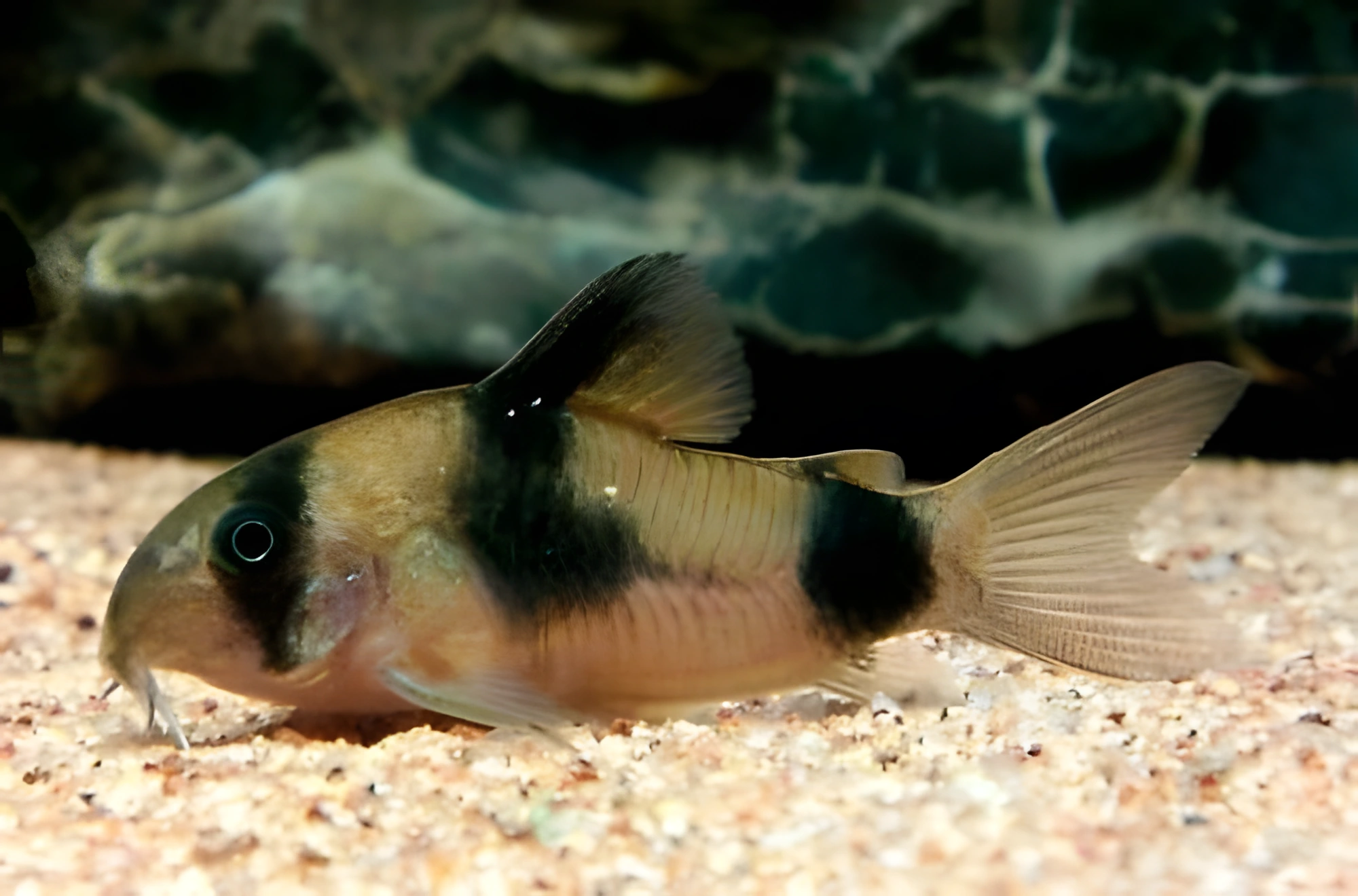
Adults reach approximately 5 cm (2 inches) in length. Their coloration is light, adorned with large dark markings, resembling a characteristic panda pattern. As they mature, a slight greenish sheen may appear on their body coverings.
Habitat
This catfish originates from South America. Its exact habitat range is still not fully explored, but it is known to occur in the western Amazon River basin. Nevertheless, for the purpose of the aquarium trade, these fish are collected from the Madre de Dios River — a tributary of the Amazon flowing through Peru and Bolivia.
Behavior and Compatibility
This calm, peaceful fish prefers to live in the company of its own kind. It is recommended to acquire a group of at least 3–4 individuals. Weitzman's Corydoras is compatible with various fish species of comparable size, including Tetras, dwarf cichlids (such as Apistogrammas and Butterfly Cichlids), numerous livebearers, Danios, and Rasboras.
Care and Maintenance
The optimal aquarium volume for a group of 3–4 corydoras starts from 50–60 liters (13–16 US gallons). For substrate, soft sand or fine gravel with smooth, non-sharp pebbles is preferred. It is important to provide hiding places using dense plant thickets, natural snags, rock formations, or artificial decor elements. Keeping this fish is not difficult, as Weitzman's Corydoras shows adaptability to various conditions, although it prefers soft, slightly acidic water. Lighting should be subdued, and the current in the aquarium should be absent or very weak. For this reason, a simple air-driven sponge filter is recommended for small aquariums. Regular aquarium maintenance includes standard procedures: weekly partial water changes, removal of organic waste, and equipment checks. The fish is undemanding regarding food. It readily accepts most popular foods, whether live, frozen, or dry. These include flakes, granules, as well as small invertebrates such as bloodworms, daphnia, artemia, and gammarus. Sources: fishbase.se, planetcatfish.com
Diet
The fish is not demanding regarding its diet. Most popular foods — live, frozen, or dry — will be readily accepted. These can include flakes, granules, as well as various small invertebrates, including bloodworms, daphnia, artemia, and gammarus.
Breeding and Reproduction
Breeding Weitzman's Corydoras is typical for the genus Corydoras. To stimulate spawning, it is recommended to keep a group of fish in a species tank, providing a varied diet, including high-quality live or frozen foods. The spawning process is triggered by replacing a portion of the water with cooler, fresh water, simulating the rainy season. The female lays eggs on the substrate, for example, on broad plant leaves or clean aquarium walls. After spawning is complete, the parent fish should be removed to prevent them from eating the eggs. Fry hatch after a few days and begin actively feeding after absorbing their yolk sacs, requiring small starter foods.
Diseases
No specific diseases unique to this species have been identified. Like other armored catfish, these fish are sensitive to water quality and substrate cleanliness. If kept in unsuitable conditions, especially with high organic content in the water, fin rot, bacterial infections, or fungal diseases may occur. An important element of prevention is the use of fine, soft sand as a substrate, as sharp gravel can injure their sensitive barbels, opening the way for secondary infections. Regular water changes and maintaining stable environmental parameters significantly reduce the risk of disease.
How to choose
When purchasing, choose active fish with clean bodies showing no visible damage, sores, or white film. Healthy individuals should have intact fins and undamaged, long barbels, which are an important sensory organ. Avoid specimens that appear emaciated, have sunken bellies, or show signs of apathy, constantly lying on the bottom without attempting to move. It is recommended to acquire a group of 6 or more individuals, as this species is schooling and experiences significant stress when alone, which negatively affects the fish's immunity and behavior in a new aquarium.
Frequently asked questions
The essentials: size, tank volume, water parameters and care
How big does Weitzman's Corydoras get?
An adult reaches 5 cm in length. Plan the tank around the maximum size: the fish quickly outgrows a cramped setup.
What size aquarium does Weitzman's Corydoras need?
The minimum recommended volume is 60 L. A smaller tank speeds up nitrate build-up and raises stress levels.
What water parameters does Weitzman's Corydoras need?
Temperature 20–26 °C, pH 6–7.5, hardness 5–15 dGH. Stability matters more than exact values: sudden swings are harder on the fish than a small deviation from the ideal.
How long does Weitzman's Corydoras live?
Around 5 years when kept properly. Lifespan depends directly on tank volume, water quality and a varied diet.
Is Weitzman's Corydoras aggressive?
Temperament: peaceful (regular). Keep this in mind when choosing tank mates.
How many Weitzman's Corydoras should be kept together?
Recommended setup: small group (3–4 individuals). Ignoring this is a common cause of stress and disease.
What does Weitzman's Corydoras eat?
Diet type: any (universal). Feed small portions that are finished within a couple of minutes — overfeeding does more harm than underfeeding.
What is the scientific name of Weitzman's Corydoras?
The scientific name of the species is Corydoras weitzmani, family Armored Catfish (Callichthyidae).