Temperature14 – 22 °C
Natural range
- Ganges River Basin
- Padma River Basin
- India area
- Nepal area
CatfishConservation status: Least concern LC
Other scientific names: Sisor rahabdophorus, Sissor rhabdophorus
Sisor rabdophorus, known as the Sisor Catfish, belongs to the family Sisoridae. Its native habitat is Asia, specifically the northern regions of India, where it is found in the Ganges River basin. These fish inhabit mountain streams with strong, turbulent currents.
- Required aquarium volume
- 200 L
- Size in aquarium
- 18 cm
- Temperature
- 14 – 22 °C
- Temperament
- Peaceful (regular)
Parameters
Water pHSlightly acidic (6) – Neutral (7)
Water dHSoft (5) – Hard (15)
Water salinityno salt (freshwater)
Size in aquarium18 cm
Lifespan5 years
TemperamentPeaceful (regular)
Toward small fishnot a predator
Required aquarium volume200 L
Lightingdimmed
Substratefine sand
Water flowmoderate or strong
FeedingHigh protein (predominantly meat)
CareBoth solitary and in group (flexible)
Description
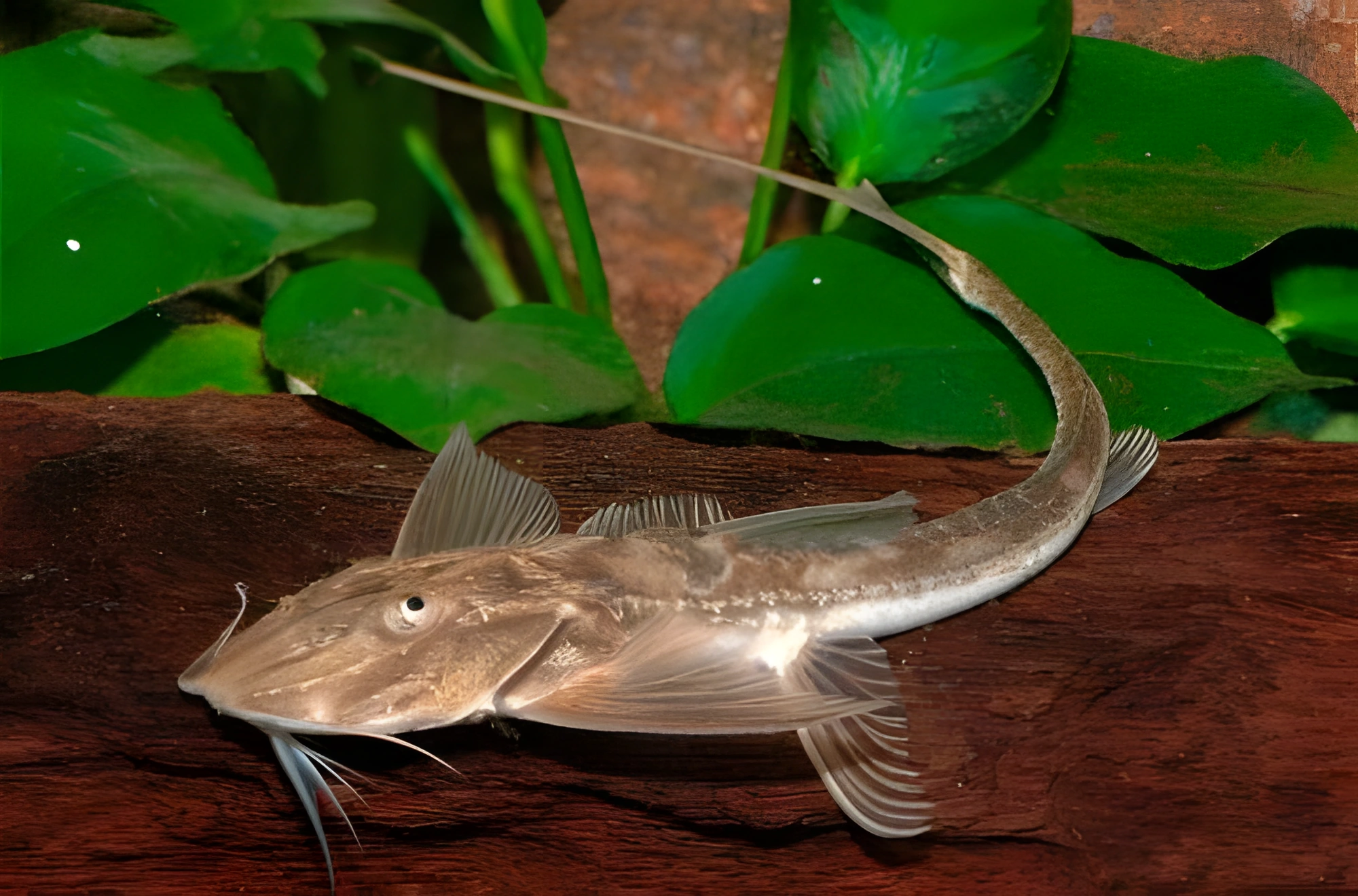
These catfish grow up to 18 cm in length. Their body is flattened, with a rather large, sloping head. The broad pectoral and pelvic fins, wing-shaped, are specially adapted, allowing the fish to firmly attach to rocks and successfully withstand strong currents. Their coloration typically varies from grey to light brownish or sandy, changing depending on the habitat to perfectly match the shades of the surrounding substrate. A distinctive feature of the species is a very long caudal filament, resembling a thread or a whip.
Habitat
The species inhabits river systems of the Indian subcontinent, including the Ganges and Padma river basins in India, Nepal, Bangladesh, and Pakistan. In nature, it populates large rivers with sandy bottoms and fairly strong currents. It prefers biotopes with cool, well-aerated water and the presence of shelters in the form of rocks or snags.
Behavior and Compatibility
Sisor Catfish are known for their peaceful and calm disposition. However, their specific requirements for keeping conditions, such as relatively cool water and moderate to strong currents, significantly limit the choice of potential tank mates. Some species of loaches, such as Gastromyzon, as well as Barilius dogarsinghi, may be suitable additions to an aquarium with them.
Care and Maintenance
For keeping 2–3 Sisor Catfish, an aquarium of at least 200 liters is optimal. Its design should ideally mimic their natural habitat – the bottom of a mountain stream. The main decorative elements will be large stones (boulders), pebbles, sand, and snags. Live aquatic plants are not essential; species capable of growing on the surface of rocks and snags can be used. For successful long-term keeping, a constant flow of clean, oxygen-rich water, with a temperature not exceeding 22°C, is critically important. It is also important to ensure internal current. A powerful filter equipped with an aeration function will help create these conditions. Aquarium maintenance includes standard procedures: weekly partial water changes, removal of organic waste, and regular equipment checks. The diet of these catfish should primarily consist of live or frozen foods. Occasionally, they can be acclimated to dry foods, but it is best to confirm this with the fish supplier.
Diet
Live or frozen foods are preferred for feeding these catfish. Occasionally, they can be adapted to accept dry foods, but it is recommended to clarify this with the seller beforehand. Sisor Catfish have a peaceful nature. However, due to their need for cool water and fast currents, the list of suitable aquarium mates becomes quite limited. Compatible species may include some representatives of loaches, such as Gastromyzon, as well as Barilius dogarsinghi.
Breeding and Reproduction
Based on available sources, a separate block cannot be compiled: the data is insufficient or contradictory. The entry can be updated later when verified information becomes available.
Diseases
This species is sensitive to dissolved oxygen levels and temperature regimes. Insufficient aeration or an increase in temperature above recommended values quickly leads to a deterioration in the fish's condition. Disease prevention involves maintaining stable water parameters, regular filtration, and ensuring a strong current that mimics their natural habitat.
How to choose
When selecting individuals, attention should be paid to the integrity of the fins and the absence of body damage. A healthy fish should be active, well-fed, and have natural coloration. Since this species is benthic and often burrows into the substrate, it is important to ensure that the fish has no oral injuries or damage to its barbels caused by sharp substrate in the store's aquarium.
Frequently asked questions
The essentials: size, tank volume, water parameters and care
How big does Sisor Catfish get?
An adult reaches 18 cm in length. Plan the tank around the maximum size: the fish quickly outgrows a cramped setup.
What size aquarium does Sisor Catfish need?
The minimum recommended volume is 200 L. A smaller tank speeds up nitrate build-up and raises stress levels.
What water parameters does Sisor Catfish need?
Temperature 14–22 °C, pH 6–7, hardness 5–15 dGH. Stability matters more than exact values: sudden swings are harder on the fish than a small deviation from the ideal.
How long does Sisor Catfish live?
Around 5 years when kept properly. Lifespan depends directly on tank volume, water quality and a varied diet.
Is Sisor Catfish aggressive?
Temperament: peaceful (regular). Keep this in mind when choosing tank mates.
How many Sisor Catfish should be kept together?
Recommended setup: both solitary and in group (flexible). Ignoring this is a common cause of stress and disease.
What does Sisor Catfish eat?
Diet type: high protein (predominantly meat). Feed small portions that are finished within a couple of minutes — overfeeding does more harm than underfeeding.
What is the scientific name of Sisor Catfish?
The scientific name of the species is Sisor rabdophorus, family Sisoridae (Asian hillstream catfishes). It also appears in the literature as: Sisor rahabdophorus, Sissor rhabdophorus.