Temperature22 – 26 °C
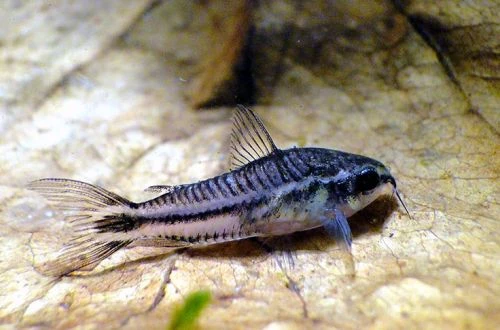
The Pygmy Corydoras, also known as the Pygmy Catfish, belongs to the family Callichthyidae, and its scientific name is Corydoras pygmaeus. In its natural habitat, this fish can be found in the Madeira River basin, which is the largest tributary of the Amazon, located in South America. Interestingly, this catfish avoids the main river channel, preferring numerous tributaries, small rivers, and streams. Here, it typically stays among dense aquatic vegetation, root systems, or fallen tree branches, finding shelter within them. During the rainy season, these fish may move into flooded forest areas.
Among Corydoras species, this one stands out for its miniature size: adults rarely grow larger than 3 cm. Outwardly, it differs somewhat from most of its relatives (not just in size), possessing a rather slender body and resembling more a typical fish that inhabits the water column. This observation is supported by the fact that the Pygmy Corydoras leads an active lifestyle, swimming throughout the entire volume of the aquarium, unlike many other catfishes that spend most of their time at the bottom. Its coloration is quite modest: a dark, grayish back and a light belly. Two noticeable wide light stripes run along its sides from the head to the tail. Its fins are transparent, with dark outlines of the rays.
The species inhabits South America and, on the available evidence, appears to be endemic to the Madeira River basin in Brazil. In nature, it populates shallow areas of rivers, streams, and tributaries with slow currents. It prefers biotopes with soft sandy or silty substrate, abundant aquatic vegetation, driftwood, and fallen branches that create natural shelters. The water in these areas is usually soft and slightly acidic, often with the presence of tannins.
A peaceful and active schooling fish. Unlike many other catfishes, it often spends time in the water column, moving in small groups. For comfortable well-being and to exhibit natural behavior, it is recommended to keep a school of 8–10 individuals. They are compatible with small, peaceful fish such as tetras, rasboras, or otocinclus. Keeping them with large or aggressive species is not permitted, as these may injure the corydoras or compete for food.
For a small group, an aquarium of 50 liters is required. Fine sand is essential as a substrate, as hard gravel can damage the fish's sensitive barbels. Live plants and shelters in the form of driftwood are necessary. Lighting should be subdued. Water parameters: temperature 22–26°C, pH 6.4–7.4, general hardness up to 15 dGH. Weekly water changes of 20–25% and filtration that creates a weak current are required.
An omnivorous species. In the aquarium, they accept any high-quality sinking foods: specialized tablets for bottom feeders, granules, as well as finely chopped live or frozen foods such as Artemia, Daphnia, or tubifex. The particle size of the food should match the fish's small mouth. Feeding should be done twice a day in small portions, ensuring that the food reaches the bottom and is not left uneaten.
Spawning is paired or in groups, often stimulated by water changes with cooler, fresh water. The female lays eggs on plant leaves or the aquarium glass. After spawning, it is recommended to remove the parents to prevent them from eating the eggs. Egg development lasts 4–5 days. Infusoria, microworms, and Artemia nauplii serve as initial food for the fry. Fish reach sexual maturity at 6–8 months of age.
The species is sensitive to water quality, especially to the accumulation of organic waste. Under poor keeping conditions, bacterial infections affecting fins and skin may occur. It is important to maintain stable water parameters and avoid overfeeding. Like other armored catfishes, these fish have the ability to breathe intestinally, so access to the water surface must be unobstructed.
When purchasing, choose active fish with clean fins and no spots, sores, or film on their bodies. It is important to pay attention to the condition of their barbels — they should be intact and undamaged. It is preferable to acquire individuals that exhibit schooling behavior and actively search for food at the bottom. Avoid fish with sunken bellies or signs of apathy, as this may indicate emaciation or hidden diseases.
The essentials: size, tank volume, water parameters and care
An adult reaches 3 cm in length. Plan the tank around the maximum size: the fish quickly outgrows a cramped setup.
The recommended volume is 50 L. A smaller tank speeds up nitrate build-up and raises stress levels.
Temperature 22–26 °C, pH 6.4–7.4, hardness 2–15 dGH. Stability matters more than exact values: sudden swings are harder on the fish than a small deviation from the ideal.
Around 4 years when kept properly. Lifespan depends directly on tank volume, water quality and a varied diet.
Temperament: peaceful (regular). Keep this in mind when choosing tank mates.
Recommended setup: group (8–10 individuals). Ignoring this is a common cause of stress and disease.
Diet type: sinking (any). Feed small portions that are finished within a couple of minutes — overfeeding does more harm than underfeeding.
The scientific name of the species is Corydoras pygmaeus, family Armored Catfish (Callichthyidae).
Matched by family, categories and overlapping keeping conditions
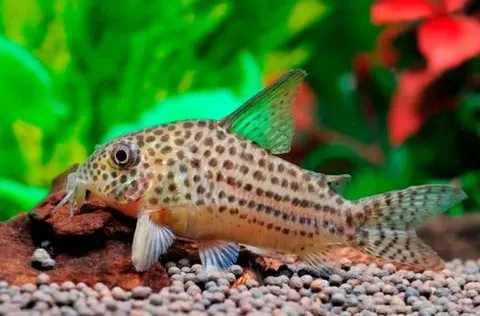
Corydoras araguaiaensis
Corydoras araguaiaensis, known as the Araguaia Catfish, belongs to the armored catfish family (Callichthyidae). It inhabits South America, specifically the basin of the Araguaia River, which is where its name comes from.
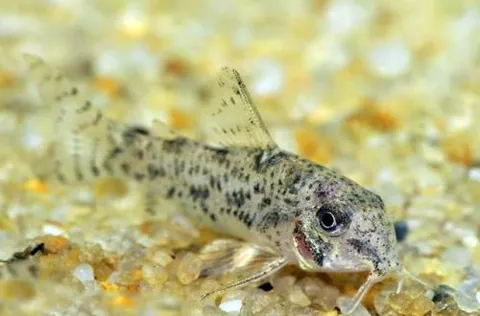
Corydoras cochui
Corydoras cochui, known as Cochu's Corydoras or Dwarf Corydoras, belongs to the family Callichthyidae – Armored or Callichthyid Catfishes. The fish was named in honor of Fred Cochu, a major exporter of tropical fish.…
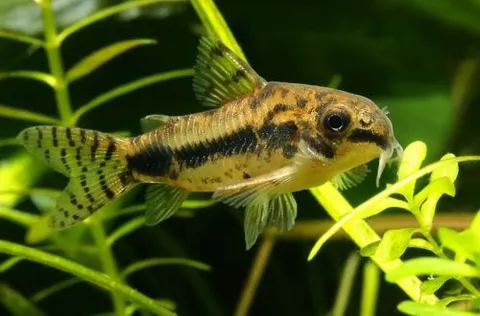
Corydoras habrosus
Corydoras habrosus is the name of this elegant Corydoras, also known as the Venezuelan Pygmy Cory. It belongs to the family Callichthyidae, which includes armored or callichthyid catfish. The common name of the fish…
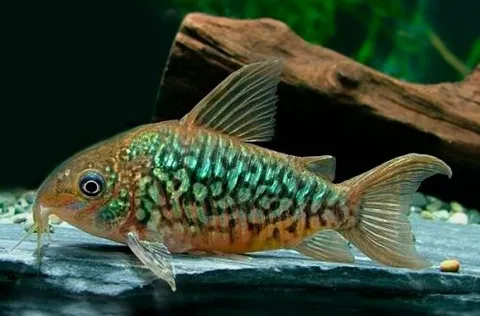
Corydoras pantanalensis
Corydoras pantanalensis, scientifically known as Corydoras pantanalensis, belongs to the armored catfish family (Callichthyidae). It originates from South America, specifically the vast wetland area called the Pantanal,…