Temperature20 – 25 °C
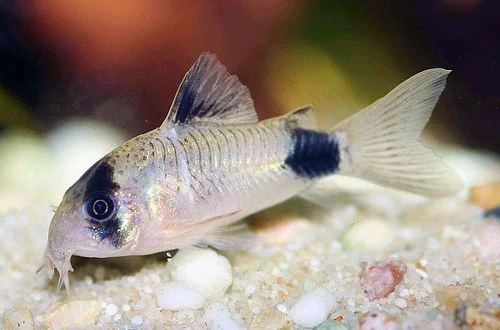
The Panda Corydoras, widely known as the Panda Catfish or Panda Cory (scientific name Corydoras panda), belongs to the family Callichthyidae. These fish originate from the upper Amazon River basin, where the foothills of the Andes begin. Their natural habitat is characterized by sandy substrates and soft water. During periods of snowmelt, the water there becomes especially soft, and its temperature can drop to 19°C. However, there is no need to replicate these natural cycles in a home aquarium, as most of the fish available for sale have been successfully bred in commercial aquarium conditions for many generations.
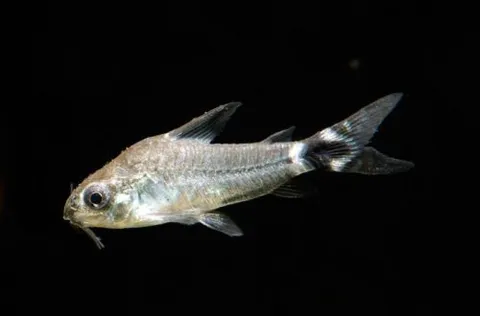
Adults of these catfish reach approximately 4 cm in length. Interestingly, their wild counterparts can grow up to 5 cm, but even at these sizes, they remain quite small compared to other species. The fish received its name, Panda Corydoras, due to the striking resemblance of its coloration to the Giant Panda bear. The fish's appearance is distinguished by two large dark spots—one located on the head and the other at the base of the tail. A small dark pigment is also noticeable on the dorsal fin. Meanwhile, the fish's body remains entirely white. Sexual dimorphism in this species is weakly expressed; distinguishing between females and males is quite difficult, except that during spawning, the female becomes noticeably plumper due to eggs.
The species inhabits South America, primarily the upper Amazon River basin in Peru, including tributaries of the Ucayali River. In nature, it occupies sections of rivers with slow currents and sandy or fine gravel bottoms. The water in its habitat is soft and acidic, often enriched with humic substances.
A peaceful, schooling fish that is most active during twilight hours. For their comfort, a group of at least six individuals is necessary. It coexists well with most non-aggressive fish inhabiting the middle and upper water layers. It is not recommended to keep them with large predatory cichlids or fish prone to fin-nipping.
A tank volume of at least 50 L is required for keeping a school. Soft sand or fine, rounded gravel should be used as substrate, as sharp edges can damage the sensitive barbels of the catfish. There should be shelters in the form of snags, grottoes, and dense plant thickets, creating shaded areas. Filtration should be effective but without creating a strong current. It is important to maintain water cleanliness by performing regular water changes.
An omnivorous species, feeding in nature on small invertebrates and organic detritus. In the aquarium, the fish readily consume high-quality sinking dry foods, specialized tablets for bottom-dwelling fish, and frozen foods. Feeding is preferably done before turning off the lights, as these catfish are primarily nocturnal.
Spawning is communal, usually with a predominance of males. The stimulus is a partial water change with fresh water and a temperature drop of 2–3 degrees. The female lays eggs on the substrate, holding them between her pelvic fins beforehand. After spawning, the parents should be removed to prevent them from eating the eggs. The incubation period is about a week, after which the fry begin independent feeding.
The species has strong immunity if kept under proper conditions. The most common problems are associated with poor water quality or injury to the barbels when using unsuitable substrate, which can lead to bacterial infections. Prevention includes regular siphoning of the bottom, monitoring water parameters, and maintaining hygiene in the aquarium.
When selecting individuals, pay attention to clean skin, absence of spots, ulcers, and fin damage. Healthy fish should be active, have intact barbels, and show a pronounced interest in searching for food on the bottom. Avoid purchasing individuals that appear emaciated, lethargic, or stay near the water surface without apparent reason.
The essentials: size, tank volume, water parameters and care
An adult reaches 4 cm in length. Plan the tank around the maximum size: the fish quickly outgrows a cramped setup.
The recommended volume is 50 L. A smaller tank speeds up nitrate build-up and raises stress levels.
Temperature 20–25 °C, pH 6–7.4, hardness 1–12 dGH. Stability matters more than exact values: sudden swings are harder on the fish than a small deviation from the ideal.
Around 8 years when kept properly. Lifespan depends directly on tank volume, water quality and a varied diet.
Temperament: peaceful (regular). Keep this in mind when choosing tank mates.
Recommended setup: small group (5–6 individuals). Ignoring this is a common cause of stress and disease.
Diet type: sinking (any). Feed small portions that are finished within a couple of minutes — overfeeding does more harm than underfeeding.
The scientific name of the species is Corydoras panda, family Armored Catfish (Callichthyidae).
Matched by family, categories and overlapping keeping conditions
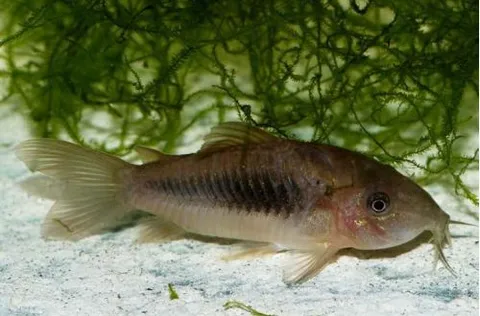
Corydoras aeneus
The Bronze Corydoras, also known by its scientific name Corydoras aeneus, is a member of the armored catfish family (Callichthyidae). This species is among the most popular and readily available aquarium fish. Its…
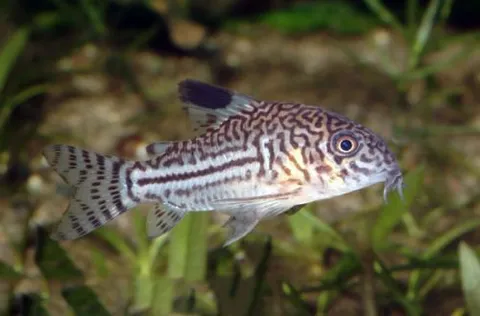
Corydoras trilineatus
Corydoras trilineatus, known as the leopard or three-stripe corydoras catfish, belongs to the family Callichthyidae. The habitat of this species covers the Amazon River basin, extending through Colombia, Peru, and…
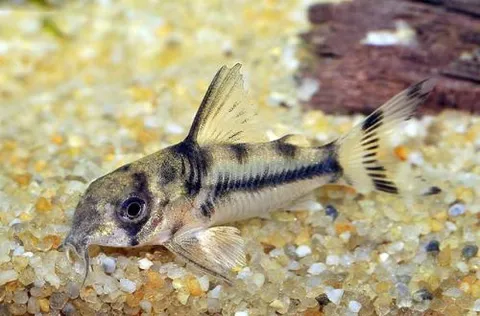
Corydoras boesemani
Boeseman's Corydoras, scientifically known as Corydoras boesemani, belongs to the family Callichthyidae, which includes armored or callichthyid catfishes. This fish is named in honor of Dr. Marcus Boeseman, as he…
Corydoras hastatus
The Dwarf Corydoras, also known as the Sparrow Corydoras, bears the scientific name Corydoras hastatus and belongs to the family Callichthyidae (Armored or Callichthid Catfishes). Its Latin name, “hastatus,” translates…