Temperature21 – 26 °C
Natural range
- Napo River
- Marañón River
- Loreto Region
- Ecuador area
CatfishConservation status: Least concern LC
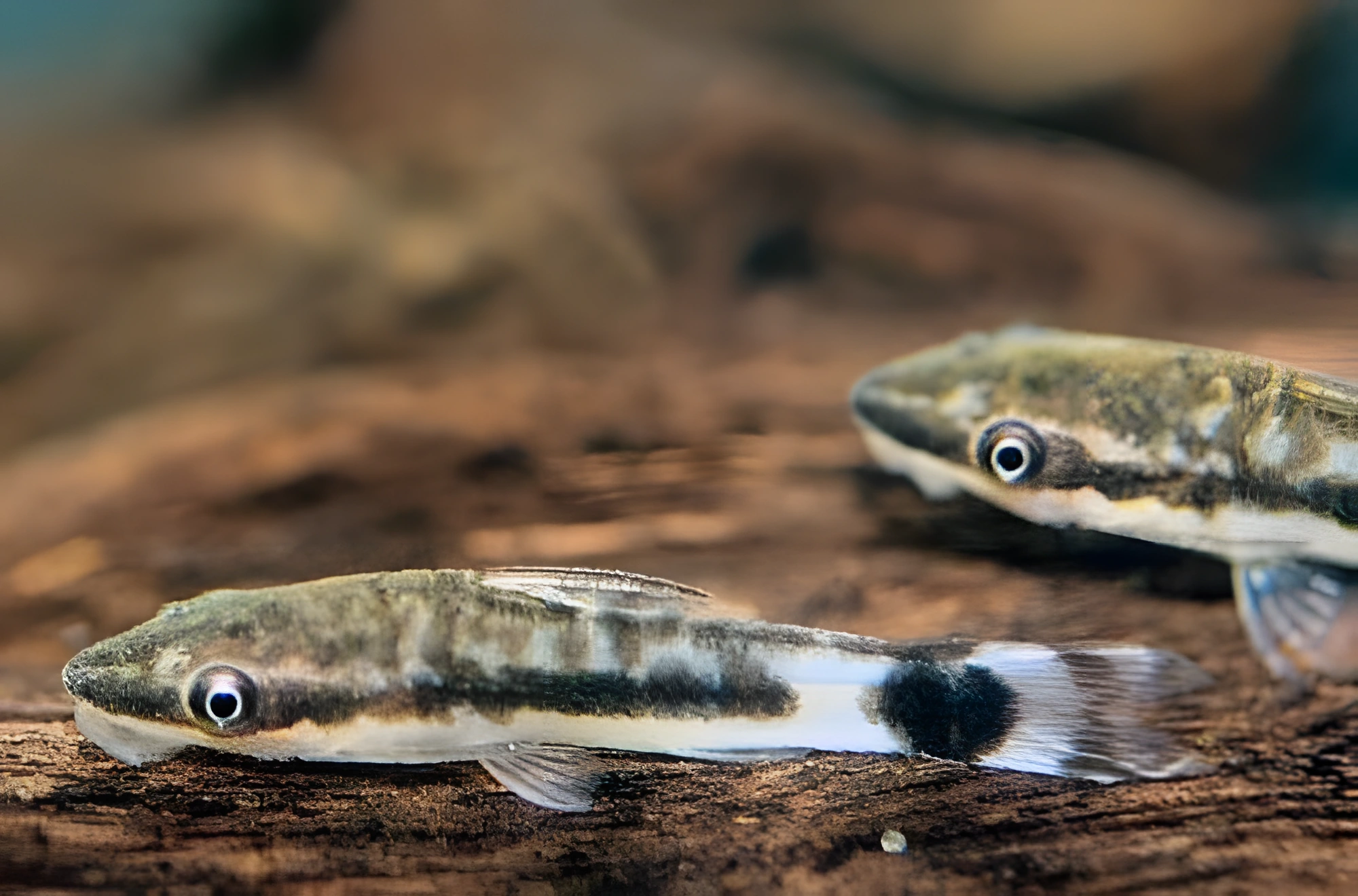
Otocinclus macrospilus, known as the Otocinclus macrospilus or Oto Catfish, belongs to the family Loricariidae, which includes armored catfish. Among its close relatives are Otocinclus affinis and the Zebra Otocinclus. These catfish are highly valued by aquarists for their ability to effectively combat algae, making them excellent inhabitants for home aquariums.
- Required aquarium volume
- 40 L
- Size in aquarium
- 4 cm
- Temperature
- 21 – 26 °C
- Temperament
- Peaceful (regular)
Parameters
Water pHSlightly acidic (5.5) – Neutral (7.5)
Water dHVery soft (1) – Hard (12)
Water salinityno salt (freshwater)
Size in aquarium4 cm
Lifespan4 years
TemperamentPeaceful (regular)
Toward small fishnot a predator
Required aquarium volume40 L
Lightingany
Substratefine sand
Water flowweak or moderate
FeedingSinking (plant-based)
CareSmall group (5–6 individuals)
Description
Adults of this catfish can reach a length of up to 4 cm. Their body is characterized by a short shape and a large head, while the fins are relatively small. The main coloration is gray, while the belly has a light, almost white, hue. Sexual dimorphism in the species is weakly expressed, and external differences between males and females are practically absent. These fish have an amazing ability to swallow atmospheric air, but not for breathing, as observed in Bettas or Gouramis. A gulp of air helps them increase buoyancy, allowing them to effortlessly stay near the surface when they find food among “floating meadows.”
Habitat
The natural habitat of this species is in South America, in the upper tributaries of the Amazon — specifically in the Napo and Marañón river systems, which flow through Ecuador, Peru (Loreto region), and Colombia. Here, it prefers sections of rivers abundant in aquatic vegetation, as well as so-called “floating meadows” — large accumulations of plants that form drifting “islands” along the current.
Behavior and Compatibility
This peaceful and somewhat shy species feels best in a group of 5 to 6 individuals. When choosing tank mates, preference should be given to other small fish, such as Corydoras catfish, Apistogramma, tetras, and similar species.
Care and Maintenance
For a group of 5–6 fish, the minimum aquarium volume should be about 40 liters. It is recommended to create an environment rich in broad-leaved plants, including floating species. It is also useful to use large driftwood in the aquarium decor. Any substrate will do for the bottom layer: sand, gravel, or other materials, as it is not crucial. The Oto Catfish prefers soft water with a slightly acidic reaction. It is important to avoid excessive accumulation of organic waste, as this can disrupt the nitrogen cycle in the aquarium. Usually, regular aquarium maintenance and an effective filtration system are sufficient to maintain favorable conditions.
Diet
In their natural environment, the main component of the catfish’s diet is algae, as well as small invertebrates living within them. When maintaining them in a home aquarium, catfish should be provided with daily food that includes plant components. For this, fresh pieces of apples, cucumbers, blanched spinach, and other vegetables or fruits can be used, as well as dried spirulina flakes and similar foods. Intense lighting in the aquarium will stimulate the natural growth of algae, which will become an additional food source for the fish. However, it is important not to overdo it, otherwise algae can cover the entire aquarium. Once a week, frozen foods such as Artemia and Daphnia should be included in the catfish’s menu.
Breeding and Reproduction
Otocinclus macrospilus successfully breeds in home aquariums, but this process has its peculiarities, as changes in the external environment simulating the rainy season are necessary to stimulate spawning. In addition, it is important to ensure active algae growth, which will serve as food for the tiny fry. The first task is solved by gradually replacing part of the water with cooler water: the temperature is lowered by 2–4 degrees and maintained at this level for several days or weeks until the fish's breeding period begins. It should be noted that this approach does not guarantee spawning. Catfish lay their eggs on plant surfaces, and the hatched fry usually remain near the hatching site. Therefore, food must always be available to them, which is achieved by stimulating algae growth naturally by increasing aquarium lighting.
Diseases
Most health problems in fish often arise from unsuitable keeping conditions. Maintaining a stable and comfortable habitat is a key factor for successful keeping. If symptoms of illness appear, the first step is to check the water quality. If deviations are found, it is important to take immediate measures to eliminate them. If the symptoms do not disappear or worsen, medicinal treatment may be required. More detailed information on symptoms and treatment methods can be found in the "Diseases of Aquarium Fish" section.
How to choose
When choosing otocinclus in a store, pay special attention to the appearance of the belly: it should be rounded, not sunken. A sunken belly is a critical sign of emaciation, which often leads to the death of the fish within the first month after purchase due to prolonged starvation during transportation and keeping in retail aquariums. Avoid individuals with signs of lethargy, rapid breathing, or body damage.
- Choose fish that actively move across surfaces and show interest in searching for food.
- Ensure there are no visible spots, film, or signs of fungal infections.
- Ask the seller how long ago the fish were imported: recently arrived individuals are under severe stress and require special attention during adaptation to a new aquarium.
Frequently asked questions
The essentials: size, tank volume, water parameters and care
How big does Oto Catfish get?
An adult reaches 4 cm in length. Plan the tank around the maximum size: the fish quickly outgrows a cramped setup.
What size aquarium does Oto Catfish need?
The minimum recommended volume is 40 L. A smaller tank speeds up nitrate build-up and raises stress levels.
What water parameters does Oto Catfish need?
Temperature 21–26 °C, pH 5.5–7.5, hardness 1–12 dGH. Stability matters more than exact values: sudden swings are harder on the fish than a small deviation from the ideal.
How long does Oto Catfish live?
Around 4 years when kept properly. Lifespan depends directly on tank volume, water quality and a varied diet.
Is Oto Catfish aggressive?
Temperament: peaceful (regular). Keep this in mind when choosing tank mates.
How many Oto Catfish should be kept together?
Recommended setup: small group (5–6 individuals). Ignoring this is a common cause of stress and disease.
What does Oto Catfish eat?
Diet type: sinking (plant-based). Feed small portions that are finished within a couple of minutes — overfeeding does more harm than underfeeding.
What is the scientific name of Oto Catfish?
The scientific name of the species is Otocinclus macrospilus, family Armored Catfishes (Loricariidae).