Temperature15 – 25 °C
Natural range
- Roraima area
- Guyana area
CatfishConservation status: Least concern LC
Other scientific names: Hemiloricaria fallax, Loricaria fallax
The Loricaria catfish, known by its scientific name Rineloricaria fallax, belongs to the Armored Catfish family (Loricariidae). It is a peaceful and undemanding fish, capable of becoming an excellent addition to a community of South American aquarium inhabitants.
- Required aquarium volume
- 80 L
- Size in aquarium
- 15 cm
- Temperature
- 15 – 25 °C
- Temperament
- Peaceful (regular)
Parameters
Water pHSlightly acidic (5.8) – Slightly alkaline (7.8)
Water dHVery soft (1) – Very hard (25)
Water salinityno salt (freshwater)
Size in aquarium15 cm
Lifespan8 years
TemperamentPeaceful (regular)
Toward small fishnot a predator
Required aquarium volume80 L
Lightingdimmed
Substratesandy (regular, light)
Water flowweak or moderate
FeedingHigh protein (predominantly meat)
CareBoth solitary and in group (flexible)
Description
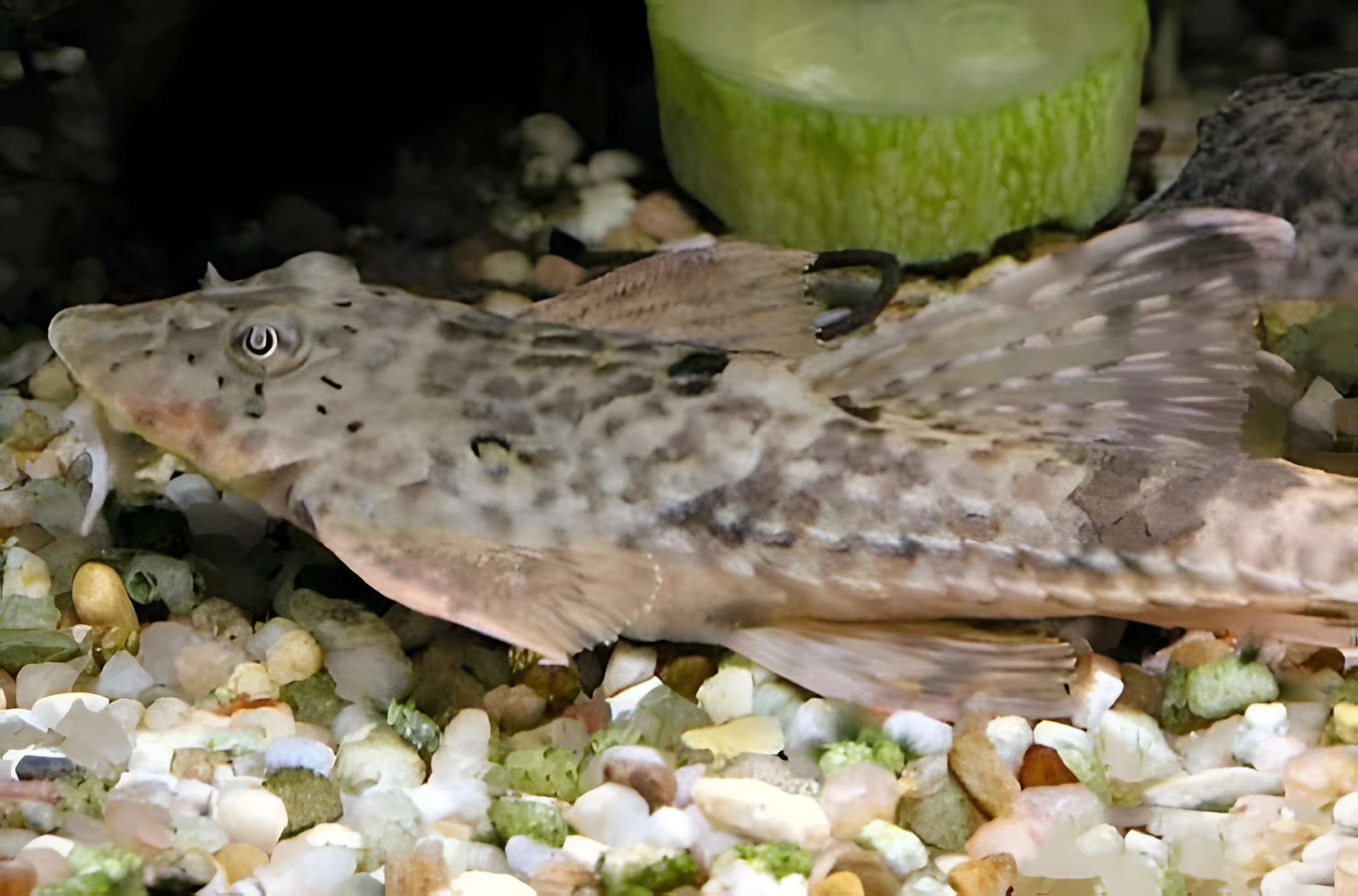
Adults of this fish can reach up to 15 cm in length. The catfish is characterized by a greatly elongated, slender body, equipped with large pectoral and pelvic fins. The head is triangular, and the mouth is in the form of a sucker. The coloration is usually gray, with a pattern of dark speckles. This coloring and appearance allow the catfish to effectively camouflage itself against a sandy bottom or mimic sticks, branches, and other woody debris to hide from predators. Sexual dimorphism is subtly expressed. Males can be distinguished from females by the presence of special small bristles, called odontodes, on their heads and on the first rays of their pectoral fins.
Habitat
Its homeland is South America. This species is found in the upper reaches of the Rio Branco and Rupununi rivers, in the territories of Guyana and the Brazilian state of Roraima. Typical habitats are shallow sections of rivers and streams. The fish prefers sandy bottom substrates, as well as areas with abundant accumulations of fallen leaves, branches, and sunken snags.
Behavior and Compatibility
This catfish is considered one of the most peaceful representatives of its family, distinguished by a calm and gentle disposition. It gets along well with its own kind, as well as with other peaceful fish species of comparable size. Goldfish and other species that prefer relatively cool water will make good tank mates.
Care and Maintenance
For a group of 2–3 fish, the optimal aquarium volume starts from 80–100 liters. For decor, it is recommended to use a sandy substrate, as well as several natural or artificial snags and other decorative elements that can serve as shelters. If you plan to breed, provide secluded places in the aquarium, resembling caves or grottoes. Some aquarists successfully use ordinary PVC pipes for this purpose. In such shelters, the catfish lay their eggs. Although vegetation is usually absent in the natural habitat of Loricaria, in an aquarium, this catfish feels perfectly at home among dense plant growth. It tolerates a wide range of hydrochemical parameters, allowing the use of ordinary dechlorinated tap water without the need to adjust pH or dGH. The fish prefers subdued lighting. Standard aquarium maintenance includes weekly partial water changes with fresh water, removal of organic waste, and regular equipment checks.
Diet
Being an omnivorous species, the catfish will readily accept most popular dry, frozen, and live foods. Often in aquariums, it feeds on leftover food not eaten by other fish, thereby helping to maintain a clean substrate. It is important to enrich the daily diet with vegetable supplements, such as pieces of cucumber, zucchini, as well as blanched lettuce or cabbage leaves.
Breeding and Reproduction
Breeding this species is not particularly difficult. The main task is to form a suitable pair, as not all males and females are capable of producing offspring. Fish choose a partner among their relatives, and the mechanism of this choice is not yet understood. It is recommended either to acquire an already formed pair or to buy about ten young catfish. In the latter case, as they mature, there is a high probability that at least one pair will form. Spawning in home aquariums is often spontaneous. The stimulus for it is a diet enriched with vegetable and protein supplements, for example, pieces of green vegetables, as well as live or frozen bloodworms and Artemia. With the onset of the breeding season, the male chooses a place for the future clutch. As noted earlier, these can be caves, grottoes in the decor, or PVC pipes. An important condition is a hole diameter of at least 5 cm. The female lays several dozen eggs inside the chosen shelter. The male fertilizes the clutch and remains to guard it. During this period, he may show some aggression towards other aquarium inhabitants. The incubation period lasts 4–5 days. After another 2–3 days, the fry begin to swim freely, and at this point, the male stops guarding the offspring. Fry are recommended to be fed finely crushed dry flakes, granules, or specialized foods for juvenile aquarium fish, as well as soft plant material, such as lettuce or cabbage leaves, previously treated with boiling water or freezing to soften the fibers.
Diseases
In a healthy aquarium ecosystem, with proper nutrition and the absence of aggressive tank mates, cases of disease in these fish are extremely rare. The appearance of disease symptoms most often indicates problems in maintenance, such as injuries, poor water quality, or bad food. If the root causes are eliminated, the catfish's body is often able to cope with the ailment on its own. Otherwise, medicinal treatment may be required, more detailed information about which can be found in the "Aquarium Fish Diseases" section.
How to choose
When choosing a Loricaria, attention should be paid to the condition of the skin and fins. In a healthy specimen, the body should be clean, without white plaque, ulcers, or visible damage to the bony plates. The fins should be spread out, without signs of deterioration or redness at the base. It is important to assess the fish's plumpness: a sunken abdomen may indicate chronic malnutrition or the presence of internal parasites.
In the store, observe the fish's behavior in the aquarium. A healthy Loricaria, when calm, usually attaches itself to surfaces or stays on the bottom, but should show activity when startled. Avoid buying specimens that appear apathetic, constantly lie on their side, or make unnatural chaotic movements. It is also recommended to ask the seller what a particular batch is fed, as acclimatization to dry foods may take time.
Frequently asked questions
The essentials: size, tank volume, water parameters and care
How big does Loricaria catfish get?
An adult reaches 15 cm in length. Plan the tank around the maximum size: the fish quickly outgrows a cramped setup.
What size aquarium does Loricaria catfish need?
The minimum recommended volume is 80 L. A smaller tank speeds up nitrate build-up and raises stress levels.
What water parameters does Loricaria catfish need?
Temperature 15–25 °C, pH 5.8–7.8, hardness 1–25 dGH. Stability matters more than exact values: sudden swings are harder on the fish than a small deviation from the ideal.
How long does Loricaria catfish live?
Around 8 years when kept properly. Lifespan depends directly on tank volume, water quality and a varied diet.
Is Loricaria catfish aggressive?
Temperament: peaceful (regular). Keep this in mind when choosing tank mates.
How many Loricaria catfish should be kept together?
Recommended setup: both solitary and in group (flexible). Ignoring this is a common cause of stress and disease.
What does Loricaria catfish eat?
Diet type: high protein (predominantly meat). Feed small portions that are finished within a couple of minutes — overfeeding does more harm than underfeeding.
What is the scientific name of Loricaria catfish?
The scientific name of the species is Rineloricaria fallax, family Armored Catfishes (Loricariidae). It also appears in the literature as: Hemiloricaria fallax, Loricaria fallax.