Temperature22 – 26 °C
Natural range
- Amazon River Basin
- Peru area
- Ecuador area
- Colombia area
CorydorasConservation status: Least concern LC
Other scientific names: Corydoras dubius, Corydoras episcopi
Corydoras trilineatus, known as the leopard or three-stripe corydoras catfish, belongs to the family Callichthyidae. The habitat of this species covers the Amazon River basin, extending through Colombia, Peru, and Brazil, and is also found in the coastal river systems of Suriname. It prefers areas with slow currents: streams, tributaries of large rivers, and backwaters. During the rainy season, the catfish moves into flooded forest areas.
- Required aquarium volume
- 40 L
- Size in aquarium
- 5 cm
- Temperature
- 22 – 26 °C
- Temperament
- Peaceful (regular)
Parameters
Water pHSlightly acidic (5.8) – Neutral (7.2)
Water dHVery soft (1) – Hard (12)
Water salinityno salt (freshwater)
Size in aquarium5 cm
Lifespan7 years
TemperamentPeaceful (regular)
Toward small fishnot a predator
Required aquarium volume40 L
Lightingdimmed or moderate
Substratesandy (regular, light)
Water flowweak or moderate
FeedingSinking (any)
CareSmall group (3–4 individuals)
Description
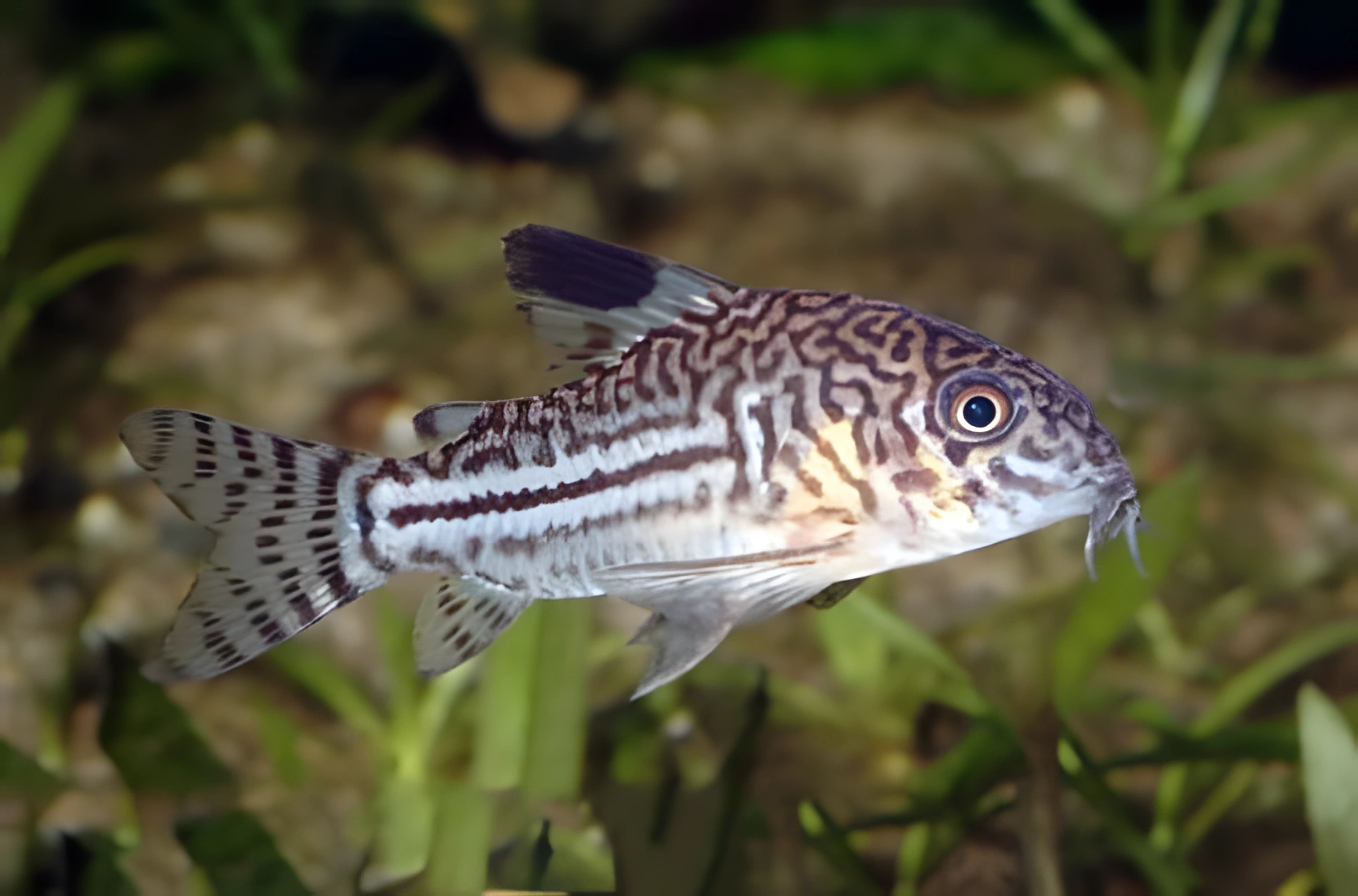
Adult fish reach approximately 5 cm in length. The main body color is light, adorned with a dark pattern resembling leopard spots. A similar pattern can be observed on the fins and tail, with the dorsal fin distinguished by a large black spot. Three parallel stripes run along the sides: two of them are white, and a dark one is located between them. Sexual dimorphism is not pronounced; males differ from females by more intense coloration and a noticeably larger spot on the fin.
Habitat
The species is widespread in South America, inhabiting the Amazon River basin in Peru, Ecuador, Colombia, and Brazil, as well as some coastal rivers of Suriname. In nature, it prefers slow-moving or stagnant waters with silty bottoms, often found in areas with dense aquatic vegetation.
Behavior and Compatibility
A peaceful schooling fish that feels most comfortable in a group of 4–10 individuals. It leads an active bottom-dwelling lifestyle, showing curiosity and friendliness towards other aquarium inhabitants. Compatible with most calm fish species, but it is not recommended to keep it with aggressive or overly large neighbors.
Care and Maintenance
For keeping a school, an aquarium of at least 40 L with a large bottom area is required. Soft sand or fine rounded gravel without sharp edges is preferred as substrate to avoid damaging the sensitive barbels of the catfish. The aquarium should be equipped with filtration and aeration, and also provide shelters in the form of driftwood, grottoes, or dense plant thickets. Lighting should be subdued. A weekly water change of 20–30% of the volume is required.
Diet
An omnivorous species, feeding on small invertebrates and plant detritus in nature. In the aquarium, it prefers sinking specialized foods in the form of tablets or granules. The diet should be varied with live or frozen foods, such as bloodworms, Artemia, or Daphnia. Feeding should be done in the evening, shortly before the lights are turned off.
Breeding and Reproduction
Spawning is paired or in groups, stimulated by frequent cool water changes. The female lays eggs on the substrate, often using the aquarium glass or broad plant leaves for this purpose. After the process is complete, the parents must be removed, as they may eat the eggs. The incubation period is 5–8 days, after which the fry begin to feed.
Diseases
Fish are sensitive to water quality and the accumulation of nitrogenous compounds, which can lead to damage to the barbels and a general weakening of immunity. Sharp temperature fluctuations cause stress. Under poor keeping conditions, fungal infections, fin rot, and helminthiasis are possible. Prevention involves regular gravel vacuuming and maintaining stable environmental parameters.
How to choose
When purchasing, choose active individuals with clean skin without signs of damage, ulcers, or plaque. It is important to check the integrity of the barbels, as their absence indicates inadequate keeping conditions. Healthy catfish should show interest in foraging for food on the bottom, rather than appearing apathetic or emaciated.
Frequently asked questions
The essentials: size, tank volume, water parameters and care
How big does Leopard Corydoras get?
An adult reaches 5 cm in length. Plan the tank around the maximum size: the fish quickly outgrows a cramped setup.
What size aquarium does Leopard Corydoras need?
The minimum recommended volume is 40 L. A smaller tank speeds up nitrate build-up and raises stress levels.
What water parameters does Leopard Corydoras need?
Temperature 22–26 °C, pH 5.8–7.2, hardness 1–12 dGH. Stability matters more than exact values: sudden swings are harder on the fish than a small deviation from the ideal.
How long does Leopard Corydoras live?
Around 7 years when kept properly. Lifespan depends directly on tank volume, water quality and a varied diet.
Is Leopard Corydoras aggressive?
Temperament: peaceful (regular). Keep this in mind when choosing tank mates.
How many Leopard Corydoras should be kept together?
Recommended setup: small group (3–4 individuals). Ignoring this is a common cause of stress and disease.
What does Leopard Corydoras eat?
Diet type: sinking (any). Feed small portions that are finished within a couple of minutes — overfeeding does more harm than underfeeding.
What is the scientific name of Leopard Corydoras?
The scientific name of the species is Corydoras trilineatus, family Callichthyidae. It also appears in the literature as: Corydoras dubius, Corydoras episcopi.