Temperature24 – 28 °C
Natural range
- Lake Tanganyika area
- Democratic Republic of the Congo area
- Burundi area
- Tanzania area
CatfishConservation status: Least concern LC
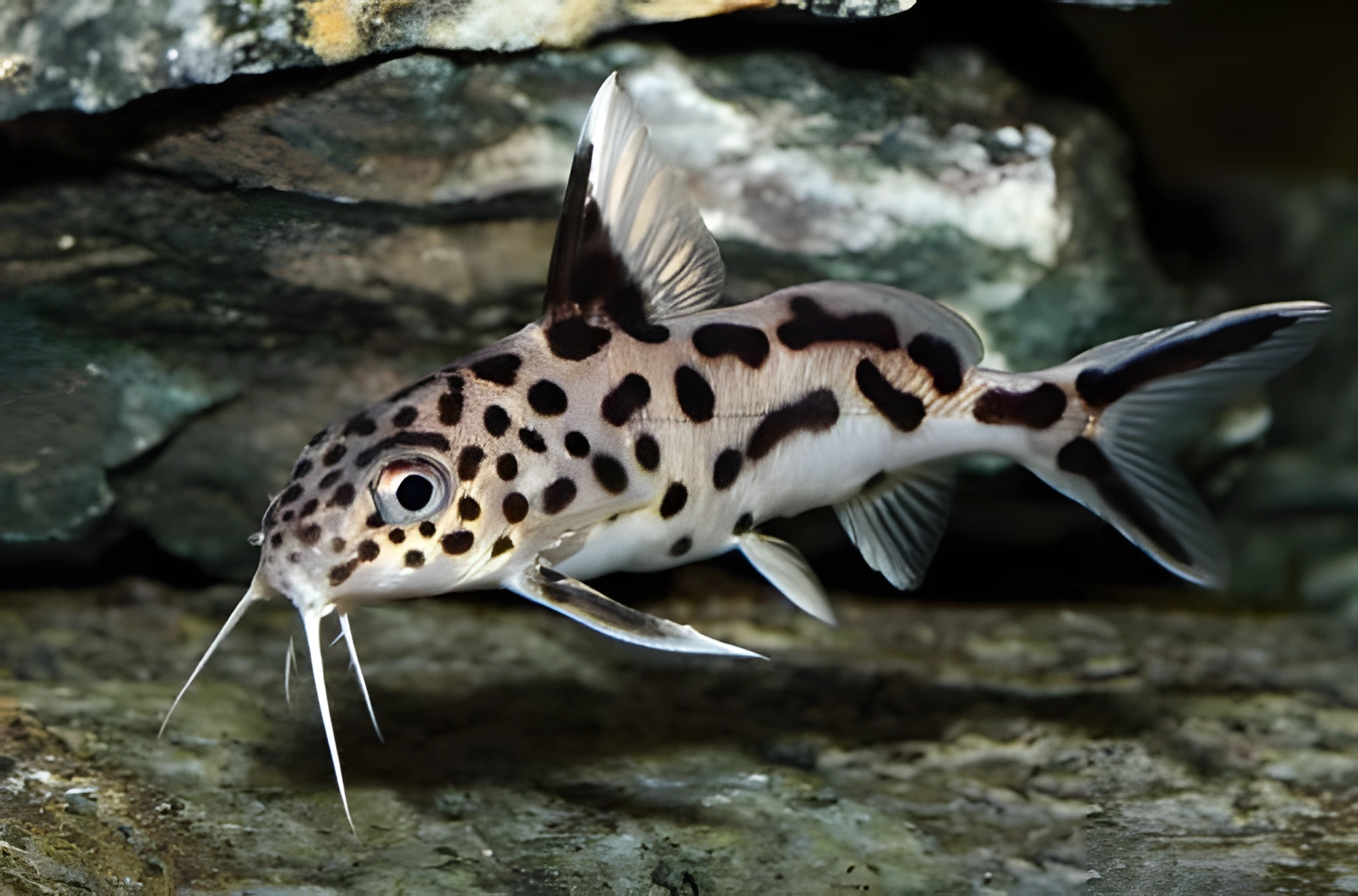
The Cuckoo Catfish, scientifically known as Synodontis multipunctatus, belongs to the family Mochokidae. This species is unique both in its habitat — a single lake in Africa — and its unusual breeding method. The catfish deposits its eggs into the clutches of other fish, thereby shifting the responsibility for its offspring onto them. Due to its unpretentiousness and ease of keeping, this species is well-suited for beginner aquarists.
- Required aquarium volume
- 100 L
- Size in aquarium
- 15 cm
- Temperature
- 24 – 28 °C
- Temperament
- Peaceful (regular)
Parameters
Water pHNeutral (7.5) – Slightly alkaline (8.5)
Water dHHard (13) – Very hard (35)
Water salinityno salt (freshwater)
Size in aquarium15 cm
Lifespan15 years
TemperamentPeaceful (regular)
Toward small fishnot a predator
Required aquarium volume100 L
Lightingdimmed
Substratefine sand
Water flowweak
FeedingSinking (any)
CareBoth solitary and in group (flexible)
Description
Adults of this fish can reach approximately 15 cm in length. Sexual dimorphism is weakly expressed, and no obvious external differences between males and females are observed. The body coloration is light cream, with brown spots distributed over the entire surface. The fins are dark-toned and have a characteristic white edge.
Habitat
This species is endemic to Lake Tanganyika in Africa, located on the borders of four countries: the Democratic Republic of Congo, Burundi, Tanzania, and Zambia. The natural habitat of these catfish is characterized by sandy substrates interspersed with rocky outcrops. Higher aquatic plants are extremely rare in these areas.
Behavior and Compatibility
For Cuckoo Synodontis to feel comfortable and active, they should be kept in groups of 4 or more individuals. Otherwise, with a small number of individuals in a spacious aquarium, they may exhibit excessive reclusiveness. These catfish coexist perfectly with Lake Tanganyika cichlids. It is important to consider only one limitation: avoid cohabitation with excessively small fish, which may inadvertently be mistaken for prey by the catfish.
Care and Maintenance
For keeping a pair of fish, the optimal aquarium volume starts from 100 liters. The decor can be quite simple: a soft sandy substrate is suitable, as well as stones and rock fragments from which various shelters — caves, grottoes, or crevices — can be easily created. The presence of live plants is not mandatory. It is recommended to maintain subdued lighting; otherwise, with excessive light, the Cuckoo Catfish will primarily hide, emerging from shelters only at night. The key condition for successful keeping is maintaining stable water parameters with suitable hydrochemical indicators. This requires the installation of an effective filtration system and regular performance of essential aquarium maintenance procedures. These procedures include weekly water changes of 15–20% of the volume with fresh water, as well as systematic removal of organic waste.
Diet
This catfish is undemanding in terms of diet. It readily accepts various types of food: dry, frozen, live, and plant-based. The daily diet can consist of products such as peas, cucumber and zucchini pieces, pumpkin, which are combined with bloodworms or Artemia. Granulated or flaked dry sinking foods are also an excellent alternative.
Breeding and Reproduction
Breeding this species in a home aquarium presents certain difficulties, due to its unique reproductive strategy. The Cuckoo Catfish is one of the rare fish that uses a parasitic spawning method. In its natural habitat, the catfish discreetly lays its already fertilized eggs into the clutch of cichlids, which, in turn, take them into their mouths along with their own eggs for brooding. Mouthbrooding is a common feature among African cichlids inhabiting Lakes Tanganyika and Malawi. The Synodontis fry hatch earlier than the cichlid fry, consume the eggs of their "adoptive parents," and then, when the time comes, leave their refuge. This spawning method resembles the behavior of cuckoo birds, which lay their eggs in the nests of other species. It is this shared characteristic that is reflected in the name of this species.
Diseases
Under favorable keeping conditions, these fish do not experience health problems. However, the risk of developing various diseases significantly increases with a substantial deterioration in water quality, significant fluctuations in pH and dGH values, and an increase in the concentration of toxic nitrogen cycle products such as ammonia, nitrates, or nitrites. More detailed information on symptoms and treatment methods is available in the "Diseases of Aquarium Fish" section.
How to choose
When purchasing, choose active individuals with clean skin showing no visible damage, ulcers, or white film. A healthy catfish should have intact, unbroken barbels, as damage to them often indicates poor keeping conditions or unsuitable substrate in the aquarium. Avoid fish with sunken bellies, which may indicate emaciation or the presence of parasites. Since the species is territorial, it is best to acquire a group of four or more individuals at once to reduce stress and intraspecific aggression during adaptation. In the store, pay attention to their behavior: healthy fish show curiosity and should not constantly hide in a corner, although during the day they may be less active than at dusk. Refuse to purchase if there are deceased individuals in the tank with the fish or if signs of a mass disease are observed in other inhabitants.
Frequently asked questions
The essentials: size, tank volume, water parameters and care
How big does Cuckoo Catfish get?
An adult reaches 15 cm in length. Plan the tank around the maximum size: the fish quickly outgrows a cramped setup.
What size aquarium does Cuckoo Catfish need?
The minimum recommended volume is 100 L. A smaller tank speeds up nitrate build-up and raises stress levels.
What water parameters does Cuckoo Catfish need?
Temperature 24–28 °C, pH 7.5–8.5, hardness 13–35 dGH. Stability matters more than exact values: sudden swings are harder on the fish than a small deviation from the ideal.
How long does Cuckoo Catfish live?
Around 15 years when kept properly. Lifespan depends directly on tank volume, water quality and a varied diet.
Is Cuckoo Catfish aggressive?
Temperament: peaceful (regular). Keep this in mind when choosing tank mates.
How many Cuckoo Catfish should be kept together?
Recommended setup: both solitary and in group (flexible). Ignoring this is a common cause of stress and disease.
What does Cuckoo Catfish eat?
Diet type: sinking (any). Feed small portions that are finished within a couple of minutes — overfeeding does more harm than underfeeding.
What is the scientific name of Cuckoo Catfish?
The scientific name of the species is Synodontis multipunctatus, family Mochokidae.