Temperature16 – 27 °C
Natural range
- Amur River Basin
- China area
- Laos area
- Vietnam area
CatfishConservation status: Least concern LC
Other scientific names: Macrones fulvidraco, Pelteobagrus fluvidraco, Pelteobagrus fulvidraco, Pimelodus fulvidraco, Pseudobagrus fulvidraco
The scientific name Tachysurus fulvidraco belongs to the Bagridae family, whose members are widely known as Bagrid Catfishes. This catfish was nicknamed the Squeaking Orinoco Catfish for the characteristic sounds it makes when removed from the water, and also due to its external resemblance to the dorsal fin of a predatory orca.
- Required aquarium volume
- 500 L
- Size in aquarium
- 34 cm
- Temperature
- 16 – 27 °C
- Temperament
- Semi-peaceful (including aggression during spawning / intraspecific conflicts)
Parameters
Water pHSlightly acidic (6) – Neutral (7.5)
Water dHSoft (5) – Very hard (19)
Water salinityno salt (freshwater)
Size in aquarium34 cm
Lifespan8 years
TemperamentSemi-peaceful (including aggression during spawning / intraspecific conflicts)
Toward small fishnot a predator
Required aquarium volume500 L
Lightingdimmed
Substratesandy (regular, light)
Water flownone or stagnant (no flow)
FeedingSinking (any)
CareBoth solitary and in group (flexible)
Description
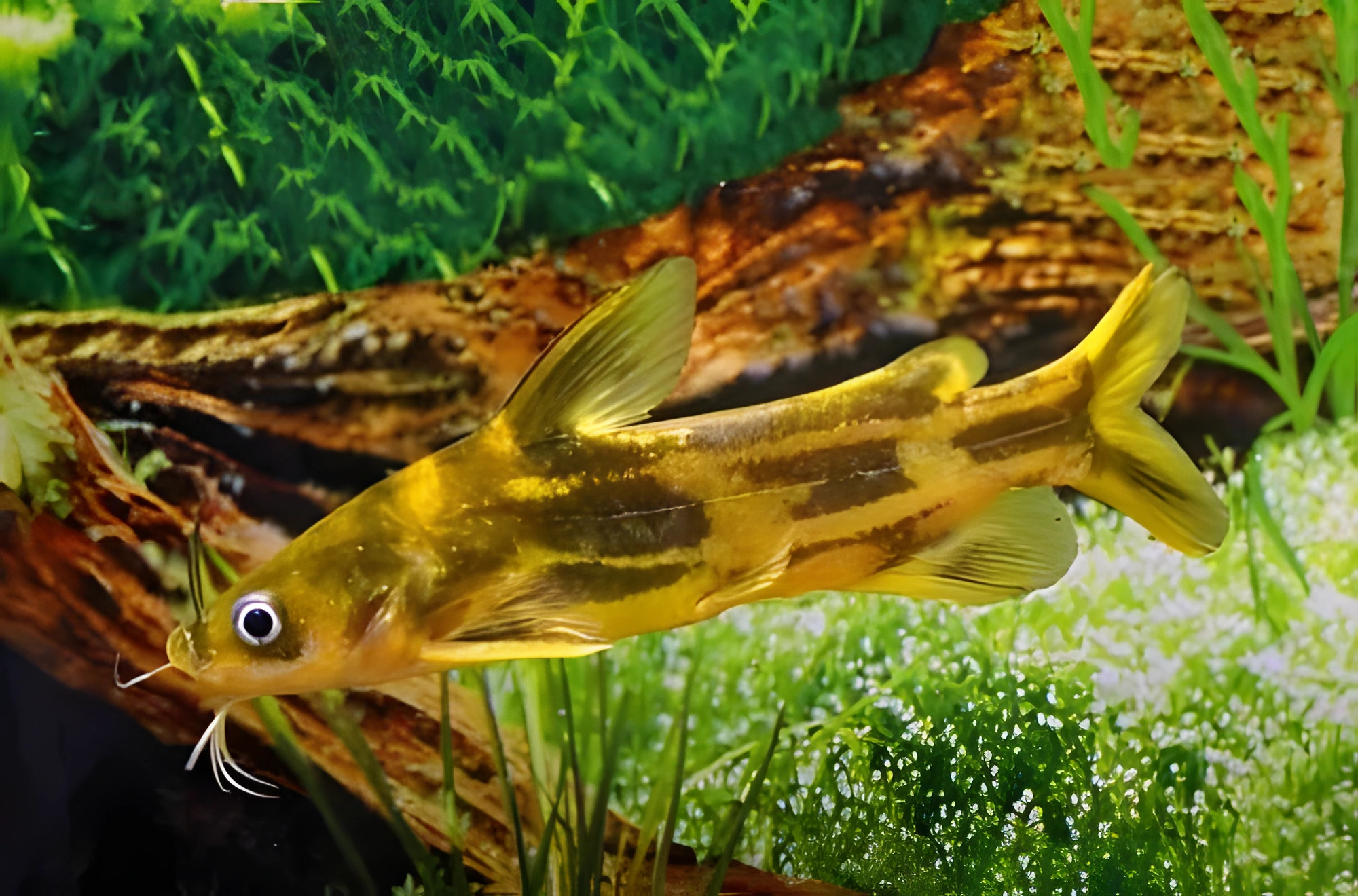
Adults of this fish can reach 34 cm in length. As mentioned, its appearance distantly resembles a marine mammal—the orca—mainly due to its high dorsal fin. The fins—both dorsal and pectoral—contain first rays modified into sharp, serrated spines, while the remaining rays retain their softness. The body coloration is dark, with a greenish, olive, or yellow sheen on the sides; its intensity can vary from lighter to rich dark tones depending on the habitat.
Habitat
The species' range covers water bodies of East and Southeast Asia, including China, Laos, Vietnam, Korea, and the Amur River basin in Russia. In nature, the Squeaking Orinoco Catfish prefers sections of rivers with slow currents, silty-clay bottoms, and deep, non-freezing places for wintering.
Behavior and Compatibility
In confined spaces, they tend to conflict with other bottom dwellers over territory. Otherwise, this catfish does not exhibit pronounced aggression. However, given its diet, any small fish will be considered a potential food source. Therefore, when choosing tank mates, one should focus exclusively on large fish capable of feeling comfortable in cool waters. Although Goldfish also prefer cool water, cohabitation with Squeaking Orinoco Catfish is still not recommended.
Care and Maintenance
For keeping one or two Squeaking Orinoco Catfish, an aquarium of at least 500 liters is required. Hiding places are extremely important in the decor: these can be snags, rock formations, or other decorative material, both natural and artificial. A soft sandy substrate is preferred. Since the fish is nocturnal, the intensity of lighting is not critical; during daylight hours, it will remain in shelters. Keeping conditions largely depend on the fish's origin—from Asia or Siberia. The further south the habitat, the higher the required water temperature: for Amur catfish, a range of 16–25°C is considered comfortable, while for Asian catfish it is 23–27°C. In any case, these fish need clean water and tolerate the accumulation of organic waste poorly.
Diet
This species is omnivorous. Its diet primarily consists of small invertebrates, fry, and small fish. Catfish can be trained to eat dry sinking foods. Feeding is recommended shortly before turning off the aquarium lights.
Breeding and Reproduction
Fish reach sexual maturity at 3–4 years of age. Spawning occurs in the summer, usually in late June. Males independently dig burrows in clay banks, which serve as nests. The female lays up to 7000 eggs, which the male actively guards until the fry become independent.
Diseases
The species has a strong immune system but is sensitive to the accumulation of organic waste in the water. The main danger comes from injuries sustained from contact with sharp fin spines, which can lead to secondary bacterial infections. Prevention includes regular water changes and maintaining substrate cleanliness.
How to choose
When selecting, attention should be paid to the integrity of the skin and the absence of spots or film on the body. A healthy fish should show activity at dusk and have clean, undamaged fins. It is important to note that the spiny rays of the fins and gill covers contain venomous mucus, so caution must be exercised during transportation and transfer.
Frequently asked questions
The essentials: size, tank volume, water parameters and care
How big does Squeaking Orinoco Catfish get?
An adult reaches 34 cm in length. Plan the tank around the maximum size: the fish quickly outgrows a cramped setup.
What size aquarium does Squeaking Orinoco Catfish need?
The minimum recommended volume is 500 L. A smaller tank speeds up nitrate build-up and raises stress levels.
What water parameters does Squeaking Orinoco Catfish need?
Temperature 16–27 °C, pH 6–7.5, hardness 5–19 dGH. Stability matters more than exact values: sudden swings are harder on the fish than a small deviation from the ideal.
How long does Squeaking Orinoco Catfish live?
Around 8 years when kept properly. Lifespan depends directly on tank volume, water quality and a varied diet.
Is Squeaking Orinoco Catfish aggressive?
Temperament: semi-peaceful (including aggression during spawning / intraspecific conflicts). Keep this in mind when choosing tank mates.
How many Squeaking Orinoco Catfish should be kept together?
Recommended setup: both solitary and in group (flexible). Ignoring this is a common cause of stress and disease.
What does Squeaking Orinoco Catfish eat?
Diet type: sinking (any). Feed small portions that are finished within a couple of minutes — overfeeding does more harm than underfeeding.
What is the scientific name of Squeaking Orinoco Catfish?
The scientific name of the species is Tachysurus fulvidraco, family Bagridae (naked catfishes). It also appears in the literature as: Macrones fulvidraco, Pelteobagrus fluvidraco, Pelteobagrus fulvidraco.