Temperature22 – 28 °C
Natural range
- Amazon River Basin
- Peru area
- Ecuador area
- Brazil area
CorydorasConservation status: Least concern LC
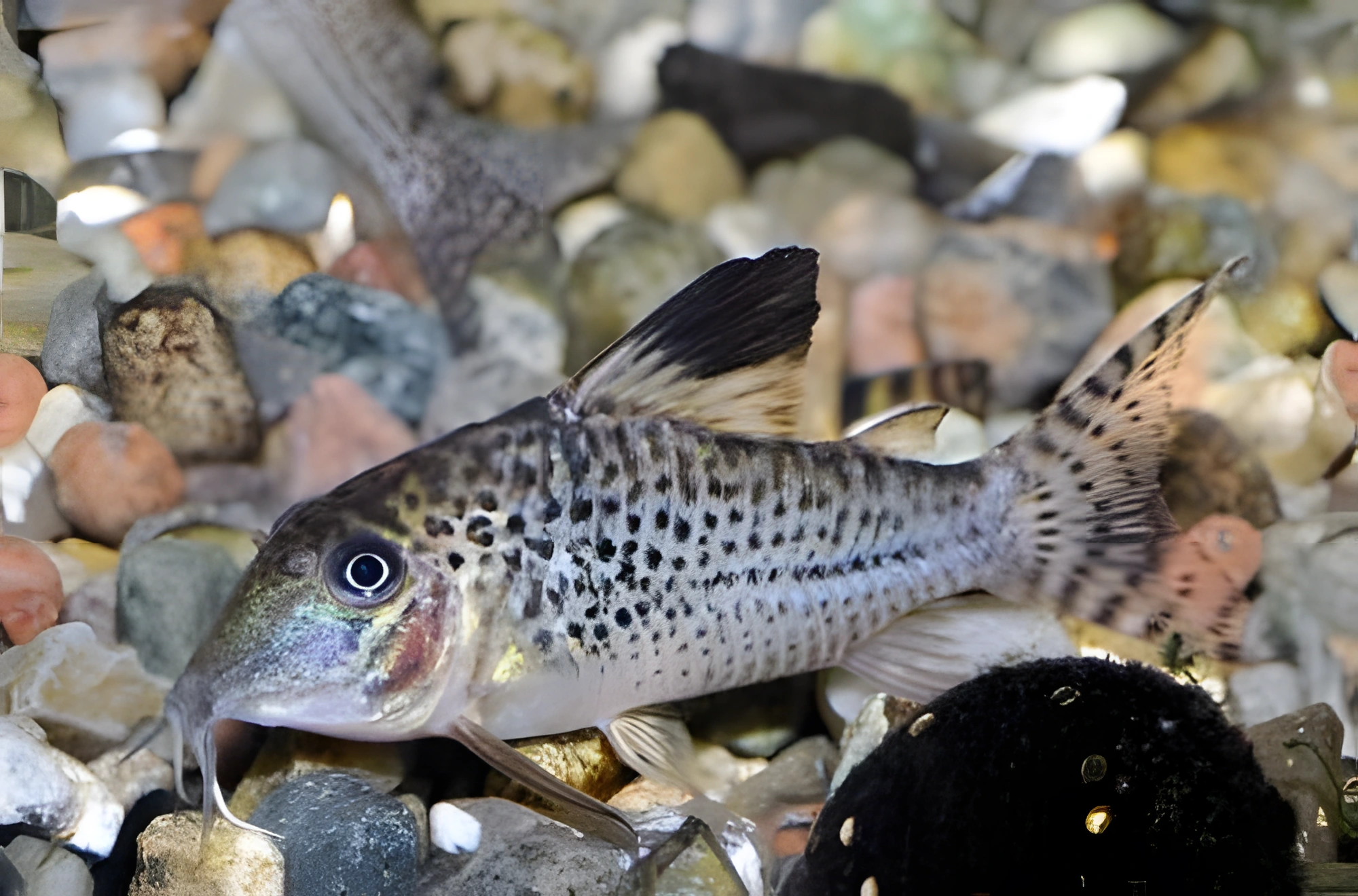
Corydoras acutus, also known as the Black-spotted Corydoras, belongs to the family Callichthyidae (Armored Catfishes) and bears the scientific name Corydoras acutus. Both of its names accurately reflect its characteristic external features. The first name refers to the prominent black mark on the upper part of its dorsal fin. The second name is derived from the Latin word acutus, meaning "elongated," and emphasizes the pointed shape of this fish's head.
- Required aquarium volume
- 100 L
- Size in aquarium
- 6 – 7 cm
- Temperature
- 22 – 28 °C
- Temperament
- Peaceful (regular)
Parameters
Water pHSlightly acidic (6) – Neutral (7.5)
Water dHVery soft (2) – Hard (12)
Water salinityno salt (freshwater)
Size in aquarium6 – 7 cm
Lifespan5 years
TemperamentPeaceful (regular)
Toward small fishnot a predator
Required aquarium volume100 L
Lightingweak (low)
Substratesandy (regular, light)
Water flowweak or moderate
FeedingSinking (any)
CareSmall group (5–6 individuals)
Description
The body shape of Corydoras acutus can vary depending on its specific origin. Some researchers suggest that this common name may actually encompass a range of species, including recently discovered ones that have not yet received official scientific descriptions, known by the numbers C024, C077, and C109. The main distinguishing features of this species, as mentioned earlier, are a prominent black mark on the dorsal fin and a somewhat elongated snout. The body coloration is typically gray, speckled with numerous small black dots. Under certain lighting, a slight emerald sheen can be observed on the head.
Habitat
The species inhabits the Amazon River basin in Peru, Ecuador, and Brazil. It is found in various river systems, including the tributaries of Napo, Marañón, and Madeira. It prefers areas with slow currents, where it stays in the bottom layers of the water. In nature, water parameters vary widely, with the fish adapted to a tropical climate with temperatures of 22–28 °C.
Behavior and Compatibility
A peaceful and active schooling fish that thrives best in groups of 6 or more individuals. The catfish spend most of their time exploring the substrate in search of food. They are highly compatible with most small and non-aggressive fish species that inhabit the mid-water or surface. Intraspecific conflicts are rare and usually limited to displays of dominance.
Care and Maintenance
Corydoras are among the most undemanding aquarium fish. They can adapt to a fairly wide range of hydrochemical water parameters and do not have strict requirements for aquarium setup – soft substrate and a few shelters are sufficient. Their diet can include almost any suitable size food. Thanks to their peaceful nature, these catfish do not create problems when choosing tank mates. It is only important to avoid keeping them with overly large, territorial, or aggressive predatory fish. Aquarium care for the Largespot Corydoras is standard and suitable for most other fish species. The key condition is maintaining a stable aquatic environment, which is ensured by reliable equipment operation and regular performance of essential procedures, such as weekly partial water changes and removal of organic waste.
Diet
An omnivorous species that feeds on small invertebrates and organic detritus in nature. In the aquarium, it accepts most types of sinking dry foods, as well as frozen and live foods such as bloodworms or tubifex. It is important to provide a varied diet and ensure that the food reaches the bottom, as the fish are not able to fully feed on the leftovers of other inhabitants.
Breeding and Reproduction
Breeding follows the typical Corydoras pattern. Spawning is stimulated by water changes with a decrease in temperature. The female holds the eggs between her pelvic fins while the male fertilizes them, after which she attaches them to the substrate. The process repeats until about 100 eggs are laid. Parental care is absent, and it is recommended to transfer the eggs to a separate incubator.
Diseases
This species is sensitive to water quality and substrate cleanliness. If kept in poor conditions, fin rot, fungal infections, or bacterial diseases may occur. It is important to avoid injuring the sensitive barbels with sharp substrate. Prevention includes regular substrate vacuuming, weekly water changes, and maintaining stable environmental parameters.
How to choose
When purchasing, choose active fish with clean fins and no visible skin damage. It is important to ensure that the individuals have intact barbels, as their absence often indicates unsatisfactory keeping conditions in the store. Avoid fish with sunken bellies or signs of apathy, as this may indicate the presence of parasites or emaciation.
Frequently asked questions
The essentials: size, tank volume, water parameters and care
How big does Corydoras acutus get?
An adult reaches 6–7 cm in length. Plan the tank around the maximum size: the fish quickly outgrows a cramped setup.
What size aquarium does Corydoras acutus need?
The minimum recommended volume is 100 L. A smaller tank speeds up nitrate build-up and raises stress levels.
What water parameters does Corydoras acutus need?
Temperature 22–28 °C, pH 6–7.5, hardness 2–12 dGH. Stability matters more than exact values: sudden swings are harder on the fish than a small deviation from the ideal.
How long does Corydoras acutus live?
Around 5 years when kept properly. Lifespan depends directly on tank volume, water quality and a varied diet.
Is Corydoras acutus aggressive?
Temperament: peaceful (regular). Keep this in mind when choosing tank mates.
How many Corydoras acutus should be kept together?
Recommended setup: small group (5–6 individuals). Ignoring this is a common cause of stress and disease.
What does Corydoras acutus eat?
Diet type: sinking (any). Feed small portions that are finished within a couple of minutes — overfeeding does more harm than underfeeding.
What is the scientific name of Corydoras acutus?
The scientific name of the species is Corydoras acutus, family Armored Catfish (Callichthyidae).