Temperature24 – 28 °C
Natural range
- Sumatra area
- Indonesia area
CatfishConservation status: Least concern LC
Other scientific names: Bagroides macracanthus, Leiocassis macracanthus
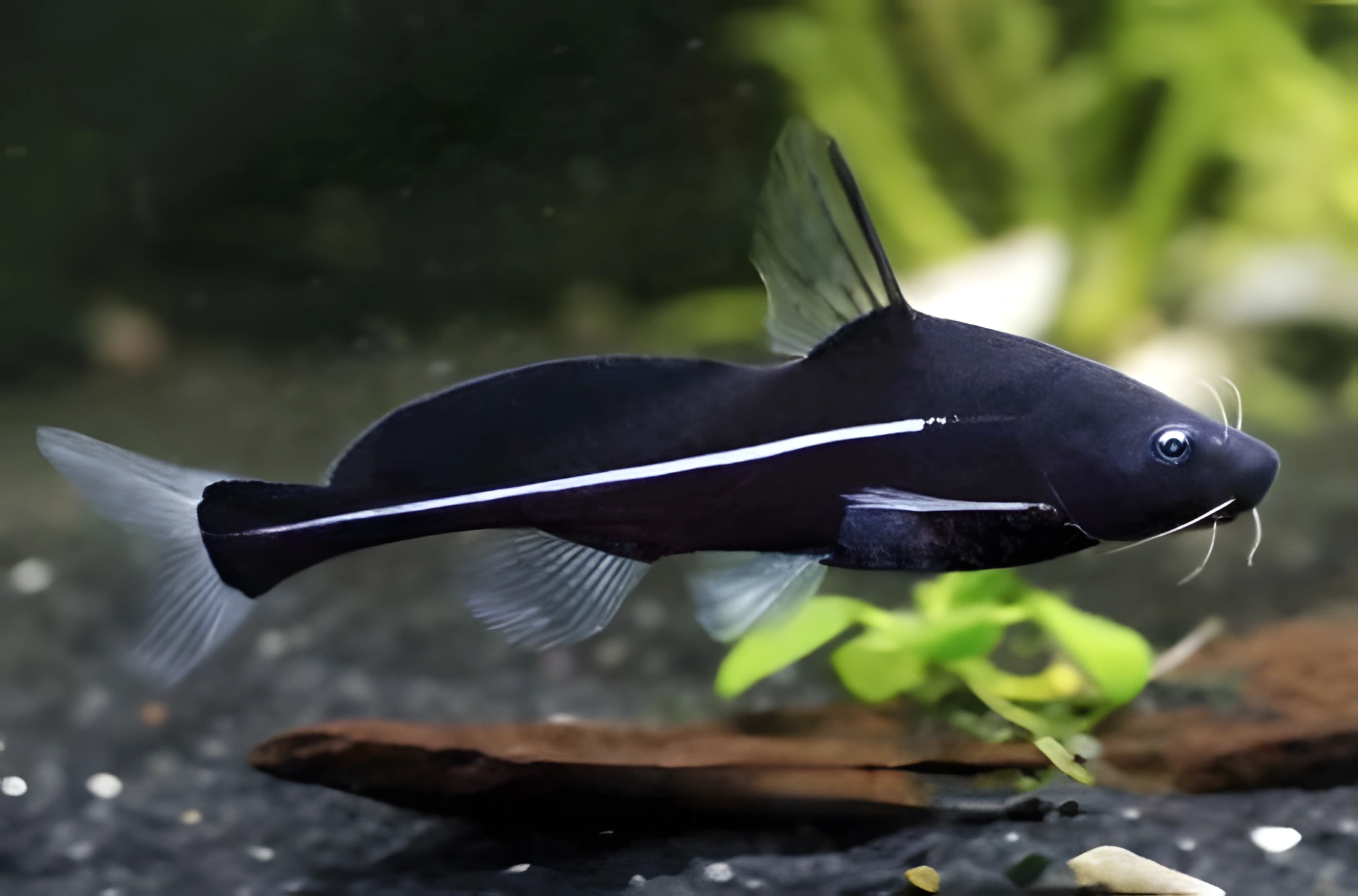
The Black Lancer Catfish, also known as the Javelin Catfish, bears the scientific name Bagrichthys macracanthus and belongs to the Bagridae family. Its name — “Lancer” (from the Norwegian for “spear”) — refers to the unique shape of its dorsal fin. This fish species is easy to care for and undemanding, but its complex character requires careful consideration when choosing tank mates.
- Required aquarium volume
- 250 L
- Size in aquarium
- 20 – 23 cm
- Temperature
- 24 – 28 °C
- Temperament
- Semi-peaceful (including aggression during spawning / intraspecific conflicts)
Parameters
Water pHSlightly acidic (5.5) – Neutral (7)
Water dHVery soft (1) – Very hard (21)
Water salinityno salt (freshwater)
Size in aquarium20 – 23 cm
Lifespan8 years
TemperamentSemi-peaceful (including aggression during spawning / intraspecific conflicts)
Toward small fishnot a predator
Required aquarium volume250 L
Lightingdimmed
Substrateany (no restrictions)
Water flownone or stagnant (no flow)
FeedingSinking (any)
CareHarem (1 male and several females)
Description
This catfish is a close relative of the White-whiskered Catfish, which inhabits the Mekong and Chao Phraya rivers in Indochina. In times when Sumatra was connected to the mainland, they represented a single species. However, after the island's separation and subsequent isolation, the Sumatran catfish acquired new traits, becoming larger and developing a white stripe along their lateral line. Adult specimens can reach up to 23 cm in length. Their coloration is deep black, and their fins and tail have a translucent gray hue. Sexual dimorphism in the species is weakly expressed; males and females are virtually indistinguishable in appearance. The structure of the dorsal fin, which is raised high and almost vertical, inspired the name “javelin carrier” for this species.
Habitat
Initially, its natural range was associated with the Indochinese Peninsula, as well as the islands of Sumatra (Kalimantan) and Java in Southeast Asia. However, recent studies have clarified that this species is endemic to Sumatra. The catfish inhabits main river channels, preferring areas with silty bottoms, where there are many shelters such as snags and dense thickets of riparian plants.
Behavior and Compatibility
This species is not known for its friendliness, actively competing with conspecifics and other bottom-dwelling fish for its territory. It is most preferable to keep them in a group, including one male and several females. Compatibility is possible with non-aggressive species of comparable size that inhabit the water column or near the surface.
Care and Maintenance
For a group of 3–4 fish, the optimal aquarium volume starts from 250 liters. Since these catfish lead a secretive, nocturnal lifestyle, it is crucial to provide them with plenty of hiding places. These can be arranged using natural materials, such as bogwood snags or aquatic plants, or by using decorative objects, for example, sunken castles or ships. Given their behavioral characteristics, each catfish should be provided with its own secluded spot to avoid potential conflicts within the species. The successful keeping of the "Black Lancer" catfish largely depends on the quality and composition of the water. The aquarist's key task is to maintain hydrochemical parameters and temperature within acceptable limits, preventing the accumulation of organic waste. Regular cleaning of the aquarium and the installation of necessary equipment, particularly an effective filtration system, are essential for clean water.
Diet
Being omnivorous, these catfish readily consume everything they find on the bottom. Their daily diet can consist of various sinking dry foods, such as flakes and pellets, as well as frozen or live foods, including artemia, bloodworms, daphnia, and others.
Breeding and Reproduction
At the time of this article's publication, no successful cases of breeding this species in captivity have been recorded. In their natural habitat, the breeding season is directly linked to the alternation of wet and dry periods. With the onset of monsoon rains, the fish move into flooded coastal rainforest areas to spawn.
Diseases
When kept in favorable conditions, fish rarely experience health deterioration. The occurrence of diseases usually indicates problems in keeping, such as polluted water, poor quality food, or injuries. In most cases, eliminating the root cause leads to recovery. However, sometimes medication may be required. Detailed information on symptoms and treatment methods can be found in the section "Diseases of aquarium fish."
How to choose
When choosing a lancer catfish, it is important to carefully inspect the fish for any damage to its fins and skin, as this species is susceptible to infections during transport. A healthy specimen should be active during twilight hours, have clear eyes, and pronounced coloration. Avoid specimens with signs of emaciation, sunken bellies, or unnatural spots on the body, which may indicate stress or disease. Given their nocturnal lifestyle, fish in the store may often hide, so it is worth asking the seller to demonstrate their feeding to assess their appetite and overall condition. Make sure the fish has no visible damage from the sharp spines of tank mates, as injured catfish are prone to developing secondary bacterial infections.
Frequently asked questions
The essentials: size, tank volume, water parameters and care
How big does Black Lancer Catfish get?
An adult reaches 20–23 cm in length. Plan the tank around the maximum size: the fish quickly outgrows a cramped setup.
What size aquarium does Black Lancer Catfish need?
The minimum recommended volume is 250 L. A smaller tank speeds up nitrate build-up and raises stress levels.
What water parameters does Black Lancer Catfish need?
Temperature 24–28 °C, pH 5.5–7, hardness 1–21 dGH. Stability matters more than exact values: sudden swings are harder on the fish than a small deviation from the ideal.
How long does Black Lancer Catfish live?
Around 8 years when kept properly. Lifespan depends directly on tank volume, water quality and a varied diet.
Is Black Lancer Catfish aggressive?
Temperament: semi-peaceful (including aggression during spawning / intraspecific conflicts). Keep this in mind when choosing tank mates.
How many Black Lancer Catfish should be kept together?
Recommended setup: harem (1 male and several females). Ignoring this is a common cause of stress and disease.
What does Black Lancer Catfish eat?
Diet type: sinking (any). Feed small portions that are finished within a couple of minutes — overfeeding does more harm than underfeeding.
What is the scientific name of Black Lancer Catfish?
The scientific name of the species is Bagrichthys macracanthus, family Bagrid Catfishes (Bagridae). It also appears in the literature as: Bagroides macracanthus, Leiocassis macracanthus.