Temperature20 – 28 °C
Natural range
- Venezuela area
CatfishConservation status: Least concern LC
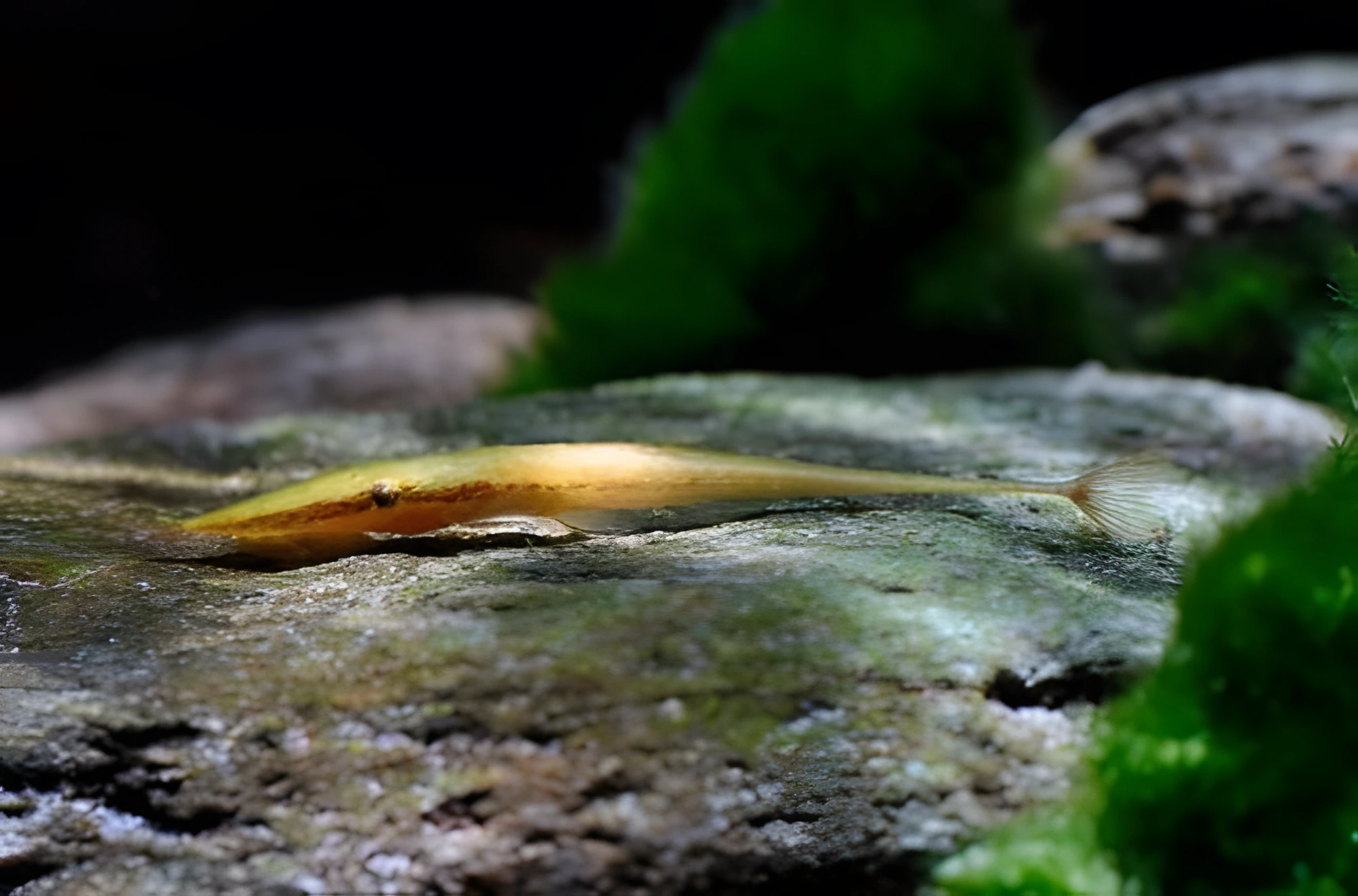
The Whiptail Catfish, or Acestridium dichromum, belongs to the family Loricariidae, which includes armored catfish. This species first became available to aquarists in the late 1990s, making it relatively new to the market. Most specimens offered for sale are wild-caught, as breeding these fish in captivity presents significant difficulties. Often, exported catfish arrive weakened and struggle to adapt to a new aquarium environment, so they are not recommended for beginner hobbyists.
- Required aquarium volume
- 40 L
- Size in aquarium
- 6 cm
- Temperature
- 20 – 28 °C
- Temperament
- Peaceful (regular)
Parameters
Water pHSlightly acidic (6) – Neutral (7.5)
Water dHVery soft (2) – Hard (15)
Water salinityno salt (freshwater)
Size in aquarium6 cm
Lifespan5 years
TemperamentPeaceful (regular)
Toward small fishnot a predator
Required aquarium volume40 L
Lightingmoderate (regular)
Substraterocky (rock formations, boulders, etc.)
Water flowmoderate or strong
FeedingPlant-based (algae, vegetables)
CareBoth solitary and in group (flexible)
Description
Adult fish of this species reach about 6 cm in length. They are distinguished by an elongated, somewhat flattened head and body. The eyes are set far back. The slender caudal peduncle ends in a small tail, resembling the tip of a whip or lash, which gave the species its name — "whiptail." The coloration of these catfish can vary greatly depending on the environment, ranging from yellow to brown or dark hues.
Habitat
The natural habitat of this species is in South America, where it is found in the upper and middle reaches of the Orinoco River in Venezuela. These fish prefer sections of rivers located in hilly terrain covered with lush tropical vegetation. A typical habitat for them is a small, shallow stream with a rocky bottom and abundant riparian flora.
Behavior and Compatibility
This species is characterized by a peaceful and calm disposition. It coexists well with other non-aggressive species of comparable size that will not perceive it as potential prey. The Whiptail Catfish can be kept alone or in a group.
Care and Maintenance
For keeping one or two fish, the optimal aquarium volume starts from 40 liters. It is extremely important to recreate conditions close to their natural habitat, mimicking the bed of a fast-flowing stream. For decor, a rocky substrate with piles of stones, boulders, as well as several natural snags and other decorative elements at the aquarist's discretion, is preferred. Live aquatic plants are not mandatory, but if desired, some hardy varieties capable of growing in turbulent conditions can be placed. Since the Whiptail Catfish inhabits flowing waters, it is very sensitive to water quality and hydrochemical composition. The aquarium must be equipped with a powerful filtration system that, in addition to purification, can provide the necessary internal current. Regular aquarium cleaning, water changes, and removal of organic waste should also be performed.
Diet
In natural conditions, the Whiptail Catfish's diet consists of algae, which it scrapes from the surface of stones, rocks, and snags. In a home aquarium, appropriate feeding must be ensured. It is recommended to offer specialized foods for herbivorous species, and also to encourage the natural growth of algae.
Breeding and Reproduction
As of the publication of this material, there has been no information on successful breeding of Metynnis lippincottianus in home aquariums.
Diseases
Most health problems in fish often arise from unsuitable keeping conditions. Maintaining a stable and comfortable habitat is a key factor for successful keeping. If symptoms of illness appear, the first step is to check the water quality. If deviations are found, it is important to take immediate measures to eliminate them. If the symptoms do not disappear or worsen, medicinal treatment may be required. More detailed information on symptoms and treatment methods can be found in the "Diseases of Aquarium Fish" section.
How to choose
When purchasing Whiptail Catfish, caution should be exercised, as this is a rare species with demanding requirements. Choose only active specimens with clean skin without signs of damage, ulcers, or unnatural spots. Avoid fish with sunken bellies, which often indicates emaciation or digestive problems caused by prolonged starvation in the store. In a healthy catfish, the fins should be spread, and breathing should be steady, without signs of rapid gill movement.
- Inspect the aquarium for dead or lethargic fish, as this species is extremely sensitive to water quality and stress during transport.
- Ensure that the fish show interest in foraging, exploring the surfaces of decorations or the substrate.
- Ask the seller what the catfish are currently eating, as adaptation to artificial foods can be difficult due to their narrow specialization in biofilm and microorganisms.
Frequently asked questions
The essentials: size, tank volume, water parameters and care
How big does Whiptail Catfish get?
An adult reaches 6 cm in length. Plan the tank around the maximum size: the fish quickly outgrows a cramped setup.
What size aquarium does Whiptail Catfish need?
The minimum recommended volume is 40 L. A smaller tank speeds up nitrate build-up and raises stress levels.
What water parameters does Whiptail Catfish need?
Temperature 20–28 °C, pH 6–7.5, hardness 2–15 dGH. Stability matters more than exact values: sudden swings are harder on the fish than a small deviation from the ideal.
How long does Whiptail Catfish live?
Around 5 years when kept properly. Lifespan depends directly on tank volume, water quality and a varied diet.
Is Whiptail Catfish aggressive?
Temperament: peaceful (regular). Keep this in mind when choosing tank mates.
How many Whiptail Catfish should be kept together?
Recommended setup: both solitary and in group (flexible). Ignoring this is a common cause of stress and disease.
What does Whiptail Catfish eat?
Diet type: plant-based (algae, vegetables). Feed small portions that are finished within a couple of minutes — overfeeding does more harm than underfeeding.
What is the scientific name of Whiptail Catfish?
The scientific name of the species is Acestridium dichromum, family Armored Catfishes (Loricariidae).