Temperature12 – 28 °C
Natural range
- India area
- Nepal area
- Bangladesh area
- Myanmar area
Catfish
The Hara Catfish (Hara hara), a member of the Sisoridae family, originates from Asia. It can be found in various river systems in southern China, India, Nepal, and Bangladesh. These fish prefer areas with weak currents or even stagnant water, typically hiding on the bottom among branches and snags.
- Required aquarium volume
- 40 L
- Size in aquarium
- 13 cm
- Temperature
- 12 – 28 °C
- Temperament
- Peaceful (regular)
Parameters
Water pHSlightly acidic (6) – Neutral (7.5)
Water dHVery soft (2) – Hard (15)
Water salinityno salt (freshwater)
Size in aquarium13 cm
Lifespan4 years
TemperamentPeaceful (regular)
Toward small fishnot a predator
Required aquarium volume40 L
Lightingdimmed
Substratesandy (regular, light)
Water flownone or stagnant (no flow)
FeedingSinking (any)
CareBoth solitary and in group (flexible)
Description
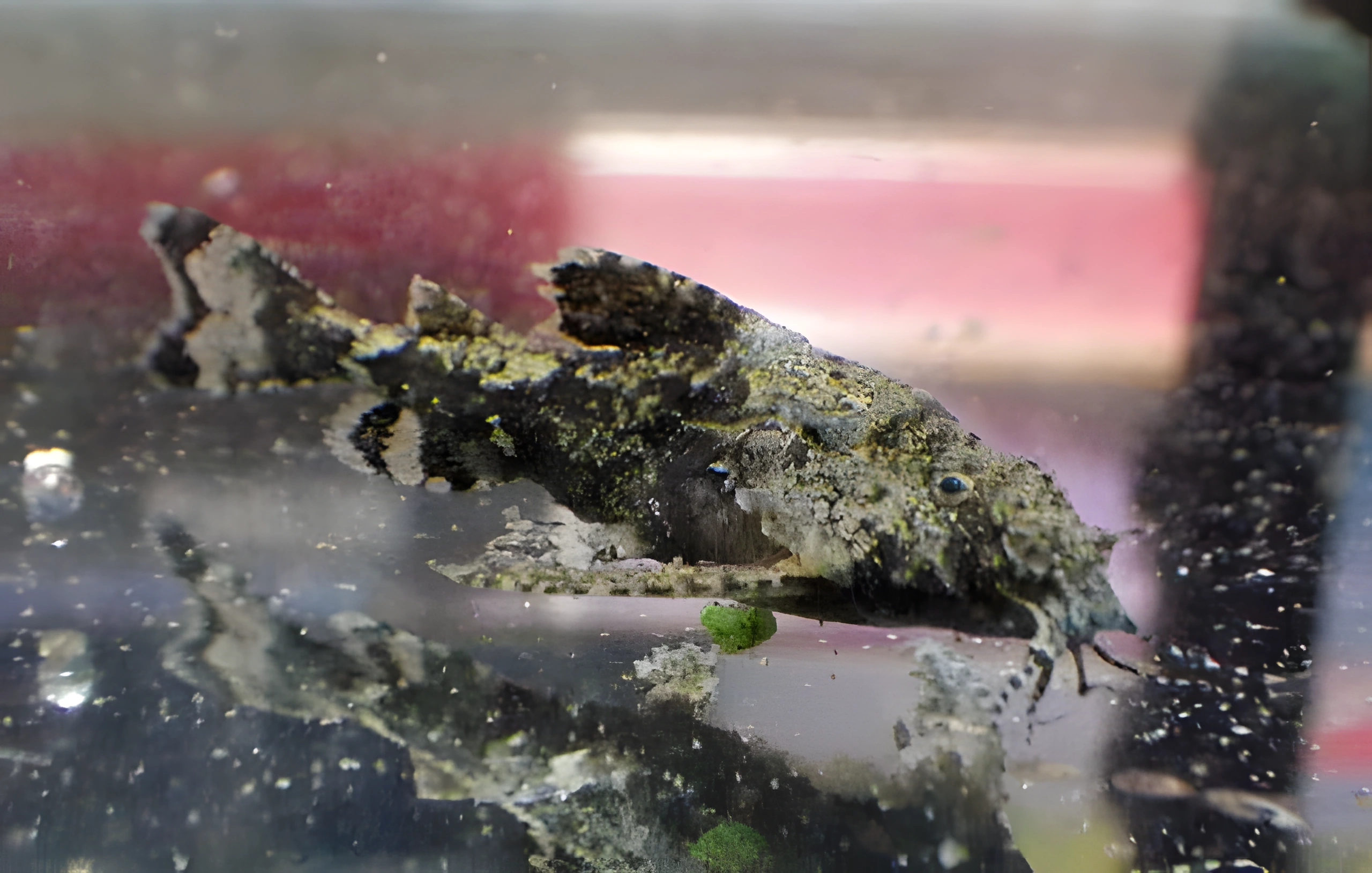
Adults of this catfish can reach up to 13 cm in length. Their body is large, stocky, and covered with bony plates that form something resembling a “helmet” on the head. The body covering feels rough, like sandpaper. Their fins are large and rigid. The pectoral and dorsal fins are equipped with sharp spines, which are modified first rays. The fish's coloration varies from grey-black to brownish, depending on the environment. For example, in areas with many snags, brown hues predominate, while on sandy substrates, the catfish adopt more greyish tones. This species is a close relative of the Asian Stone Catfish, which is more well-known among aquarists.
Habitat
The species is widely distributed in the river systems of South Asia, including territories of India, Nepal, Bangladesh, Myanmar, and the southern provinces of China. It inhabits bodies of water with slow currents or stagnant water, preferring bottom areas with abundant natural shelters such as snags, branches, and fallen leaves. In nature, the fish are adapted to a wide range of temperatures and water parameters characteristic of subtropical and tropical river systems.
Behavior and Compatibility
This peaceful and calm catfish prefers to hide among shelters, not disturbing other aquarium inhabitants. It can live both alone and in a group. Suitable tank mates include non-aggressive species of comparable size, such as danios, rasboras, tetras, and almost all livebearers.
Care and Maintenance
For a single Hara catfish, an aquarium of at least 40 liters is recommended. The setup should include a soft sandy substrate and plenty of driftwood, as the fish is nocturnal, and the presence of hiding places is critically important for it. The catfish can adapt to a wide range of pH and GH values. It feels perfectly comfortable even in cool water; the comfortable temperature range is between 12°C and 28°C, which allows it to be kept without a heater. Standard maintenance includes weekly partial water changes, removal of organic waste, and keeping equipment in good working order. It is important to feed the catfish in the evening, before turning off the lights, as it is a nocturnal inhabitant. Sinking foods, such as flakes or granules, should be offered. Dried bloodworms will also be an excellent choice, as they are a valuable source of protein and essential amino acids.
Diet
Since the catfish is nocturnal, feeding is recommended in the evening, just before the lights are turned off. Sinking foods, such as flakes or granules, should be offered. Dried bloodworms will be an excellent choice, as they are a valuable source of protein and essential amino acids.
Breeding and Reproduction
Based on available sources, a separate block cannot be compiled: the data is insufficient or contradictory. The entry can be updated later when verified information becomes available.
Diseases
Fish are sensitive to water quality and the accumulation of organic waste, which can lead to the development of bacterial infections and skin lesions. To prevent diseases, it is necessary to maintain stable environmental parameters, ensure effective filtration, and perform regular partial water changes. Due to their body structure and lifestyle, it is important to avoid injuring the fish with sharp decorative elements.
How to choose
When selecting specimens, attention should be paid to the integrity of the fins and the absence of skin damage, which should appear clean and characteristically rough. A healthy fish shows caution but should not exhibit signs of emaciation or apathy. It is recommended to acquire specimens that actively respond to food, as their slowness in food competition can lead to malnutrition when kept with faster tankmates.
Frequently asked questions
The essentials: size, tank volume, water parameters and care
How big does Hara Catfish get?
An adult reaches 13 cm in length. Plan the tank around the maximum size: the fish quickly outgrows a cramped setup.
What size aquarium does Hara Catfish need?
The minimum recommended volume is 40 L. A smaller tank speeds up nitrate build-up and raises stress levels.
What water parameters does Hara Catfish need?
Temperature 12–28 °C, pH 6–7.5, hardness 2–15 dGH. Stability matters more than exact values: sudden swings are harder on the fish than a small deviation from the ideal.
How long does Hara Catfish live?
Around 4 years when kept properly. Lifespan depends directly on tank volume, water quality and a varied diet.
Is Hara Catfish aggressive?
Temperament: peaceful (regular). Keep this in mind when choosing tank mates.
How many Hara Catfish should be kept together?
Recommended setup: both solitary and in group (flexible). Ignoring this is a common cause of stress and disease.
What does Hara Catfish eat?
Diet type: sinking (any). Feed small portions that are finished within a couple of minutes — overfeeding does more harm than underfeeding.
What is the scientific name of Hara Catfish?
The scientific name of the species is Hara hara, family Sisoridae.