Temperature22 – 28 °C
Natural range
- Kayin State
- Myanmar area
Catfish
The Banded Catfish, also known by its scientific name Caelatoglanis zonatus, is a member of the family Erethistidae (Sisorid Catfishes). This fish is quite rare among amateur aquarists. Most of the specimens offered for sale usually enter aquariums after being caught from the wild. It should be noted that exported individuals may have difficulty acclimatizing and initially refuse commercial foods. Due to these characteristics, this species is not recommended for beginners in aquarism.
- Required aquarium volume
- 60 L
- Size in aquarium
- 4 cm
- Temperature
- 22 – 28 °C
- Temperament
- Peaceful (regular)
Parameters
Water pHNeutral (6.5) – Neutral (7.5)
Water dHSoft (5) – Hard (15)
Water salinityno salt (freshwater)
Size in aquarium4 cm
Lifespan3 years
TemperamentPeaceful (regular)
Toward small fishnot a predator
Required aquarium volume60 L
Lightingdimmed
Substratesand or gravel + stones/boulders
Water flowmoderate
FeedingSinking (meat / protein)
CareLarge group (10+ individuals)
Description
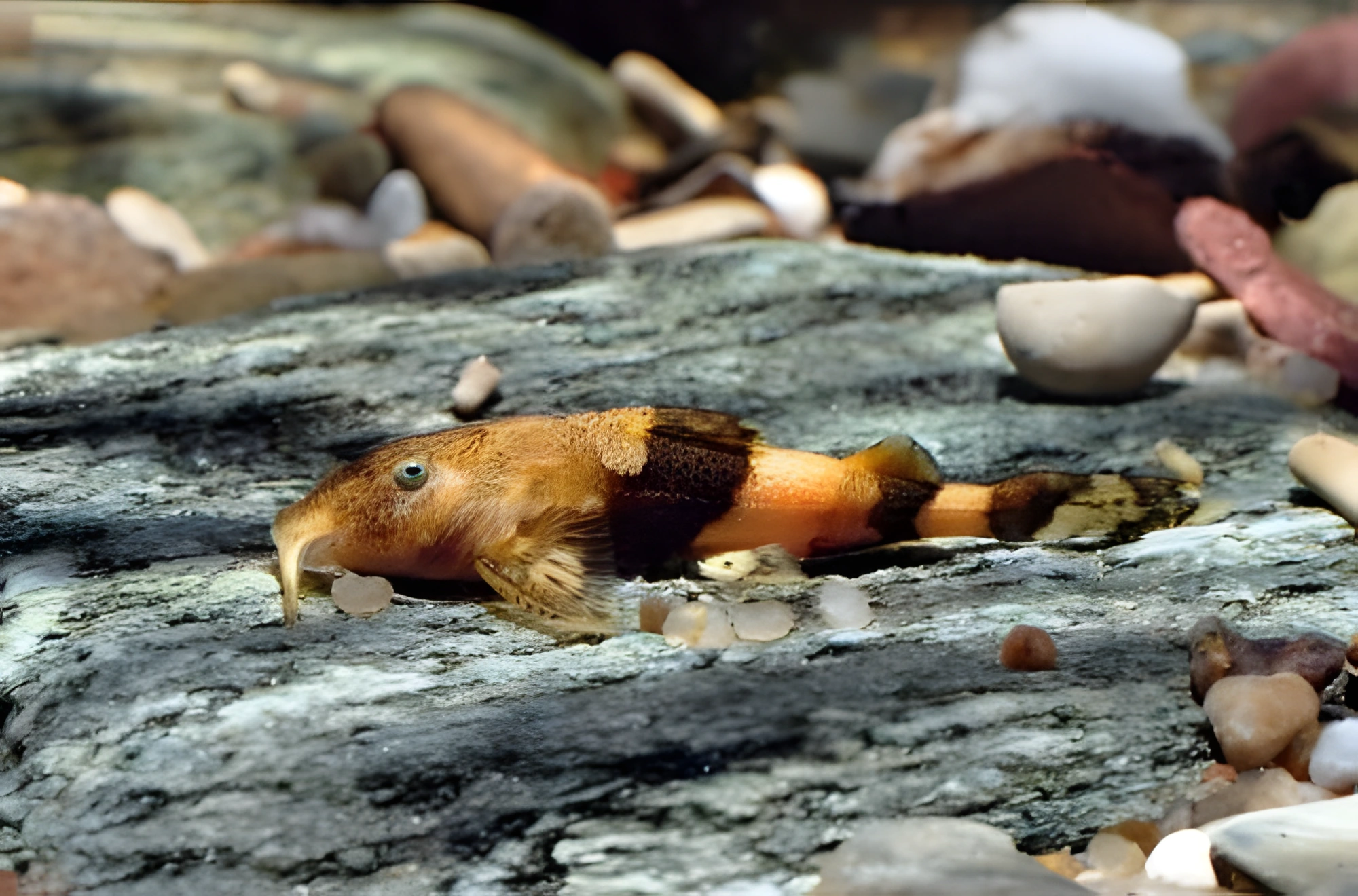
Adults of this species reach a length of about 4 cm. Their body is covered with hard integuments with numerous sharp spines. The head is reliably protected by bony plates. The eyes are located on the top of the head and oriented upwards. The first rays of the fins in these fish are modified into spines. One of the most remarkable features is the structure of the mouth: it is elongated and flattened, resembling a chisel in its shape, which is reflected in the species' name. The coloration is usually yellow-orange, with three dark bands encircling the body.
Habitat
The natural habitat of this catfish extends throughout Southeast Asia, including the Ataran River basin, which mostly flows through Karen State in Myanmar, bordering Thailand to the east. The headwaters of the river are located in hilly and mountainous areas. The typical biotope is characterized by a shallow riverbed with a rocky or sandy bottom, where clean, clear water saturated with dissolved oxygen circulates.
Behavior and Compatibility
These fish are peaceful and calm, showing activity primarily during feeding in the dark. They are more comfortable in a group, so it is recommended to keep at least 10 individuals. They get along well with many other non-aggressive species of comparable size.
Care and Maintenance
For comfortable keeping of a group of 10 Banded Catfish, an aquarium of 80–100 liters will be required. In the aquarium setup, preference is given to sandy or rocky substrate, as well as creating piles of stones, rocks, and several large snags. From these decorative elements, shelters should be formed, the number of which should correspond to the number of catfish, where they can hide during the day. Introducing live aquatic plants is not necessary, as they are not characteristic of the natural habitat of this species. A key condition for successful keeping of the Banded Catfish is maintaining high water quality within acceptable temperature and hydrochemical parameters. The accumulation of organic waste, which can disrupt the nitrogen cycle, should be avoided. Regular maintenance procedures and equipping the aquarium with the necessary equipment, in particular, an effective filtration and aeration system, are the key to creating a healthy aquarium environment.
Diet
In natural conditions, these catfish forage among stones for small invertebrates. In an aquarium environment, they learn to accept live or frozen foods, such as Artemia, Daphnia, bloodworms, as well as specialized foods for carnivorous species. Since they are nocturnal, feeding is recommended after the main aquarium lighting is turned off.
Breeding and Reproduction
Based on available sources, a separate block cannot be compiled: the data is insufficient or contradictory. The entry can be updated later when verified information becomes available.
Diseases
Most health problems in fish often arise from unsuitable keeping conditions. Maintaining a stable and comfortable habitat is a key factor for successful keeping. If symptoms of illness appear, the first step is to check the water quality. If deviations are found, it is important to take immediate measures to eliminate them. If the symptoms do not disappear or worsen, medicinal treatment may be required. More detailed information on symptoms and treatment methods can be found in the "Diseases of Aquarium Fish" section.
How to choose
When choosing individuals, attention should be paid to the integrity of the fins and the absence of damage to the skin. Healthy fish should be active at dusk, and during the day, exhibit natural behavior, hiding in shelters or resting on the substrate. Avoid buying fish with signs of emaciation, sunken bellies, or an apathetic state under bright lighting, as this may indicate stress or hidden diseases. It is recommended to purchase a group of 10 or more individuals, as this species becomes extremely timid and prone to stress when kept alone.
Frequently asked questions
The essentials: size, tank volume, water parameters and care
How big does Chiselmouth Catfish get?
An adult reaches 4 cm in length. Plan the tank around the maximum size: the fish quickly outgrows a cramped setup.
What size aquarium does Chiselmouth Catfish need?
The minimum recommended volume is 60 L. A smaller tank speeds up nitrate build-up and raises stress levels.
What water parameters does Chiselmouth Catfish need?
Temperature 22–28 °C, pH 6.5–7.5, hardness 5–15 dGH. Stability matters more than exact values: sudden swings are harder on the fish than a small deviation from the ideal.
How long does Chiselmouth Catfish live?
Around 3 years when kept properly. Lifespan depends directly on tank volume, water quality and a varied diet.
Is Chiselmouth Catfish aggressive?
Temperament: peaceful (regular). Keep this in mind when choosing tank mates.
How many Chiselmouth Catfish should be kept together?
Recommended setup: large group (10+ individuals). Ignoring this is a common cause of stress and disease.
What does Chiselmouth Catfish eat?
Diet type: sinking (meat / protein). Feed small portions that are finished within a couple of minutes — overfeeding does more harm than underfeeding.
What is the scientific name of Chiselmouth Catfish?
The scientific name of the species is Caelatoglanis zonatus, family Erethistidae.