Temperature24 – 28 °C
Natural range
- Madre de Dios River
- Beni Department area
- Bolivia area
- Amazon River Estuary
CatfishConservation status: Data deficient DD
Other scientific names: Pimelodella meesi
Brachyrhamdia meesi, or the Pin Catfish, belongs to the family Heptapteridae. This species is rarely found in home aquariums, as it is usually imported unintentionally, mixed with other similar species. Although keeping these catfish is no more difficult than others, their inconspicuous coloration does not generate much interest among aquarists.
- Required aquarium volume
- 80 L
- Size in aquarium
- 8 cm
- Temperature
- 24 – 28 °C
- Temperament
- Semi-peaceful (including aggression during spawning / intraspecific conflicts)
Parameters
Water pHSlightly acidic (6) – Neutral (7.5)
Water dHVery soft (1) – Medium hardness (10)
Water salinityno salt (freshwater)
Size in aquarium8 cm
Lifespan7 years
TemperamentSemi-peaceful (including aggression during spawning / intraspecific conflicts)
Toward small fishnot a predator
Required aquarium volume80 L
Lightingdimmed or moderate
Substratesandy (regular, light)
Water flowweak or moderate
FeedingPlant-based (algae, vegetables)
CareBoth solitary and in group (flexible)
Description
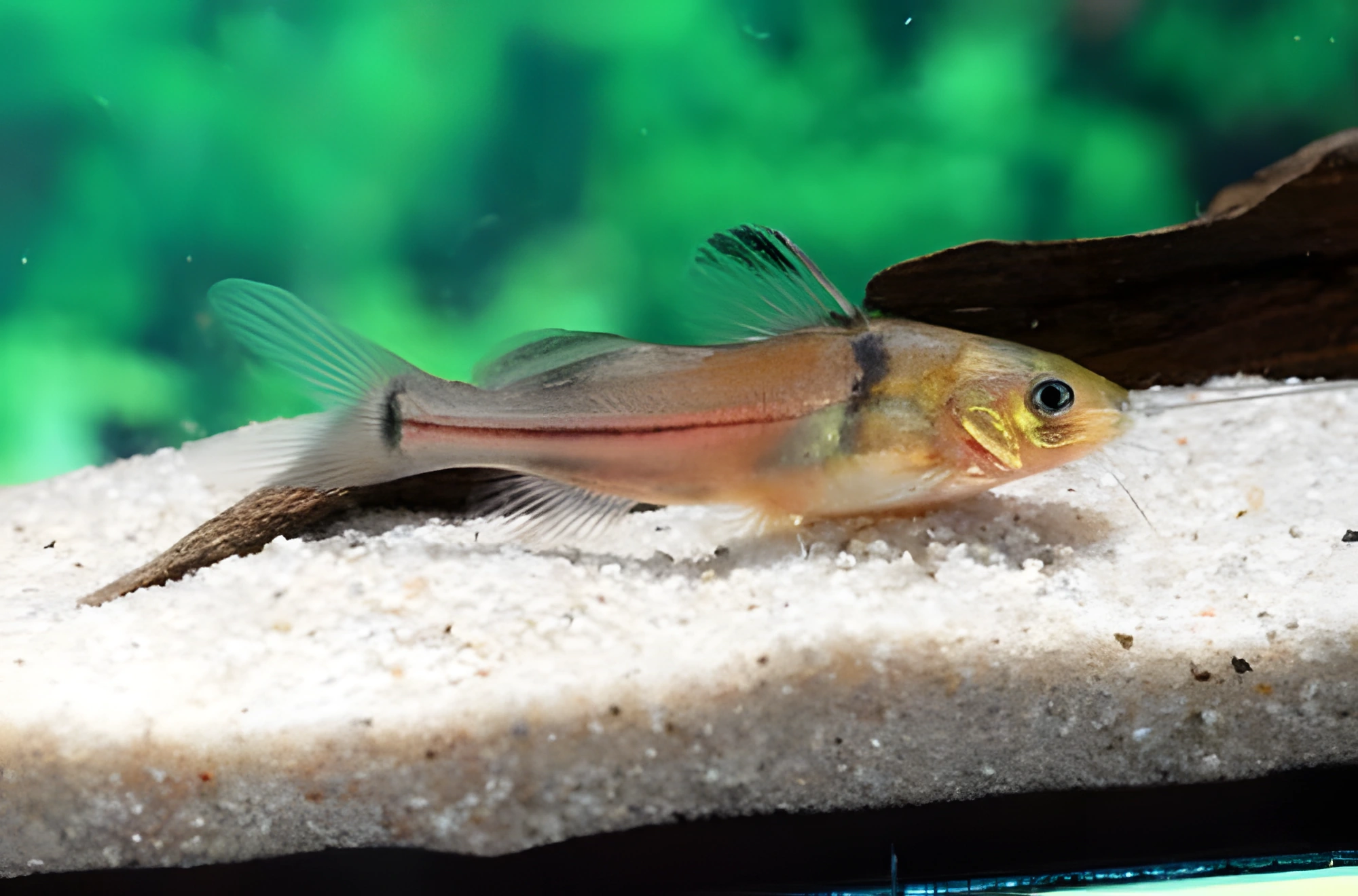
Adults grow to about 8 cm in length. Their coloration is pale gray, with a lighter stripe running through the middle of the body, crossed by a thin black line at the base of the tail. This pattern resembles a needle or pin, which gave the species its name. Males and females are almost indistinguishable, as sexual dimorphism is extremely subtle.
Habitat
The species originates from South America, although its exact habitat range is still undetermined. These catfish were first exported from the city of Belém, located at the mouth of the Amazon, in the mid-1980s. There is evidence that they are found throughout the region; for example, several individuals identified as Brachyrhamdia meesi were found in the Madre de Dios River, in the upper Amazon basin in northern Bolivia.
Behavior and Compatibility
This species is characterized by a calm and non-aggressive nature. Nevertheless, like many catfish, it may eat small fish due to its indiscriminate feeding habits. Interactions with conspecifics are not particularly social, but no conflicts are observed among them. These catfish can be kept either individually or in groups, if the aquarium size permits.
Care and Maintenance
For a single fish, the minimum tank volume should be at least 80 L. The aquarium setup is quite simple: the main element is a sandy substrate, supplemented by several hiding places made of driftwood. Plants are not mandatory, but floating plants can create the desired shading in the aquarium. Pin Catfish prefer subdued lighting and will spend more time in hiding under bright light. The water should be slightly acidic in pH and have low carbonate hardness. Special attention should be paid to water quality: catfish do not tolerate the accumulation of organic waste, so an efficient filtration system and weekly water changes of 15–20% of the volume are essential.
Diet
In their natural habitat, the diet of these fish consists of aquatic invertebrates. In the aquarium, it is recommended to regularly include live and frozen foods in their menu, such as bloodworms and small earthworms, which will serve as an excellent supplement to dry sinking foods.
Breeding and Reproduction
Successful breeding of the Pin Catfish in aquarium conditions has not been recorded. Most individuals entering aquariums come from the wild.
Diseases
The species is sensitive to water quality and does not tolerate the accumulation of organic waste, which can lead to bacterial infections and damage to their sensitive barbels. Prevention involves maintaining a clean environment, regular water changes, and using a soft sandy substrate to prevent injury to the mouth. If maintenance conditions are violated, the fish become susceptible to skin diseases and fin erosion.
How to choose
When selecting individuals, attention should be paid to the fish's activity and the integrity of its skin. A healthy fish should exhibit exploratory behavior, actively move along the bottom, and have clean, undamaged barbels. Avoid purchasing specimens with signs of emaciation, sunken bellies, spots on the body, or clamped fins. Since the species often enters the trade as bycatch, it is important to carefully inspect the fish for any injuries sustained during transport.
Frequently asked questions
The essentials: size, tank volume, water parameters and care
How big does Pin Catfish get?
An adult reaches 8 cm in length. Plan the tank around the maximum size: the fish quickly outgrows a cramped setup.
What size aquarium does Pin Catfish need?
The minimum recommended volume is 80 L. A smaller tank speeds up nitrate build-up and raises stress levels.
What water parameters does Pin Catfish need?
Temperature 24–28 °C, pH 6–7.5, hardness 1–10 dGH. Stability matters more than exact values: sudden swings are harder on the fish than a small deviation from the ideal.
How long does Pin Catfish live?
Around 7 years when kept properly. Lifespan depends directly on tank volume, water quality and a varied diet.
Is Pin Catfish aggressive?
Temperament: semi-peaceful (including aggression during spawning / intraspecific conflicts). Keep this in mind when choosing tank mates.
How many Pin Catfish should be kept together?
Recommended setup: both solitary and in group (flexible). Ignoring this is a common cause of stress and disease.
What does Pin Catfish eat?
Diet type: plant-based (algae, vegetables). Feed small portions that are finished within a couple of minutes — overfeeding does more harm than underfeeding.
What is the scientific name of Pin Catfish?
The scientific name of the species is Brachyrhamdia meesi, family Heptapteridae. It also appears in the literature as: Pimelodella meesi.