Temperature17 – 23 °C
Natural range
- Kanchanaburi Province area
- Thailand area
CatfishConservation status: Data deficient DD
The Batasio Catfish, scientifically known as Batasio tigrinus, belongs to the Bagridae family (Bagrid Catfishes). These fish are peaceful and calm, easy to care for, and readily coexist with various species. Their coloration is sometimes noted as being subdued.
- Required aquarium volume
- 100 L
- Size in aquarium
- 7 – 8 cm
- Temperature
- 17 – 23 °C
- Temperament
- Peaceful (regular)
Parameters
Water pHSlightly acidic (6) – Neutral (7)
Water dHVery soft (3) – Hard (15)
Water salinityno salt (freshwater)
Size in aquarium7 – 8 cm
Lifespan6 years
TemperamentPeaceful (regular)
Toward small fishnot a predator
Required aquarium volume100 L
Lightingmoderate (regular)
Substraterocky (rock formations, boulders, etc.)
Water flowmoderate or strong
FeedingSinking (any)
CareBoth solitary and in group (flexible)
Description
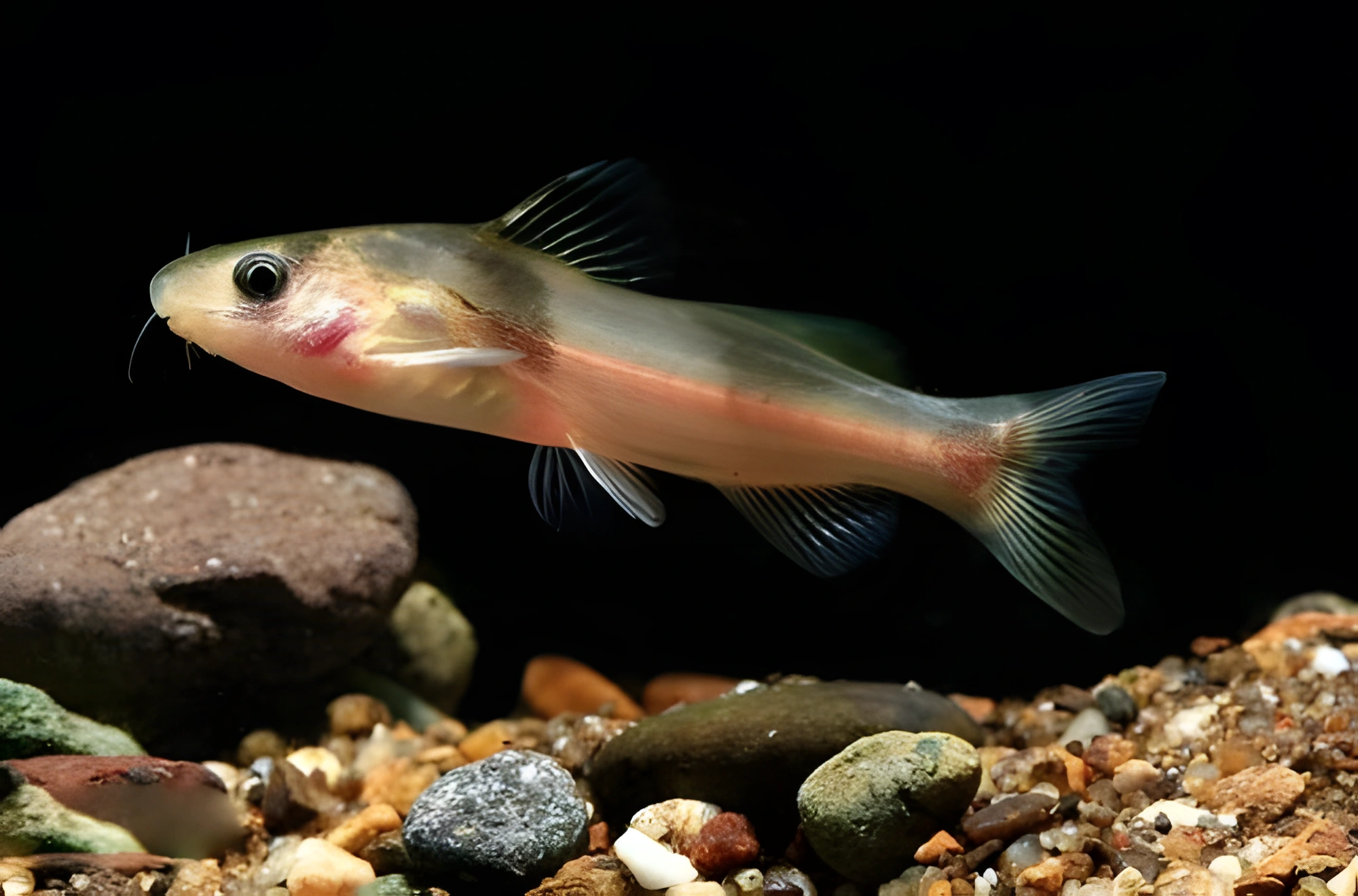
Adults of this catfish can reach a length of 7–8 cm. Their body appears somewhat laterally compressed, and the head is large and blunt. The dorsal fin is divided into two parts: the first part is high, with almost vertically oriented rays, while the second, low part, is ribbon-shaped, extending to the tail. Young fish have a pinkish hue, which changes to brown with age. The body pattern consists of dark pigment spots forming wide stripes.
Habitat
Its origin is associated with Southeast Asia, specifically Kanchanaburi Province in western Thailand. This species is considered endemic to the Khwae Yai River basin. Its typical habitat includes small rivers and streams in mountainous areas, where the current is often fast, sometimes even turbulent. The bottom of these bodies of water consists of small stones, sand, and gravel, along with large boulders. The absence of aquatic vegetation is characteristic. The water in such places is usually clear, except during the rainy season, and always rich in oxygen.
Behavior and Compatibility
This peaceful and calm species coexists perfectly with other non-aggressive fish of comparable size that can live in similar conditions. No signs of intraspecific conflicts are observed.
Care and Maintenance
For a group of 3–4 individuals, an aquarium of at least 100 liters is recommended. The setup should mimic the natural habitat, primarily using stones, gravel, and several large snags. For plants, choose undemanding species that can attach to wood and withstand turbulent conditions; these include, for example, Anubias, Bolbitis, and Java fern. To create the necessary current in the aquarium, additional pumps can be installed; sometimes a powerful filtration system can provide internal water movement. Batasio Catfish, originating from flowing waters, require exceptionally clean and well-oxygenated water. Therefore, in addition to a powerful filter, an aerator is an essential piece of equipment. Maintaining high water quality depends not only on the stable operation of the equipment but also on regular aquarium maintenance, which includes weekly water changes of 30–50% of the volume with fresh water of identical temperature, pH, and dGH parameters, as well as the removal of organic waste such as food remnants and excrement.
Diet
Being an omnivorous species, this catfish readily accepts most common aquarium fish foods. It is important that the food is sinking, as Batasio feeds exclusively at the bottom.
Breeding and Reproduction
It is observed that successful breeding of these fish in artificial conditions is quite rare. In their natural environment, their spawning coincides with the rainy season, which is characterized by a significant increase in water levels and changes in its hydrochemical characteristics. If an aquarist wishes to stimulate spawning in their pets, they will need to recreate these natural processes. For example, one could try to gradually change a significant portion of the water (from 50% to 70%) over a week, while simultaneously lowering the temperature by 4–5 degrees, bringing it down to 17°C, and establishing a neutral pH level (7.0). These conditions would need to be maintained for approximately two weeks. Notably, during reproduction, these catfish do not form a clutch but prefer to scatter their eggs directly onto the substrate, distributing them over a certain area. Since they lack parental instincts, there is a risk that adults may eat their offspring. The incubation period is about 2 days. After this, the fry, after some time, begin to swim actively, independently searching for food.
Diseases
Under favorable conditions, fish rarely experience health deterioration. The onset of diseases usually indicates problems in husbandry, such as polluted water, poor quality food, or injuries. In most cases, eliminating the root cause leads to recovery, but sometimes medication may be required. More detailed information on symptoms and treatment methods can be found in the "Aquarium Fish Diseases" section.
How to choose
When selecting Batasio tigrinus, it is important to ensure there are no external injuries, such as ulcers, whitish spots, or damaged fins, as this species is sensitive to water quality and stress during transport. Healthy individuals should be active, show interest in foraging, and have clear, transparent eyes. Avoid purchasing fish with sunken bellies or signs of apathy, as this often indicates emaciation or hidden diseases caused by improper conditions in the store. Since the species is rarely available for sale, it is recommended to inquire in advance with the seller about the living conditions and diet the fish are already accustomed to, to minimize stress during the move to a new aquarium.
Frequently asked questions
The essentials: size, tank volume, water parameters and care
How big does Batasio Catfish get?
An adult reaches 7–8 cm in length. Plan the tank around the maximum size: the fish quickly outgrows a cramped setup.
What size aquarium does Batasio Catfish need?
The minimum recommended volume is 100 L. A smaller tank speeds up nitrate build-up and raises stress levels.
What water parameters does Batasio Catfish need?
Temperature 17–23 °C, pH 6–7, hardness 3–15 dGH. Stability matters more than exact values: sudden swings are harder on the fish than a small deviation from the ideal.
How long does Batasio Catfish live?
Around 6 years when kept properly. Lifespan depends directly on tank volume, water quality and a varied diet.
Is Batasio Catfish aggressive?
Temperament: peaceful (regular). Keep this in mind when choosing tank mates.
How many Batasio Catfish should be kept together?
Recommended setup: both solitary and in group (flexible). Ignoring this is a common cause of stress and disease.
What does Batasio Catfish eat?
Diet type: sinking (any). Feed small portions that are finished within a couple of minutes — overfeeding does more harm than underfeeding.
What is the scientific name of Batasio Catfish?
The scientific name of the species is Batasio tigrinus, family Bagrid Catfishes (Bagridae).