Temperature20 – 28 °C
Natural range
- Brazil area
CatfishConservation status: Least concern LC
Other scientific names: Corydoras pauciradiatus
A member of the Callichthyidae family, the Aspidoras catfish, known as Aspidoras pauciradiatus, is an excellent choice for almost any community aquarium. It adapts to various diets and keeping conditions, demonstrating compatibility with most small fish species. Some may consider its modest coloration a drawback, but this is quite typical among catfish.
- Required aquarium volume
- 40 L
- Size in aquarium
- 2.5 – 5 cm
- Temperature
- 20 – 28 °C
- Temperament
- Peaceful (regular)
Parameters
Water pHSlightly acidic (6) – Neutral (7)
Water dHVery soft (2) – Hard (12)
Water salinityno salt (freshwater)
Size in aquarium2.5 – 5 cm
Lifespan5 years
TemperamentPeaceful (regular)
Toward small fishnot a predator
Required aquarium volume40 L
Lightingdimmed or moderate
Substratesandy (regular, light)
Water flowweak or moderate
FeedingAny (universal)
CareSmall group (3–4 individuals)
Description
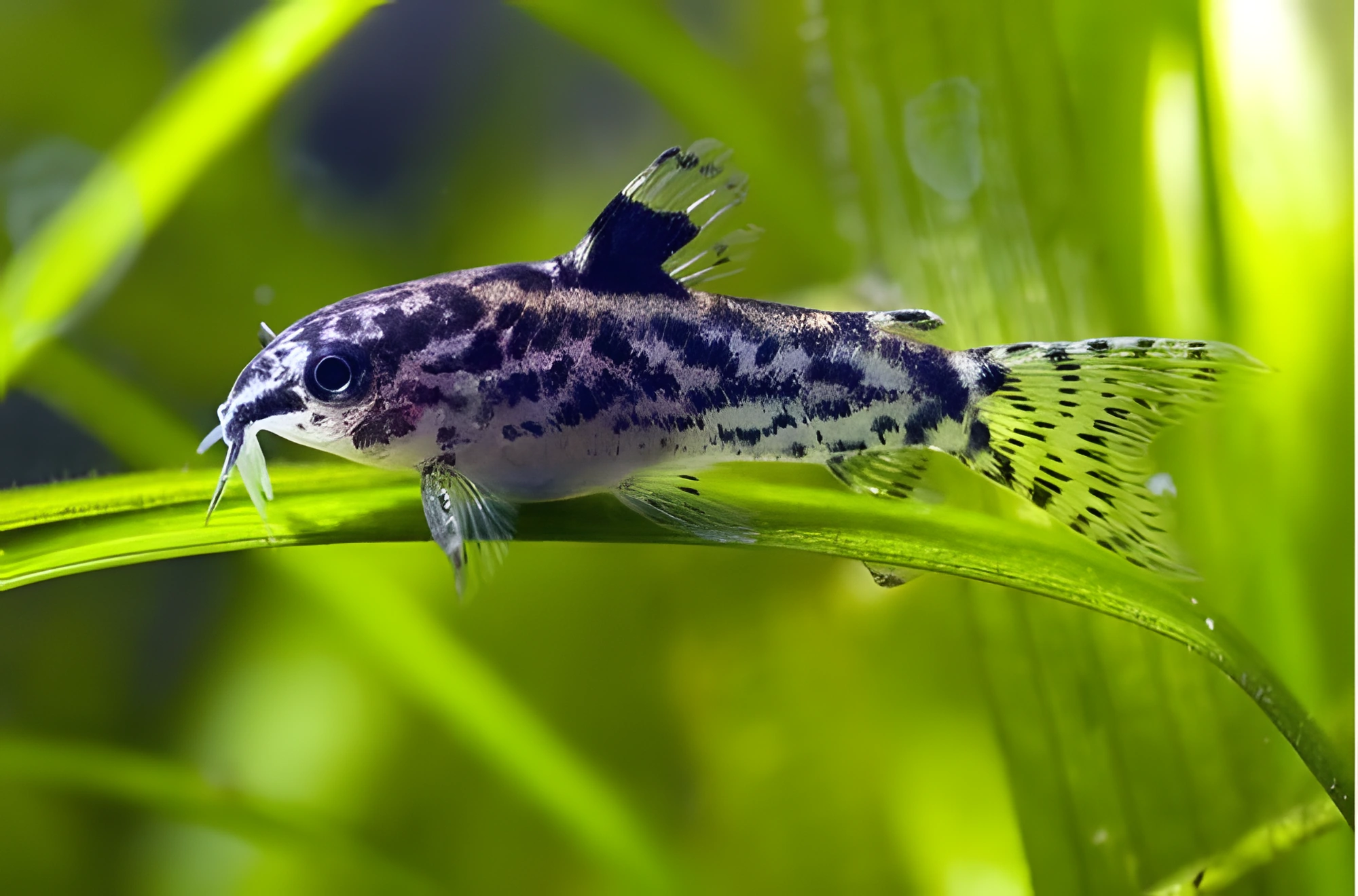
Adults reach no more than 3 cm in length. Their light coloration is adorned with numerous black speckles that spread over the entire body, including the caudal and dorsal fins. Near their mouths, they have several barbels used for searching for food on the bottom. Distinguishing males from females is quite difficult, as sexual dimorphism is weakly expressed.
Habitat
Its natural habitat is a limited area of the upper Araguaia River basin, located in modern-day Brazil. This river flows south of the Amazon, through subequatorial forests and evergreen gallery areas.
Behavior and Compatibility
These peaceful and friendly fish get along well with other calm, small-sized species. Keeping them alone is undesirable, as the catfish become timid, experience stress, which can lead to refusal to eat and a tendency to hide. It is recommended to keep them in a group of 4 to 6 individuals.
Care and Maintenance
A group of these fish requires a tank volume of 40 to 50 liters. The main attention should be paid to the substrate; soft sand or fine gravel is preferred. The rest of the aquarium decor can be chosen depending on the needs of other inhabitants. It is recommended to provide shelters, such as snags or decorative elements, which is especially important when keeping Aspidoras with larger fish. Optimal water parameters include a slightly acidic pH and low carbonate hardness, with a comfortable temperature of 20 to 27°C. These catfish are sensitive to water quality, so an effective filtration system and regular cleaning of the substrate from organic debris are necessary. It is also important to perform weekly water changes of 15–20% of the volume with fresh water.
Diet
This catfish accepts a wide range of foods: dry, frozen, and live, provided the particle size is suitable. It is important that the food is sinking. A varied menu positively affects the overall well-being and appearance of the fish.
Breeding and Reproduction
Breeding Aspidoras at home is usually not difficult, and fry can appear at any time of the year. However, spawning can be stimulated by gradually lowering the water temperature to 20–22°C over several days and then maintaining it at this level, while a large amount of live or frozen food is recommended to be introduced into the diet. This mimics the conditions of the rainy season, which in nature promotes the reproduction of this species. After spawning, the eggs should be transferred to a separate tank, for example, a three-liter jar with identical water parameters, to protect them from being eaten by other fish.
Diseases
The main cause of most diseases in Leaf Fish is unsuitable keeping conditions and poor-quality nutrition. If initial symptoms are observed, it is first necessary to check water parameters and the concentration of dangerous substances such as ammonia, nitrites, and nitrates. If the indicators deviate from the norm, they should be brought back into order, and only then should treatment begin. More detailed information on symptoms and treatment methods can be found in the "Aquarium Fish Diseases" section.
How to choose
When choosing individuals in a store, pay attention to their activity: healthy fish are constantly searching for food, actively exploring the substrate. Avoid specimens with damaged barbels, signs of fin erosion, or visible spots and ulcers on the body. It is important to assess the overall condition of the group: the fish should exhibit schooling behavior and not appear emaciated. Since this species is sensitive to water quality, do not purchase individuals from aquariums with dead fish or signs of mass diseases.
Frequently asked questions
The essentials: size, tank volume, water parameters and care
How big does Aspidoras Catfish get?
An adult reaches 2.5–5 cm in length. Plan the tank around the maximum size: the fish quickly outgrows a cramped setup.
What size aquarium does Aspidoras Catfish need?
The minimum recommended volume is 40 L. A smaller tank speeds up nitrate build-up and raises stress levels.
What water parameters does Aspidoras Catfish need?
Temperature 20–28 °C, pH 6–7, hardness 2–12 dGH. Stability matters more than exact values: sudden swings are harder on the fish than a small deviation from the ideal.
How long does Aspidoras Catfish live?
Around 5 years when kept properly. Lifespan depends directly on tank volume, water quality and a varied diet.
Is Aspidoras Catfish aggressive?
Temperament: peaceful (regular). Keep this in mind when choosing tank mates.
How many Aspidoras Catfish should be kept together?
Recommended setup: small group (3–4 individuals). Ignoring this is a common cause of stress and disease.
What does Aspidoras Catfish eat?
Diet type: any (universal). Feed small portions that are finished within a couple of minutes — overfeeding does more harm than underfeeding.
What is the scientific name of Aspidoras Catfish?
The scientific name of the species is Aspidoras pauciradiatus, family Armored Catfish (Callichthyidae). It also appears in the literature as: Corydoras pauciradiatus.