Temperature16 – 24 °C
Natural range
- Chanthaburi Province area
- Thailand area
CatfishConservation status: Data deficient DD
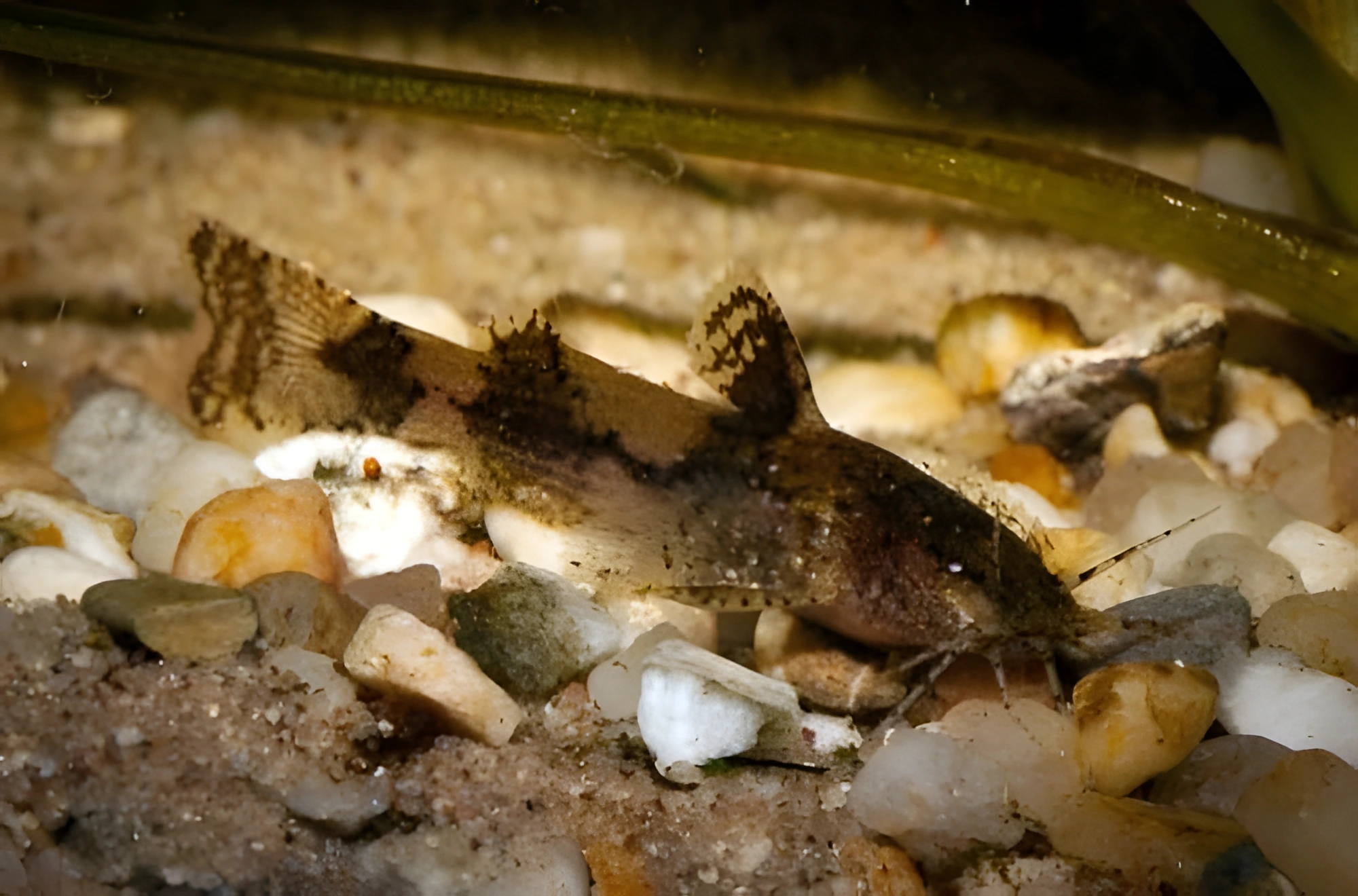
The Akysis Catfish, scientifically known as Akysis maculipinnis, is a member of the Akysidae family. This miniature fish, sometimes called tiny, can be difficult to spot in an aquarium due to its predominantly nocturnal lifestyle and tendency to seek shelter. Keeping this species is not difficult, and it coexists well with other non-aggressive tankmates.
- Required aquarium volume
- 40 L
- Size in aquarium
- 3 – 3.5 cm
- Temperature
- 16 – 24 °C
- Temperament
- Peaceful (regular)
Parameters
Water pHSlightly acidic (6) – Neutral (7.5)
Water dHVery soft (2) – Hard (12)
Water salinityno salt (freshwater)
Size in aquarium3 – 3.5 cm
Lifespan5 years
TemperamentPeaceful (regular)
Toward small fishnot a predator
Required aquarium volume40 L
Lightingany
Substrategravel (dark)
Water flowmoderate or strong
FeedingMeat / protein (live, frozen, fresh)
CareBoth solitary and in group (flexible)
Description
Adults of this species reach approximately 3 cm in length. A notable feature of the fish is its large pectoral and dorsal fins, the initial rays of which are modified into sharp spines. These spines contain a small amount of venom, which is not dangerous to humans, but a prick can cause considerable pain. The fish has a large, noticeably flattened head, adorned with eight barbels. The body coloration is gray-brown with characteristic dark pigmentation. Sexual dimorphism in this species is weakly expressed, making it difficult to determine the sex of males or females.
Habitat
Its homeland is Southeast Asia, specifically eastern Thailand, Chanthaburi province. The catfish inhabits the basin of the river of the same name, preferring areas with fast currents and a bottom covered with stony substrate, sand, gravel, and rocks. Typically, the water here is clear and contains only minor suspended particles, excluding rainy periods. Aquatic vegetation is usually absent.
Behavior and Compatibility
This fish is peaceful and calm; it can live both alone and in a group of its kind. For tankmates, it is recommended to choose non-aggressive fish of similar size, such as rasboras, danios, and the like.
Care and Maintenance
For a group of 3–4 fish, the minimum aquarium volume starts from 40 L. Akysis catfish love to dig in the substrate and seek refuge in crevices. Therefore, the aquarium design should include a soft substrate and several shelters, which can be created from piles of large stones, rocks, and branched driftwood. Aquatic plants are not mandatory. If desired, artificial vegetation or undemanding species that can attach to hard surfaces, such as Anubias, Microsorum pteropus, or Bucephalandra, can be used. If plants are planted directly in the substrate, there is a high risk that the fish will uproot them. Like many other fish that live in flowing waters in nature, this catfish species is very sensitive to water quality and cannot tolerate the accumulation of organic waste. The aquarium must be equipped with all necessary equipment, primarily a reliable filtration system. Regular aquarium maintenance is also mandatory: this includes partial water changes, removal of excrement and food residues, and cleaning of glass and decorative elements.
Diet
Feeding occurs at dusk or at night; the catfish search for food in the bottom layer, hunting small zooplankton. Wild-caught specimens will likely not accept dry foods, and captive-bred fish may exhibit the same behavior. Before purchasing, it is important to clarify what type of food they are accustomed to. In any case, their diet should consist primarily of high-protein food, such as live or frozen brine shrimp, daphnia, or bloodworms.
Breeding and Reproduction
In natural conditions, during the breeding season, these fish lay eggs directly on the substrate, without forming a complete clutch. The eggs, carried by the current, can be transported over significant distances, which serves as a form of protection against predation. This catfish species completely lacks parental instincts: given a favorable opportunity, they will certainly feast on their offspring. The incubation period for the eggs is approximately 3 days. A week after hatching, the fry are already actively swimming and looking for food. Breeding Akysis catfish in home aquariums is challenging due to the absence of clear precursors to spawning and their predatory behavior towards their own eggs. Additionally, there is an increased likelihood of missing the moment of reproduction, which often occurs at night.
Diseases
In favorable conditions, fish rarely experience health deterioration. The onset of diseases usually indicates problems in husbandry, such as contaminated water, poor-quality food, or injuries. In most cases, eliminating the root cause leads to recovery, but sometimes medication may be required. More detailed information on symptoms and treatment methods can be found in the "Diseases of Aquarium Fish" section.
How to choose
When purchasing, choose active individuals without visible skin damage, ulcers, or signs of emaciation. Since Akysis catfish lead a secretive, nocturnal lifestyle, they often hide in the store, so it is important to ask the seller to monitor their reaction to food to ensure there are no appetite problems.
- Clarify what type of food the fish are accustomed to, as wild-caught specimens may refuse dry pellets in favor of live or frozen products.
- Inspect the fins: they should not show signs of splitting or film, as fish are sensitive to water quality and may be weakened by improper keeping.
- Remember the sharp spines on their fins, which require the use of thick bags during transport to avoid punctures.
Frequently asked questions
The essentials: size, tank volume, water parameters and care
How big does Akysis Catfish get?
An adult reaches 3–3.5 cm in length. Plan the tank around the maximum size: the fish quickly outgrows a cramped setup.
What size aquarium does Akysis Catfish need?
The minimum recommended volume is 40 L. A smaller tank speeds up nitrate build-up and raises stress levels.
What water parameters does Akysis Catfish need?
Temperature 16–24 °C, pH 6–7.5, hardness 2–12 dGH. Stability matters more than exact values: sudden swings are harder on the fish than a small deviation from the ideal.
How long does Akysis Catfish live?
Around 5 years when kept properly. Lifespan depends directly on tank volume, water quality and a varied diet.
Is Akysis Catfish aggressive?
Temperament: peaceful (regular). Keep this in mind when choosing tank mates.
How many Akysis Catfish should be kept together?
Recommended setup: both solitary and in group (flexible). Ignoring this is a common cause of stress and disease.
What does Akysis Catfish eat?
Diet type: meat / protein (live, frozen, fresh). Feed small portions that are finished within a couple of minutes — overfeeding does more harm than underfeeding.
What is the scientific name of Akysis Catfish?
The scientific name of the species is Akysis maculipinnis, family Akysidae.