Temperature19 – 26 °C
Natural range
- Northern South America area
- Atlantic Ocean drainages area
CatfishConservation status: Least concern LC
Other scientific names: Acipenser plecostomus, Acipenser spec, Hypostomus guacari, Loricaria flava, Plecostomus bicirrosus, Plecostomus brasiliensis
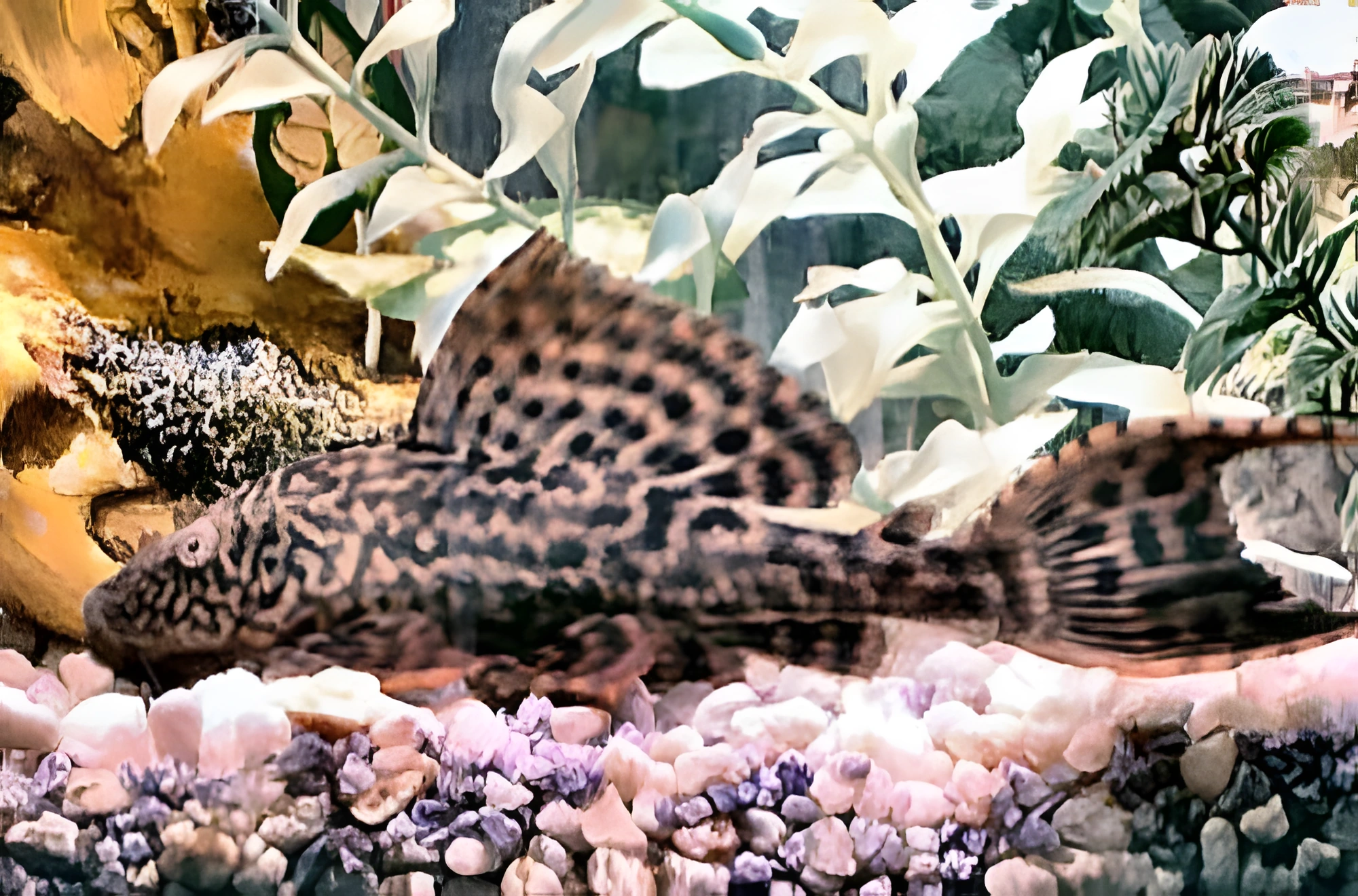
The Plecostomus, also known as the Sucker Catfish, belongs to the family Loricariidae under the scientific name Hypostomus plecostomus. Various varieties of this fish, including albino individuals, have been artificially bred for the aquarium trade in several Asian countries. This species is highly valued for its unpretentiousness and hardiness, and it is also effectively used to control algae in aquariums.
- Required aquarium volume
- 200 L
- Size in aquarium
- 35 cm
- Temperature
- 19 – 26 °C
- Temperament
- Territorial (often aggressive)
Parameters
Water pHNeutral (6.5) – Slightly alkaline (8)
Water dHVery soft (2) – Very hard (25)
Water salinitywide range (from ~1 to ~20 g/L)
Size in aquarium35 cm
Lifespan15 years
TemperamentTerritorial (often aggressive)
Toward small fishnot a predator
Required aquarium volume200 L
Lightingany
Substrateany (no restrictions)
Water flowmoderate
FeedingPlant-based (algae, vegetables)
CareSolitary
Description
The catfish's body is elongated, except for the abdominal part, and covered with bony plates. A high dorsal fin is located on its back, which increases in size as the fish grows; the caudal fin is crescent-shaped. The mouth, which is a rounded suction cup with smooth edges, allows the catfish to attach to surfaces, scraping and eating algae. The standard coloration is light brown with dark spots all over the body, giving the fish a rather dark appearance. In natural conditions, the catfish can reach up to 60 cm in length, but in an aquarium, its size rarely exceeds 30–35 cm, and its lifespan in captivity is 10–15 years. It leads a predominantly nocturnal lifestyle, preferring to hide in shelters during the day.
Habitat
In 1758, Carl Linnaeus first described the Plecostomus (Hypostomus plecostomus). This catfish is widely distributed in the northern regions of South America, inhabiting various bodies of water: from ponds to brackish waters of river estuaries flowing into both the Pacific and Atlantic Oceans. The name "Plecostomus" means "folded mouth" and is applied to many species with a suction-cup-shaped mouth.
Behavior and Compatibility
Herbivorous fish are generally peaceful, and a young Sucker Catfish is no exception. However, its behavior undergoes some changes with age. While the fish is young, it lives perfectly well with all peaceful species, but an adult becomes territorial and actively drives other fish away from its shelter. Clashes become especially aggressive when new conspecifics appear or with fish that have similar habitat requirements (e.g., eels or other catfishes).
Care and Maintenance
Although water composition does not present critical requirements, its purity must be maintained at a high level. To prevent contamination, effective filtration and regular partial water changes are necessary—optimally, at least 15% of the volume should be replaced once a month. For adult individuals of this large species, a spacious aquarium of at least 200 liters will be required. It is recommended to actively use wood elements in the aquarium decor: snags, roots, and other natural materials. The use of wood solves two key tasks: it serves as a source of necessary shelters for the fish and simultaneously creates a suitable basis for algae growth. An ideal shelter is formed by a combination of wood elements and planted vegetation around them, with the plants needing to have a strong root system and stiff leaves.
Diet
The main component of these fish's diet is algae, which they scrape from the aquarium walls, decorations, and vegetation, without causing any harm to the latter. To ensure natural algae growth, good lighting must be maintained and wooden elements used in the aquarium decor. However, given the size of the adult fish, the natural growth of algae in an aquarium is insufficient, so daily plant supplements are essential. Commercial dry plant foods (granules, flakes) are used as additional feeds, as well as vegetables anchored to the bottom (e.g., lettuce, spinach, peas). Small crustaceans, insect larvae, and earthworms can help diversify their menu. Feeding is recommended in the evening, before turning off the lights, as the catfish is active at night. In case of insufficient food, the fish may start damaging aquarium plants.
Breeding and Reproduction
Determining the sexual differences in Plecostomus is extremely difficult; only experienced breeders can reliably determine the sex of the fish. In their natural environment, catfishes spawn in deep burrows dug into silty riverbanks. The pair lays about 300 eggs, which the male guards throughout the maturation period. In home aquariums, successful breeding cases have not been recorded. For mass sale, fish are bred in specialized nurseries located in Singapore, Hong Kong, and Florida.
Diseases
Thanks to its hardiness, in optimal keeping conditions, the fish is practically not susceptible to diseases. If the immune system is weakened, for example, due to poor water quality or injury, the body becomes vulnerable to the same diseases as other tropical fish. More detailed information on possible ailments can be found in the "Aquarium Fish Diseases" section.
How to choose
When purchasing, choose active individuals with clean skin without visible damage, ulcers, or white spots. Avoid fish with sunken bellies or signs of emaciation, as this may indicate internal diseases or parasites. In the store, a healthy plecostomus is usually at the bottom or attached to the aquarium walls, showing caution when a person approaches. Before purchasing, it is important to consider that this species grows to a significant size, so make sure your aquarium meets the volume requirements for an adult specimen.
Frequently asked questions
The essentials: size, tank volume, water parameters and care
How big does Sucker Catfish get?
An adult reaches 35 cm in length. Plan the tank around the maximum size: the fish quickly outgrows a cramped setup.
What size aquarium does Sucker Catfish need?
The minimum recommended volume is 200 L. A smaller tank speeds up nitrate build-up and raises stress levels.
What water parameters does Sucker Catfish need?
Temperature 19–26 °C, pH 6.5–8, hardness 2–25 dGH. Stability matters more than exact values: sudden swings are harder on the fish than a small deviation from the ideal.
How long does Sucker Catfish live?
Around 15 years when kept properly. Lifespan depends directly on tank volume, water quality and a varied diet.
Is Sucker Catfish aggressive?
Temperament: territorial (often aggressive). Keep this in mind when choosing tank mates.
How many Sucker Catfish should be kept together?
Recommended setup: solitary. Ignoring this is a common cause of stress and disease.
What does Sucker Catfish eat?
Diet type: plant-based (algae, vegetables). Feed small portions that are finished within a couple of minutes — overfeeding does more harm than underfeeding.
What is the scientific name of Sucker Catfish?
The scientific name of the species is Hypostomus plecostomus, family Armored Catfishes (Loricariidae). It also appears in the literature as: Acipenser plecostomus, Acipenser spec, Hypostomus guacari.