Temperature24 – 28 °C
Natural range
- West Africa area
- Central Africa area
CatfishConservation status: Least concern LC
Other scientific names: Pantodon buchholtzi
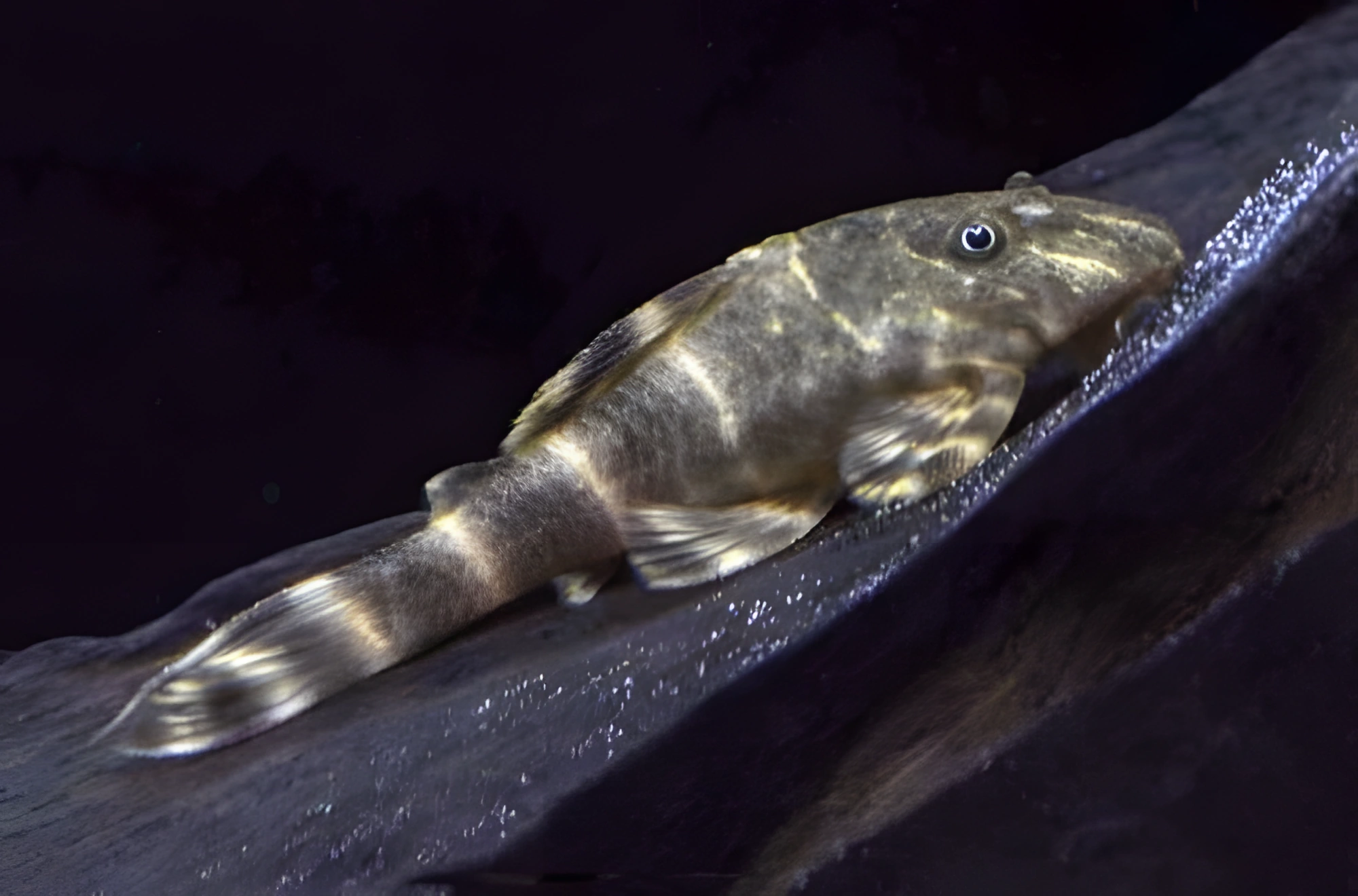
Dekeyseria pulchra, also known as Butterfly Pleco or Banded Peckoltia (formerly Peckoltia pulcher), is a catfish species inhabiting the waters of South America. It can be found in the basins of the Rio Negro and Orinoco rivers, extending across Colombia, Venezuela, and northern Brazilian states.
- Required aquarium volume
- 80 L
- Size in aquarium
- 10 – 15 cm
- Temperature
- 24 – 28 °C
- Temperament
- Peaceful, timid (shy)
Parameters
Water pHSlightly acidic (6) – Slightly alkaline (8)
Water dHSoft (5) – Very hard (19)
Water salinityno salt (freshwater)
Size in aquarium10 – 15 cm
Lifespan3 years
TemperamentPeaceful, timid (shy)
Toward small fishnot a predator
Required aquarium volume80 L
Lightingdimmed
Substrateany (no restrictions)
Water flowweak or moderate
FeedingPlant-based (algae, vegetables)
CareBoth solitary and in group (flexible)
Description
This catfish has a flattened body topped with a large, conical head. Adults grow to approximately 10 cm in length. Their eyes are set high, allowing for an almost 180-degree view of their surroundings. The entire body is covered with bony plates studded with short, sharp spines, which are also present on the first rays of the fins. The fish's coloration can vary significantly, adapting to environmental conditions. The color can change from light gray with a greenish tint to almost black, but the pattern of 7–8 dark transverse stripes always remains constant.
Habitat
This species inhabits freshwater bodies in West and Central Africa, including the Niger and Congo river basins, Lake Chad, and the upper Zambezi. It prefers still or slow-moving waters with dense vegetation, such as swamps, backwaters, and river sections with abundant floating plants that provide cover. In nature, these fish stay in the surface layer of the water, where the temperature typically ranges from 23–30 °C, and the water is characterized by softness and slight acidity.
Behavior and Compatibility
This peaceful but timid fish prefers to hide in shelters, avoiding overly active tank mates. It coexists well with most non-aggressive species of comparable size. Good choices for tank mates include fish that inhabit the middle or upper layers of the water column.
Care and Maintenance
For a single catfish, the optimal aquarium size starts from 80–100 liters. In terms of decor, the presence of shelters and natural wood elements, such as various shaped snags, is fundamentally important. Under certain conditions, algae can grow on the snags, serving as an additional food source for the Banded Peckoltia. Otherwise, the decor is chosen at the aquarist's discretion. Warm, slightly acidic water with dH values not exceeding 19 is considered comfortable for these fish. The accumulation of organic waste, which can significantly degrade water quality, must be avoided. Weekly aquarium maintenance is absolutely necessary, along with a stable filtration system, which is especially important for bottom dwellers.
Diet
The diet of the Banded Peckoltia should be based on foods with a high content of plant components, as they can subsist exclusively on a plant-based diet, including algae. Dry sinking foods such as flakes, granules, and tablets are excellent for this, as are fresh vegetable pieces like zucchini, cucumber, spinach, or peas.
Breeding and Reproduction
Breeding in an aquarium is associated with difficulties. Spawning requires a spacious tank with soft and acidic water (pH 6.0–6.5) at a temperature of 25–27 °C. Males differ from females in the shape of their anal fin: males have a notch, while females have a straight edge. A gradual lowering of the water level followed by the addition of fresh water serves as a spawning trigger. The eggs float on the surface; after spawning, the parents must be removed to prevent cannibalism. Rearing the fry requires very fine live food, as the young only feed on moving prey.
Diseases
Butterfly fish are sensitive to abrupt changes in water parameters and environmental quality. Major health problems often arise from an improper diet or poor aquarium hygiene. The species is susceptible to fungal and bacterial infections, which can develop if fins are damaged or due to stress. Prevention includes maintaining stable conditions, using high-quality live food, and avoiding aggressive tank mates that could injure the long rays of the pelvic fins.
How to choose
When purchasing, select active individuals with undamaged fins and clear eyes. It is important to inspect the fish for external signs of parasites or skin erosion. Since the species is a specialized predator, it is worth clarifying whether the individual is accustomed to the food offered in the store. Avoid purchasing fish that appear emaciated or stay at the bottom, as this may indicate health or adaptation problems.
Frequently asked questions
The essentials: size, tank volume, water parameters and care
How big does Butterfly Pleco get?
An adult reaches 10–15 cm in length. Plan the tank around the maximum size: the fish quickly outgrows a cramped setup.
What size aquarium does Butterfly Pleco need?
The minimum recommended volume is 80 L. A smaller tank speeds up nitrate build-up and raises stress levels.
What water parameters does Butterfly Pleco need?
Temperature 24–28 °C, pH 6–8, hardness 5–19 dGH. Stability matters more than exact values: sudden swings are harder on the fish than a small deviation from the ideal.
How long does Butterfly Pleco live?
Around 3 years when kept properly. Lifespan depends directly on tank volume, water quality and a varied diet.
Is Butterfly Pleco aggressive?
Temperament: peaceful, timid (shy). Keep this in mind when choosing tank mates.
How many Butterfly Pleco should be kept together?
Recommended setup: both solitary and in group (flexible). Ignoring this is a common cause of stress and disease.
What does Butterfly Pleco eat?
Diet type: plant-based (algae, vegetables). Feed small portions that are finished within a couple of minutes — overfeeding does more harm than underfeeding.
What is the scientific name of Butterfly Pleco?
The scientific name of the species is Pantodon buchholzi, family Pantodontidae. It also appears in the literature as: Pantodon buchholtzi.