Temperature20 – 28 °C
Natural range
- Northern Australia area
- Southern Papua New Guinea area
- Australia area
- Papua New Guinea area
CatfishConservation status: Least concern LC
Other scientific names: Anyperistius perugiae, Copidoglanis brevidorsalis, Neosilurus bartoni, Tandanus brevidorsalis
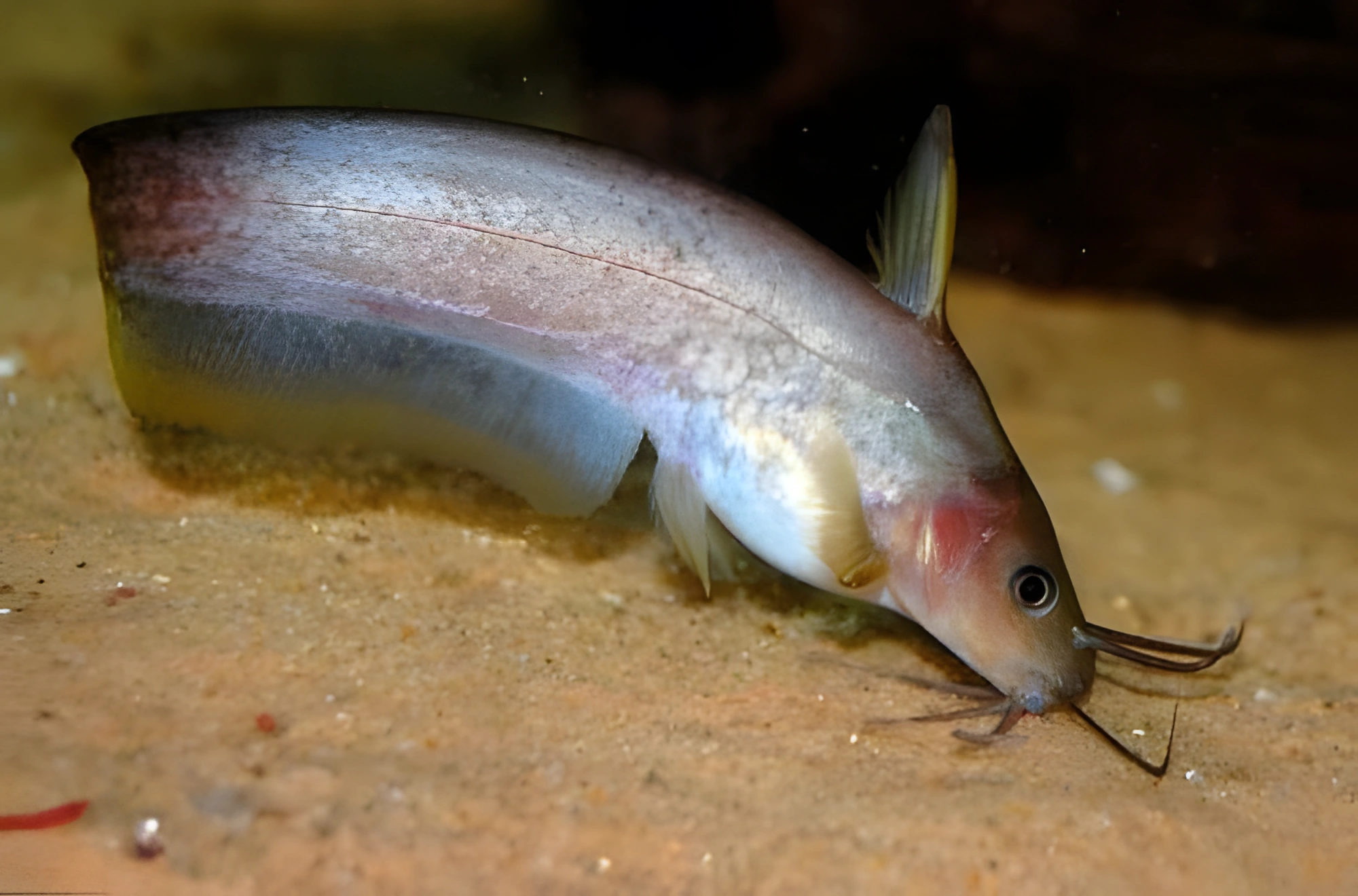
A representative of the Plotosidae family, known as Eel-tailed Catfish, the Australian Catfish (scientific name Neosilurus brevidorsalis) is a rather exotic guest from Australia. It is not often encountered in amateur aquaristics. This fish is undemanding and considered quite easy to keep, coexisting well with many freshwater species.
- Required aquarium volume
- 250 L
- Size in aquarium
- 15 – 20 cm
- Temperature
- 20 – 28 °C
- Temperament
- Peaceful (regular)
Parameters
Water pHSlightly acidic (6) – Neutral (7.5)
Water dHVery soft (2) – Hard (15)
Water salinityno salt (freshwater)
Size in aquarium15 – 20 cm
Lifespan10 years
TemperamentPeaceful (regular)
Toward small fishnot a predator
Required aquarium volume250 L
Lightingdimmed
Substrateany (no restrictions)
Water flowweak or moderate
FeedingSinking (any)
CareBoth solitary and in group (flexible)
Description
Adults reach approximately 20 cm in length. Their body is elongated, slightly flattened laterally. A characteristic feature is the absence of a distinct caudal fin, which is represented as a continuation of a very long anal fin, starting almost from the middle of the body. The other fins are relatively short. This anatomy results in an undulating swimming style, resembling the movements of an eel. The coloration of representatives of this species can vary from pale pink to dark gray, depending on the specific region from which the fish originates. Sexual dimorphism is poorly expressed in these fish, making it quite difficult to distinguish males and females.
Habitat
The natural habitat of this catfish extends across the northern part of Australia and encompasses the southern regions of Papua New Guinea. It is found in many large river systems in the region, not showing attachment to any specific biotope and inhabiting various sections of rivers.
Behavior and Compatibility
This is a peaceful and calm catfish species that coexists well with many other non-aggressive fish. However, due to its indiscriminate eating habits, it can pose a threat to very small fish, which may become part of its diet. No conflicts are observed between representatives of this species; they can exist both individually and in groups with their kin.
Care and Maintenance
For keeping a group of 2–3 individuals, the optimal aquarium volume should be at least 250 liters. The decor can be chosen at the discretion of the aquarist or considering the needs of other inhabitants. Nevertheless, it is recommended to create subdued lighting and provide several shelters where the fish can find refuge. Maintaining an aquarium with these catfish is relatively straightforward. Thanks to their adaptation to a wide range of hydrochemical parameters, the water preparation process for weekly partial water changes is significantly simplified. Maintaining favorable conditions in a closed ecosystem is also ensured by an effective filtration system and other necessary equipment, as well as regular procedures for removing organic waste and cleaning.
Diet
This species is omnivorous. The Australian Catfish eats almost anything it can find and swallow. In aquarium conditions, its diet can be varied and include popular dry, fresh, and frozen foods. An important condition is that the offered food must be sinking, as this catfish is very reluctant to rise to the water surface for food.
Breeding and Reproduction
In the natural environment, the breeding period of these catfish is directly related to the onset of the rainy season, which in the Southern Hemisphere falls in the summer months, approximately from December to March. During this period, partial flooding of coastal areas occurs due to river overflow, and the catfish move to these flooded areas for spawning. One adult female can lay over 1500 eggs. Parental instincts in Neosilurus brevidorsalis are not developed, so the eggs and hatching fry are left unattended. At the time of writing this description, there are no recorded cases of successful breeding of this species in home aquariums.
Diseases
Most health problems in fish often arise from unsuitable keeping conditions. Maintaining a stable and comfortable habitat is a key factor for successful keeping. If symptoms of illness appear, the first step is to check the water quality. If deviations are found, it is important to take immediate measures to eliminate them. If the symptoms do not disappear or worsen, medicinal treatment may be required. More detailed information on symptoms and treatment methods can be found in the "Diseases of Aquarium Fish" section.
How to choose
When purchasing, choose active individuals that show interest in food and have no visible skin damage. Healthy catfish should have spread fins and regular breathing. Avoid specimens with signs of emaciation, whitish spots, ulcers, or an unnatural coating on the body, as these may indicate bacterial or parasitic infections. Observe the fish's behavior in the store: a healthy catfish should be mobile, but also able to rest calmly in shaded areas of the aquarium. Given the rarity of the species for sale, ask the seller about the keeping conditions and the diet to which the fish is accustomed. Adaptation after transportation may take time, so it is important to provide clean water and shelters in the quarantine tank to reduce stress levels.
Frequently asked questions
The essentials: size, tank volume, water parameters and care
How big does Australian Catfish get?
An adult reaches 15–20 cm in length. Plan the tank around the maximum size: the fish quickly outgrows a cramped setup.
What size aquarium does Australian Catfish need?
The minimum recommended volume is 250 L. A smaller tank speeds up nitrate build-up and raises stress levels.
What water parameters does Australian Catfish need?
Temperature 20–28 °C, pH 6–7.5, hardness 2–15 dGH. Stability matters more than exact values: sudden swings are harder on the fish than a small deviation from the ideal.
How long does Australian Catfish live?
Around 10 years when kept properly. Lifespan depends directly on tank volume, water quality and a varied diet.
Is Australian Catfish aggressive?
Temperament: peaceful (regular). Keep this in mind when choosing tank mates.
How many Australian Catfish should be kept together?
Recommended setup: both solitary and in group (flexible). Ignoring this is a common cause of stress and disease.
What does Australian Catfish eat?
Diet type: sinking (any). Feed small portions that are finished within a couple of minutes — overfeeding does more harm than underfeeding.
What is the scientific name of Australian Catfish?
The scientific name of the species is Neosilurus brevidorsalis, family Eel-tailed Catfish (Plotosidae). It also appears in the literature as: Anyperistius perugiae, Copidoglanis brevidorsalis, Neosilurus bartoni.