Temperature23 – 28 °C
Natural range
- Mekong River Basin
- Laos area
- Cambodia area
- Thailand area
LoachesConservation status: Least concern LC
Other scientific names: Botia eos
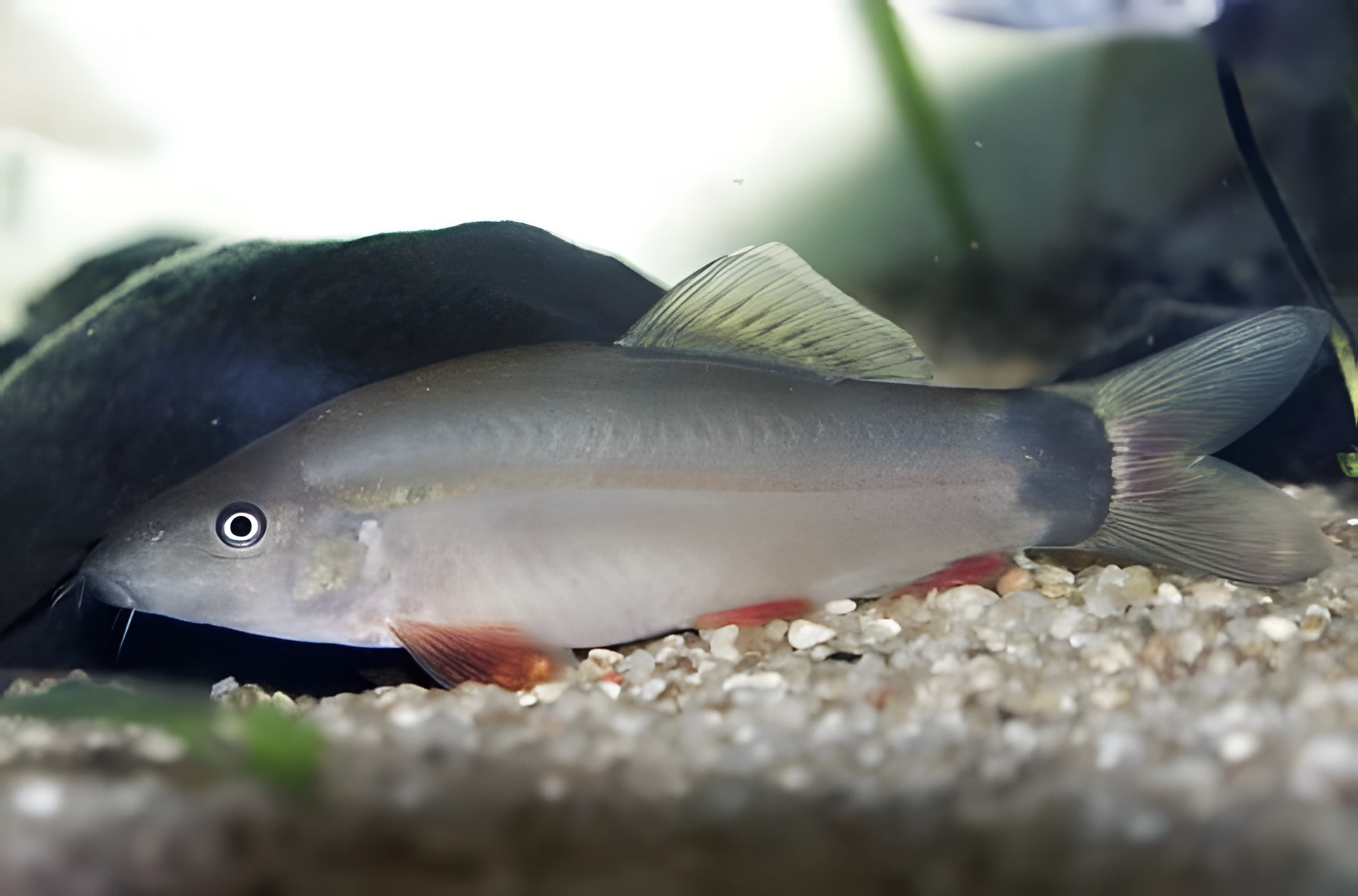
Yasuhikotakia eos, or Eos Loach, also known as the Sun Loach, belongs to the family Cobitidae. This species is not frequently found for sale, partly due to its unremarkable coloration and some difficulties in cohabiting with other aquarium inhabitants. Nevertheless, it is a rather hardy and undemanding fish, capable of successfully adapting to home aquarium conditions.
- Required aquarium volume
- 100 L
- Size in aquarium
- 10 – 11 cm
- Temperature
- 23 – 28 °C
- Temperament
- Aggressive / incompatible / unfriendly
Parameters
Water pHSlightly acidic (6) – Neutral (7.5)
Water dHVery soft (2) – Hard (12)
Water salinityno salt (freshwater)
Size in aquarium10 – 11 cm
Lifespan8 years
TemperamentAggressive / incompatible / unfriendly
Toward small fishnot a predator
Required aquarium volume100 L
Lightingdimmed
Substraterocky (rock formations, boulders, etc.)
Water flowweak
FeedingSinking (any)
CareSmall group (5–6 individuals)
Description
Adults reach a length of approximately 11 cm. Sexual dimorphism is weakly expressed: females are usually slightly larger than males. During spawning, males acquire a dark blue coloration and red fin margins. Specimens raised in commercial aquariums primarily have a gray-blue coloration. A dark “belt” can be seen near the base of the tail, and their fins are translucent and reddish. Juveniles have thin vertical stripes on their sides, which disappear with age. It is worth noting that wild individuals have brighter coloration—they are yellow or orange, which led to this species being called “Sun” or named after Eos, the Greek goddess of dawn.
Habitat
Its natural habitat is Southeast Asia, specifically the territories of Laos, Cambodia, and Thailand. The Eos Loach inhabits the middle and lower sections of the Mekong River basin, found in both main channels and tributaries. These fish prefer areas with moderate currents, where the bottom consists of silty sand or rocky substrates, the composition of which can change depending on the season and migratory cycles.
Behavior and Compatibility
These fish have a reputation for being quite aggressive and territorial. To a certain extent, this is true. The Eos Loach can attack smaller fish if they approach its hiding spot. To minimize such conflicts, it is advisable to choose species that prefer to inhabit the middle or upper water column as tank mates. It is recommended to keep them in groups of at least 5 individuals, as aggression levels decrease in the company of their own kind. In large aquariums, when in a large school, these fish become completely harmless.
Care and Maintenance
For a group of 5 fish, the optimal aquarium volume starts from 100 liters. The decor can be anything, the main thing is to have enough hiding places of suitable size. These can include driftwood, rock formations creating caves and crevices, as well as ordinary ceramic pots tilted on their side, or hollow tubes. In other words, anything that allows the fish to hide. Maintaining favorable conditions requires very clean water, moderate current, and subdued lighting. Using a powerful filter and weekly water changes of 30–50% of the volume with fresh water will help prevent the accumulation of organic waste, and its regular removal with a siphon is also strongly recommended.
Diet
This species is omnivorous and does not have special dietary requirements. Eos Loaches readily accept various foods: dry, frozen, and live. It is important that the food is sinking and includes vegetable components. As the latter, you can offer chopped domestic vegetables and fruits, such as zucchini, spinach, melon, cucumber, secured to the bottom in advance.
Breeding and Reproduction
In their natural environment, these fish spawn with the onset of the rainy season. During this period, they migrate upstream, where the fry spend the early stages of their development. At the end of the wet season, the fish move back downstream. Recreating such conditions in an aquarium is quite difficult. Commercial breeding is carried out using hormonal preparations. However, fish raised in this way usually have less vibrant coloration than wild individuals.
Diseases
Health problems in these fish arise only in the presence of injuries or keeping in unsuitable conditions, which leads to a weakening of the immune system and the subsequent occurrence of various diseases. At the first signs of illness, it is necessary first to check the water parameters for exceeding permissible values or the presence of toxic substances (such as nitrites, nitrates, ammonia). If deviations are found, all indicators should be normalized, and then treatment should begin. More detailed information on symptoms and treatment methods is available in the "Diseases of Aquarium Fish" section.
How to choose
When choosing a Sun Loach, pay attention to the fish's activity and appearance. Healthy individuals should be active, curious, and show no visible damage such as ulcers, spots, or damaged fins. Given the territorial nature of the species, it is important to ensure that there are no individuals in the aquarium with obvious signs of emaciation or constant stress caused by dominant tank mates.
Since this species has sharp spines under its eyes, care should be taken during transportation and transfer to prevent the fish from getting entangled in the net. It is recommended to acquire a group of several individuals, as keeping them alone often leads to shyness and secretive behavior. Inspect the fish for clean skin and the absence of signs of parasitic diseases characteristic of wild-caught specimens.
Frequently asked questions
The essentials: size, tank volume, water parameters and care
How big does Sun Loach get?
An adult reaches 10–11 cm in length. Plan the tank around the maximum size: the fish quickly outgrows a cramped setup.
What size aquarium does Sun Loach need?
The minimum recommended volume is 100 L. A smaller tank speeds up nitrate build-up and raises stress levels.
What water parameters does Sun Loach need?
Temperature 23–28 °C, pH 6–7.5, hardness 2–12 dGH. Stability matters more than exact values: sudden swings are harder on the fish than a small deviation from the ideal.
How long does Sun Loach live?
Around 8 years when kept properly. Lifespan depends directly on tank volume, water quality and a varied diet.
Is Sun Loach aggressive?
Temperament: aggressive / incompatible / unfriendly. Keep this in mind when choosing tank mates.
How many Sun Loach should be kept together?
Recommended setup: small group (5–6 individuals). Ignoring this is a common cause of stress and disease.
What does Sun Loach eat?
Diet type: sinking (any). Feed small portions that are finished within a couple of minutes — overfeeding does more harm than underfeeding.
What is the scientific name of Sun Loach?
The scientific name of the species is Yasuhikotakia eos, family Cobitidae (Loaches). It also appears in the literature as: Botia eos.