Temperature25 – 29 °C
Natural range
- South America area
CichlidsConservation status: Least concern LC
Pterophyllum altum, known as the Altum Angelfish or High-bodied Angelfish, belongs to the Cichlidae family. This species is the largest among angelfish, reaching lengths of 18 cm or more. Despite their size, these fish exhibit a relatively peaceful temperament, especially when young, which allows for their keeping with smaller species. However, because the Altum Angelfish has high demands for living conditions and water quality, it is not recommended for beginner aquarists.
- Required aquarium volume
- 200 L
- Size in aquarium
- 20 cm
- Temperature
- 25 – 29 °C
- Temperament
- Semi-peaceful (including aggression during spawning / intraspecific conflicts)
Parameters
Water pHAcidic (4.8) – Slightly acidic (6.2)
Water dHVery soft (1) – Soft (5)
Water salinityno salt (freshwater)
Size in aquarium20 cm
Lifespan15 years
TemperamentSemi-peaceful (including aggression during spawning / intraspecific conflicts)
Toward small fishnot a predator
Required aquarium volume200 L
Lightingdimmed
Substrateany (no restrictions)
Water flowweak
FeedingMeat / protein (live, frozen, fresh)
CareSchooling (usually from 5–6 individuals and more)
Description
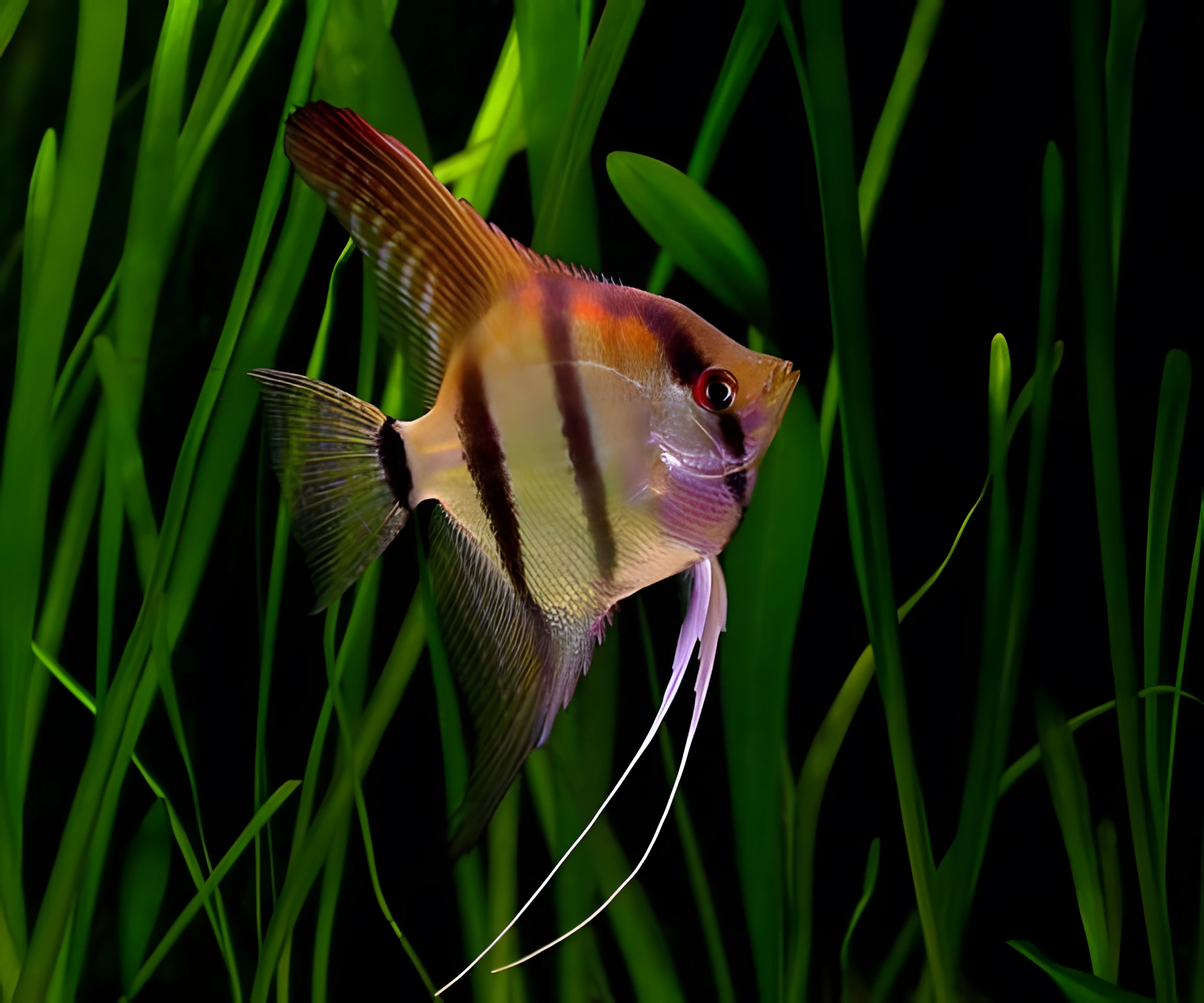
A characteristic feature of this species is its rhomboid body shape, which is strongly flattened laterally and possesses significant height, reaching about 18 cm, and a length of up to 20 cm. In the wild, specimens growing up to half a meter have been recorded. The impressive dimensions of the fish are due to its long dorsal and anal fins. The predominant coloration is silvery with a slight greenish tint. Broad vertical dark brown stripes run across the body, extending onto the fins. Sometimes a red hue can be observed, particularly distinct in the caudal fin's edging.
Habitat
The natural habitat of this species is the waters of South America, specifically the Amazon and Orinoco river basins, as well as their numerous tributaries. The fish feel most comfortable in the floodplains of rivers, where the current is moderate, and the water is very soft and rich in oxygen. They prefer to stay near the shoreline, which is densely overgrown with plants and provides many natural shelters in the form of roots and submerged tree trunks. In their natural environment, these fish are omnivorous: their diet consists of small fish and invertebrates, as well as plant components.
Behavior and Compatibility
Among the many angelfish species, this one stands out for its relatively peaceful nature. It can coexist with most calm aquarium inhabitants; however, as they age, fish exhibit territorial behavior and can become aggressive, especially noticeable during spawning. When choosing tank mates, it's worth remembering that at a young age, until the angelfish reaches its maximum size (approximately up to 5 years), other peaceful species or members of its own kind can quite well coexist with it.
Care and Maintenance
This fish species is extremely demanding regarding its aquatic environment: the water must be very soft and acidic. Any changes in the hydrochemical composition negatively affect their health. At least 25% of the water must be renewed weekly, and before adding, ensure that the parameters of the fresh water match those of the aquarium. It is also important to create an artificial current in the aquarium, which is achieved by installing powerful filters; it is advisable to use peat as a filter material, as it helps to increase acidity. A good aeration system is no less important, as Pterophyllum altum is very sensitive to oxygen levels. Essential equipment also includes a heater and lighting. When decorating the aquarium, preference should be given to numerous shelters arranged around the perimeter: driftwood, roots, stones, and grottoes. It is advisable to leave enough free space in the central part for swimming. Any plants capable of growing in these conditions can be used, as the fish are not prone to damaging them.
Diet
These fish are omnivorous and readily consume various types of food: both dry commercial mixes and live or frozen products. A key condition for successful keeping is maintaining a varied diet with a daily combination of different types of food. It is recommended to feed the fish 2–3 times a day. It is important to remove all uneaten food within five minutes to prevent overeating, fat accumulation, and subsequent digestive problems.
Breeding and Reproduction
Breeding this species in a home aquarium presents significant difficulties and is practically impossible. This is due to both the challenges in determining the sex of individuals and the need to create specific external conditions that are extremely difficult to reproduce outside their natural habitat.
Diseases
Pterophyllum altum is susceptible to most common diseases. Even minor changes in living conditions can provoke various ailments. The most frequent problems are ichthyophthiriasis and external parasite infestations. More detailed information on symptoms and treatment methods is described in the section "Diseases of Aquarium Fish."
How to choose
When selecting individuals, preference should be given to fish with active behavior and clean skin without signs of film, spots, or fin damage. It is important to assess the overall condition of the group in the store: the fish should show curiosity, rather than hiding in corners or lying on the bottom. Avoid purchasing specimens with sunken bellies or signs of emaciation, as this species tolerates adaptation after transportation extremely poorly. It is recommended to ask the seller about the origin of the fish, as wild-caught individuals require specific keeping conditions and adapt to the aquarium environment more difficultly than those bred in captivity.
Frequently asked questions
The essentials: size, tank volume, water parameters and care
How big does Altum Angelfish get?
An adult reaches 20 cm in length. Plan the tank around the maximum size: the fish quickly outgrows a cramped setup.
What size aquarium does Altum Angelfish need?
The minimum recommended volume is 200 L. A smaller tank speeds up nitrate build-up and raises stress levels.
What water parameters does Altum Angelfish need?
Temperature 25–29 °C, pH 4.8–6.2, hardness 1–5 dGH. Stability matters more than exact values: sudden swings are harder on the fish than a small deviation from the ideal.
How long does Altum Angelfish live?
Around 15 years when kept properly. Lifespan depends directly on tank volume, water quality and a varied diet.
Is Altum Angelfish aggressive?
Temperament: semi-peaceful (including aggression during spawning / intraspecific conflicts). Keep this in mind when choosing tank mates.
How many Altum Angelfish should be kept together?
Recommended setup: schooling (usually from 5–6 individuals and more). Ignoring this is a common cause of stress and disease.
What does Altum Angelfish eat?
Diet type: meat / protein (live, frozen, fresh). Feed small portions that are finished within a couple of minutes — overfeeding does more harm than underfeeding.
What is the scientific name of Altum Angelfish?
The scientific name of the species is Pterophyllum altum, family Cichlids (Cichlidae).