Temperature21 – 25 °C
Natural range
- Pra River Basin
- Volta River Basin
- Sassandra River Basin
- Bandama River Basin
CatfishConservation status: Least concern LC
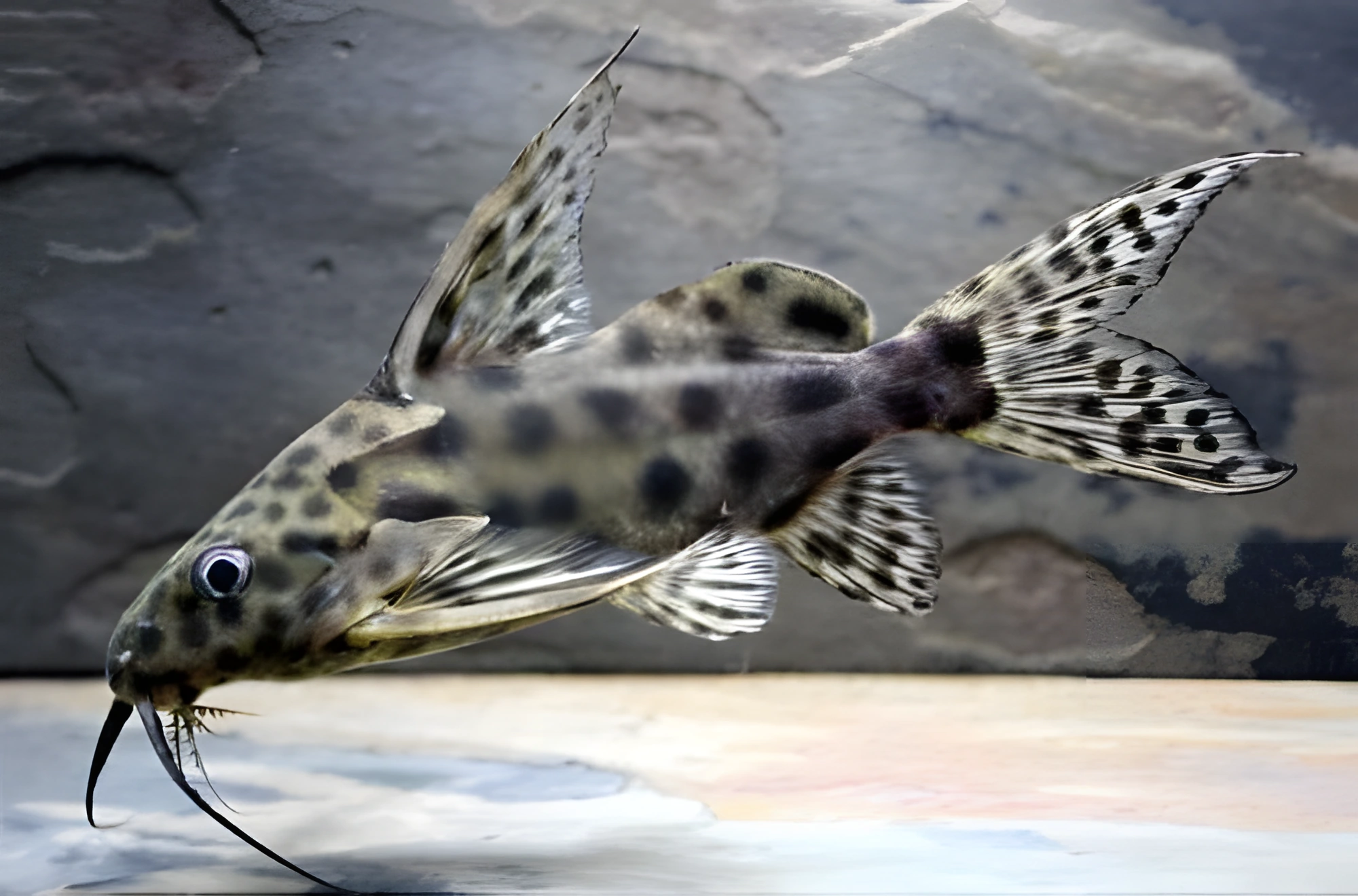
The scientific name Synodontis velifer is used to refer to the Synodontis velifer catfish, also known as the Sailfin Synodontis, a member of the family Mochokidae (Squeaker Catfishes). Native to West Africa, this fish is found in river systems primarily flowing through countries such as Burkina Faso, Côte d'Ivoire, Ghana, and Togo.
- Required aquarium volume
- 200 L
- Size in aquarium
- 23 cm
- Temperature
- 21 – 25 °C
- Temperament
- Peaceful (regular)
Parameters
Water pHSlightly acidic (6) – Neutral (7)
Water dHMedium hardness (10) – Very hard (20)
Water salinityno salt (freshwater)
Size in aquarium23 cm
Lifespan8 years
TemperamentPeaceful (regular)
Toward small fishnot a predator
Required aquarium volume200 L
Lightingdimmed or moderate
Substratesoft peat-based
Water flowweak or moderate
FeedingSinking (plant-based)
CareBoth solitary and in group (flexible)
Description
Adults of this fish can reach up to 23 cm in length. A distinctive feature is the robust protection of the head, formed by bony plates that create a helmet-like structure and are densely covered with small spines. The dorsal and pectoral fins are particularly large, with their first rays transformed into sharp spines. The other fins are significantly smaller. The tail of the fish is massive and forked. The body coloration is gray, with a characteristic pattern of dark, round spots. Several pairs of sensitive barbels are located around the mouth, which help the Synodontis navigate and find food on the silty bottom in murky water.
Habitat
The species inhabits river basins in West Africa, including the Pra, Volta, Sassandra, and Bandama rivers in Ghana, Côte d'Ivoire, Togo, and Burkina Faso. It populates water bodies with sandy-gravel bottoms and moderate currents. In nature, it prefers biotopes with soft water and the presence of natural shelters, such as snags and stones, where it leads a predominantly nocturnal lifestyle.
Behavior and Compatibility
This fish is distinguished by its peaceful and calm disposition. It coexists well with its own kind and with other non-aggressive species. It prefers a secretive lifestyle, showing activity mainly at night. During the day, Synodontis velifer usually hides in shelters.
Care and Maintenance
For the comfortable keeping of one or two Synodontis velifer catfish, an aquarium of at least 200 liters will be required. In the aquarium's setup, it is vitally important to provide a sufficient number of shelters, such as caves, where the fish can hide during the day. These refuges can be created from piles of stones, forming grottoes and crevices, or by using snags and plant thickets, placing the latter in front of the entrance to the shelter. Aquarium lighting can be any, especially if shelters are present and other fish species are kept; its intensity should primarily be determined by the needs of the plants. The species originates from swampy regions, so the water in the aquarium should have low pH and GH values. The presence of dissolved tannins, which naturally form from the decomposition of natural leaves, snags, and tree bark, will be beneficial. Aquarium maintenance should follow a standard schedule, including weekly partial water changes, removal of organic waste (e.g., food remnants and excrement), and regular equipment prophylaxis.
Diet
The diet of these fish should consist of high-protein foods, and the products must be sinking. Good options include dry, live, or frozen bloodworms, earthworms, tubifex, as well as various dry foods presented as flakes and granules. Sources: wikipedia.org, planetcatfish.com, fishbase.de
Breeding and Reproduction
The fish are oviparous. During the spawning period, pair formation is observed. Given their secretive lifestyle and specific environmental requirements, breeding in home aquariums is difficult and requires stimulation. Detailed data on the natural reproductive cycle in captivity are limited; hormonal stimulation methods are most often used to obtain offspring.
Diseases
The species has a strong immune system when kept under proper conditions but is sensitive to sudden changes in water parameters and high levels of organic waste. Characteristic problems include bacterial infections of the skin and fins, which arise from poor filtration. Prevention involves weekly partial water changes and maintaining substrate cleanliness.
How to choose
When choosing, attention should be paid to the integrity of the fins and the absence of damage on the body, as catfish are prone to injuries during transportation. A healthy individual should be active during twilight hours, have clear eyes, and a distinct pattern on its body. Avoid fish with signs of emaciation, sunken bellies, or film on the skin.
Frequently asked questions
The essentials: size, tank volume, water parameters and care
How big does Synodontis velifer get?
An adult reaches 23 cm in length. Plan the tank around the maximum size: the fish quickly outgrows a cramped setup.
What size aquarium does Synodontis velifer need?
The minimum recommended volume is 200 L. A smaller tank speeds up nitrate build-up and raises stress levels.
What water parameters does Synodontis velifer need?
Temperature 21–25 °C, pH 6–7, hardness 10–20 dGH. Stability matters more than exact values: sudden swings are harder on the fish than a small deviation from the ideal.
How long does Synodontis velifer live?
Around 8 years when kept properly. Lifespan depends directly on tank volume, water quality and a varied diet.
Is Synodontis velifer aggressive?
Temperament: peaceful (regular). Keep this in mind when choosing tank mates.
How many Synodontis velifer should be kept together?
Recommended setup: both solitary and in group (flexible). Ignoring this is a common cause of stress and disease.
What does Synodontis velifer eat?
Diet type: sinking (plant-based). Feed small portions that are finished within a couple of minutes — overfeeding does more harm than underfeeding.
What is the scientific name of Synodontis velifer?
The scientific name of the species is Synodontis velifer, family Mochokidae (Squeaker Catfishes).