Temperature22 – 27 °C
Natural range
- Democratic Republic of the Congo area
CatfishConservation status: Least concern LC
The Marbled Synodontis, or Synodontis schoutedeni, also known as Schouteden's Synodontis, belongs to the family Mochokidae. This catfish is popular due to its peaceful nature and unusual body pattern, as well as being undemanding in care. It gets along wonderfully with most common aquarium fish and can be recommended even to beginners in aquaristics.
- Required aquarium volume
- 80 L
- Size in aquarium
- 13 – 14 cm
- Temperature
- 22 – 27 °C
- Temperament
- Peaceful (regular)
Parameters
Water pHSlightly acidic (6) – Neutral (7.5)
Water dHVery soft (3) – Hard (15)
Water salinityno salt (freshwater)
Size in aquarium13 – 14 cm
Lifespan10 years
TemperamentPeaceful (regular)
Toward small fishnot a predator
Required aquarium volume80 L
Lightingdimmed or moderate
Substratesandy (regular, light)
Water flowweak or moderate
FeedingSinking (any)
CareSolitary
Description
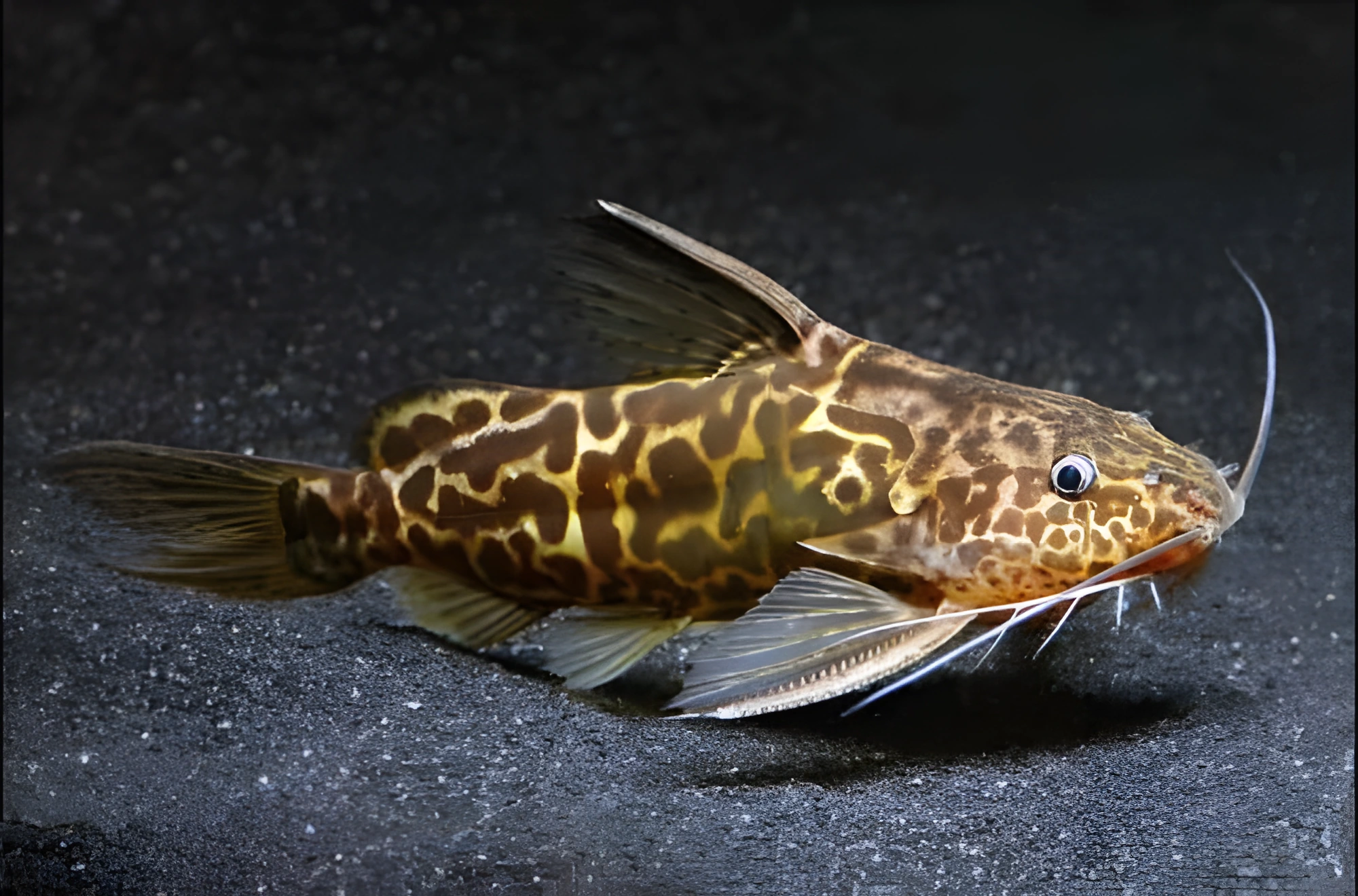
Adults typically reach 13–14 cm in length. The body pattern consists of large, irregularly shaped spots that may merge, set against a yellow background. The overall coloration is most often dark, resembling chocolate. The first rays of the dorsal and pectoral fins are modified into pointed spines, serving as protection against predators. Sexual dimorphism is weakly expressed, making sex determination difficult.
Habitat
Its natural habitat is the confined basin of the Congo River, located in the Democratic Republic of Congo. The catfish is found in both main channels and tributaries, preferring areas with soft substrate, rich in rocks, snags, and tree roots, which provide reliable shelters.
Behavior and Compatibility
The Marbled Synodontis is a peaceful and calm fish that coexists well with other fish of similar or smaller size. It is not recommended to keep it with aggressive or territorial species, which can harm not only the catfish but also themselves. Intraspecific relationships are territorial: each adult individual occupies and actively defends its territory from conspecifics. Therefore, in a single aquarium, especially a small one, it is advisable to keep only one Synodontis.
Care and Maintenance
This catfish is not very active and does not require a large swimming space; the optimal aquarium volume for it starts from 80 liters. When decorating the tank, it is recommended to use a soft sandy substrate and various shelters that mimic natural conditions — snags, branches, grottoes, caves, or decorative elements such as sunken ships and castles. Although aquatic plants are welcome, their presence is not essential, and they are usually chosen based on the needs of other inhabitants. Synodontis prefers dim lighting; in bright light, it will mostly emerge from shelters after the light is turned off. Optimal water conditions include slightly acidic pH and low to medium carbonate hardness (dH), with an acceptable temperature range of 22–27°C. Aquarium care involves regular cleaning of the substrate from organic waste; it is important to avoid heavy pollution and silting, as this can lead to infections of the catfish's barbels. Maintaining high water quality is ensured by effective filtration and weekly replacement of 10–15% of the water volume with fresh water.
Diet
The Marbled Synodontis has no particular food preferences and readily eats all types of popular sinking dry foods, as well as frozen and live foods. It is important to include plant supplements in its diet — for example, shelled peas, a piece of cucumber, or choose dry granulated foods that already contain the necessary plant components.
Breeding and Reproduction
As of the writing of this information, reliable data on the successful breeding of this species in home aquariums is absent. Catfish available for sale are raised on commercial fish farms, where conditions mimicking the natural habitat, taking into account seasonality, are created to stimulate spawning, and hormonal preparations are also used.
Diseases
The main causes of most diseases in aquarium fish are unsuitable living conditions and poor-quality food. Upon detecting the first symptoms, it is important to first check water parameters for high concentrations of harmful substances (ammonia, nitrites, nitrates, etc.), normalize the indicators, and only then proceed with treatment. There is also an observation that Marbled Synodontis can develop bloat if fed exclusively dry foods, so it is crucial to include live or frozen foods in their diet. More detailed information on disease symptoms and treatment methods can be found in the section "Diseases of Aquarium Fish."
How to choose
When choosing a Marbled Synodontis, attention should be paid to the fish's activity at dusk and the absence of skin damage, as the species has no scales. Healthy individuals should show curiosity, have clear eyes without cloudiness, and fins pressed tightly against the body. Avoid specimens with bloated bellies, as the species is prone to digestive problems with an improper diet. In the store, it is important to check:
- the integrity of all fins, especially the dorsal and pectoral fins, which are equipped with sharp spines;
- the absence of white spots, ulcers, or unnatural film on the body;
- reaction to food, confirming a good appetite and absence of stress.
Since the fish have sharp spines, it is recommended to use thick bags for transportation to avoid puncturing them. If dead fish or signs of disease are noticed in the aquarium with the specimens for sale, it is advisable to refrain from purchasing.
Frequently asked questions
The essentials: size, tank volume, water parameters and care
How big does Marbled Synodontis get?
An adult reaches 13–14 cm in length. Plan the tank around the maximum size: the fish quickly outgrows a cramped setup.
What size aquarium does Marbled Synodontis need?
The minimum recommended volume is 80 L. A smaller tank speeds up nitrate build-up and raises stress levels.
What water parameters does Marbled Synodontis need?
Temperature 22–27 °C, pH 6–7.5, hardness 3–15 dGH. Stability matters more than exact values: sudden swings are harder on the fish than a small deviation from the ideal.
How long does Marbled Synodontis live?
Around 10 years when kept properly. Lifespan depends directly on tank volume, water quality and a varied diet.
Is Marbled Synodontis aggressive?
Temperament: peaceful (regular). Keep this in mind when choosing tank mates.
How many Marbled Synodontis should be kept together?
Recommended setup: solitary. Ignoring this is a common cause of stress and disease.
What does Marbled Synodontis eat?
Diet type: sinking (any). Feed small portions that are finished within a couple of minutes — overfeeding does more harm than underfeeding.
What is the scientific name of Marbled Synodontis?
The scientific name of the species is Synodontis schoutedeni, family Fringe-mouthed Catfish (Mochokidae).