Temperature23 – 28 °C
Natural range
- Democratic Republic of the Congo area
CatfishConservation status: Data deficient DD
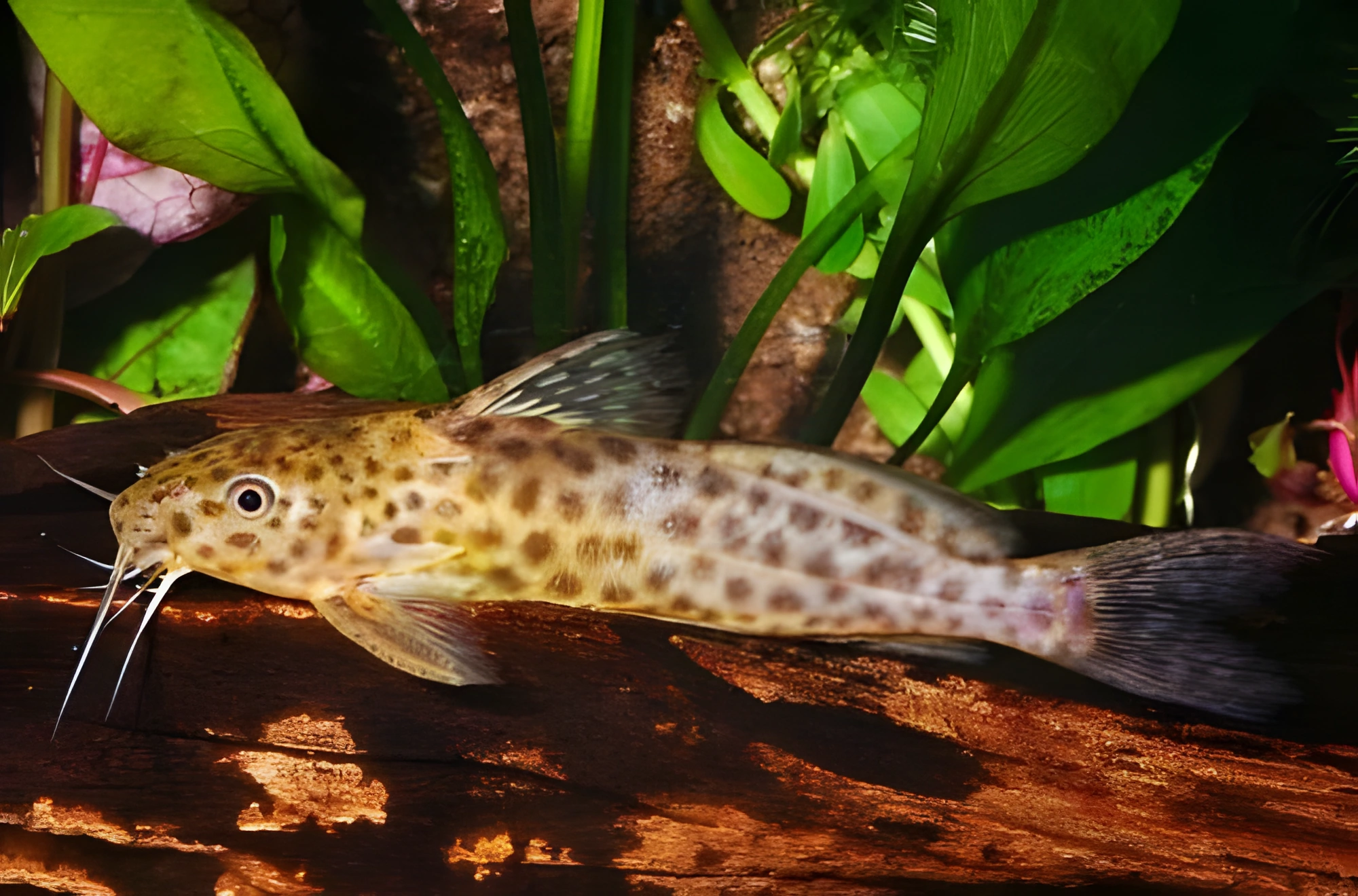
The Leopard Synodontis, scientifically known as Synodontis camelopardalis, belongs to the family Mochokinae, or upside-down catfishes. Its native habitat is the waters of Central Africa. This species is endemic to the Tshuapa River, which is a tributary of the Congo River in the Democratic Republic of Congo.
- Required aquarium volume
- 120 L
- Size in aquarium
- 13 cm
- Temperature
- 23 – 28 °C
- Temperament
- Peaceful (regular)
Parameters
Water pHSlightly acidic (6) – Neutral (7)
Water dHVery soft (3) – Hard (12)
Water salinityno salt (freshwater)
Size in aquarium13 cm
Lifespan10 years
TemperamentPeaceful (regular)
Toward small fishnot a predator
Required aquarium volume120 L
Lightingdimmed or moderate
Substrateany (no restrictions)
Water flownone or stagnant (no flow)
FeedingMixed diet (meat + plant-based)
CareBoth solitary and in group (flexible)
Description
This species can reach a length of about 18 cm. Like other members of the genus Synodontis, these fish have effective protection against predators living in rivers. Their head is covered with fused bony plates, resembling a strong helmet. The first rays of the dorsal and pectoral fins are transformed into sharp spines. Sensitive barbels are located around the mouth, which help the catfish navigate the bottom in low visibility and find food. The body coloration of the catfish is spotted: large dark spots are located on a lighter yellow background. This feature is reflected in the species' common name. Among aquarists, it is often called "Leopard Synodontis" due to the analogy with leopard coloration. However, the scientists who assigned the scientific name approached the matter differently: they compared the spotted pattern to a giraffe's coloration, hence the Latin "camelopardalis," which literally means "giraffe."
Habitat
The species is endemic to the Congo River basin in the Democratic Republic of Congo, specifically found in the Ruki River and its tributaries. It inhabits freshwater bodies with slow currents, preferring areas with dense vegetation, snags, and rocky bottoms. In nature, it leads a benthopelagic lifestyle, staying in the bottom layers of the water [fishbase.se].
Behavior and Compatibility
This species is distinguished by its peaceful and calm disposition. Adults successfully coexist both alone and in groups of their kind. They prefer a nocturnal lifestyle, spending the daytime hiding in shelters. Leopard Synodontis are compatible with many non-aggressive fish of similar size.
Care and Maintenance
For keeping one or two catfish, an aquarium of 120–150 L will be optimal. The aquarium setup should include a sufficient number of suitable shelters; for this, it is recommended to use intertwined snags, piles of stones, or dense thickets of plants. The use of artificial decorative elements is also permissible. Originating from swampy areas of rivers flowing through humid equatorial forests, the Leopard Synodontis needs soft, acidic water. Tannins dissolved in the water, which are formed during the decomposition of plant organic matter, will have a beneficial effect. To introduce them into the aquarium, natural snags are placed, a layer of dried leaves or bark from certain trees is added. Aquarium care is standard: mandatory weekly procedures include partial water changes, removal of accumulated organic waste (food remains, excrement, etc.), and preventive equipment maintenance.
Diet
Leopard Synodontis are considered omnivorous species. Nevertheless, a key part of their diet should consist of foods high in protein. The daily diet can include popular dry sinking foods, as well as live, frozen, or dried bloodworms, tubifex, earthworms, and similar delicacies. Sources: fishbase.se, wikipedia.org
Breeding and Reproduction
Breeding occurs during the rainy season. In aquarium conditions, hormonal preparations are often required to stimulate spawning, as the natural process is difficult in captivity. The fish form pairs, and eggs are laid on the substrate. Larvae begin to feed independently on the fourth day after hatching [md.org.ua], [zooeco.com].
Diseases
The species has strong immunity when water parameters are maintained, but it is sensitive to the accumulation of organic waste. No characteristic species-specific diseases have been identified, but under poor keeping conditions, bacterial skin and fin infections, as well as fungal lesions, are possible. Prevention includes weekly water changes and effective filtration [md.org.ua].
How to choose
When purchasing, choose active fish with clean skin without signs of ulcers, spots, or fin damage. It is important to check the condition of the eyes — they should be clear, without cloudiness. Avoid individuals with severely sunken bellies, which may indicate emaciation or internal parasitic diseases. During transportation, it is important to consider the presence of sharp spines on the fins, which can damage the bag [md.org.ua].
Frequently asked questions
The essentials: size, tank volume, water parameters and care
How big does Leopard Synodontis get?
An adult reaches 13 cm in length. Plan the tank around the maximum size: the fish quickly outgrows a cramped setup.
What size aquarium does Leopard Synodontis need?
The minimum recommended volume is 120 L. A smaller tank speeds up nitrate build-up and raises stress levels.
What water parameters does Leopard Synodontis need?
Temperature 23–28 °C, pH 6–7, hardness 3–12 dGH. Stability matters more than exact values: sudden swings are harder on the fish than a small deviation from the ideal.
How long does Leopard Synodontis live?
Around 10 years when kept properly. Lifespan depends directly on tank volume, water quality and a varied diet.
Is Leopard Synodontis aggressive?
Temperament: peaceful (regular). Keep this in mind when choosing tank mates.
How many Leopard Synodontis should be kept together?
Recommended setup: both solitary and in group (flexible). Ignoring this is a common cause of stress and disease.
What does Leopard Synodontis eat?
Diet type: mixed diet (meat + plant-based). Feed small portions that are finished within a couple of minutes — overfeeding does more harm than underfeeding.
What is the scientific name of Leopard Synodontis?
The scientific name of the species is Synodontis camelopardalis, family Squeaker Catfishes (Mochokidae).