Temperature23 – 27 °C
Natural range
- Democratic Republic of the Congo area
CatfishConservation status: Least concern LC
Other scientific names: Synodontis grenshoffi, Synodontis holopercnus, Synodontis pantherinus
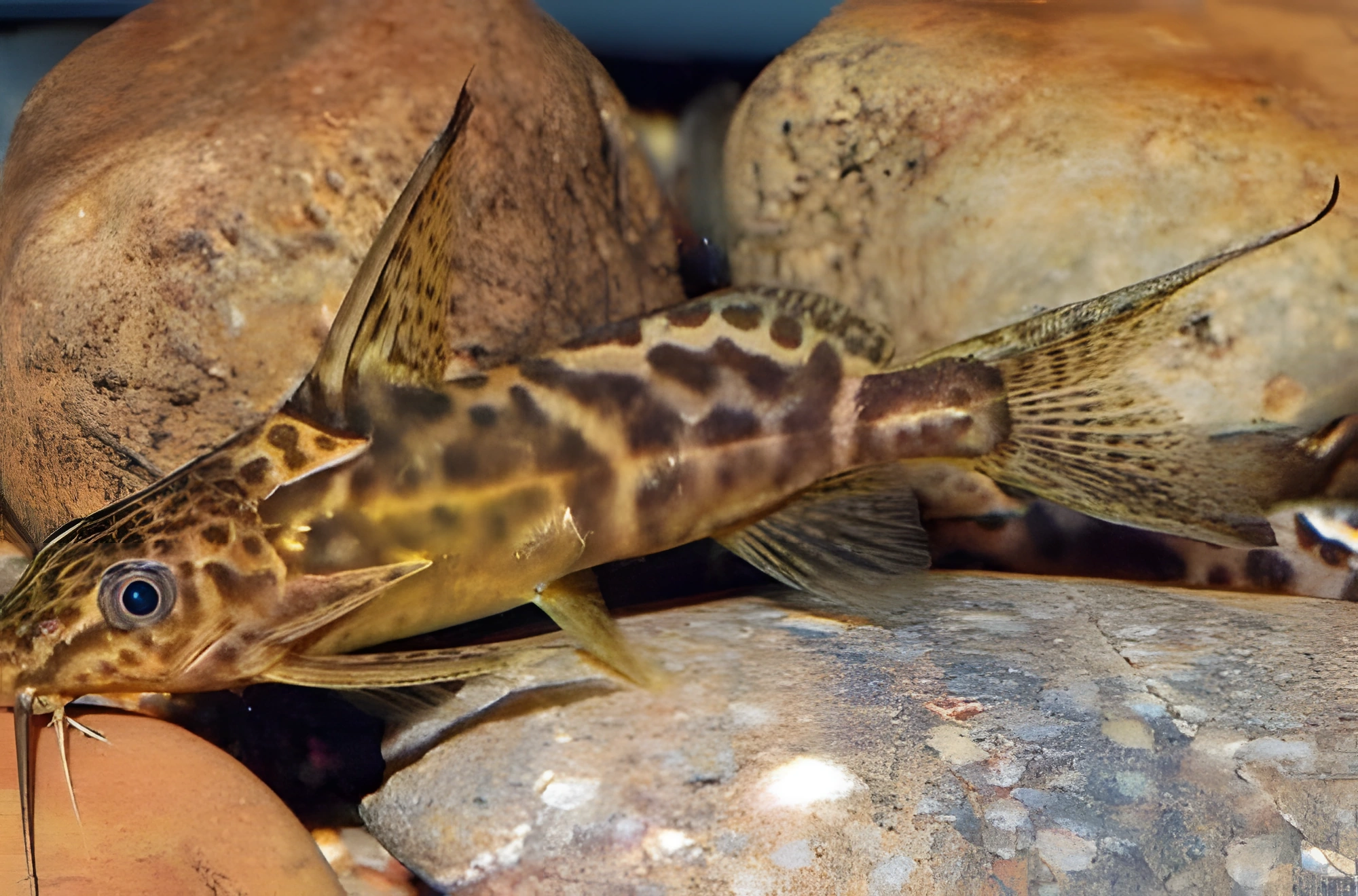
Synodontis greshoffi, also known as Synodontis Congo, belongs to the family Mochokidae. This catfish is an excellent choice for a community aquarium due to its unpretentiousness, hardiness, and peaceful temperament, as well as its distinctive body pattern.
- Required aquarium volume
- 110 L
- Size in aquarium
- 20 cm
- Temperature
- 23 – 27 °C
- Temperament
- Peaceful (regular)
Parameters
Water pHNeutral (6.5) – Neutral (7.2)
Water dHVery soft (3) – Hard (15)
Water salinityno salt (freshwater)
Size in aquarium20 cm
Lifespan15 years
TemperamentPeaceful (regular)
Toward small fishnot a predator
Required aquarium volume110 L
Lightingdimmed or moderate
Substratesoft peat-based
Water flowweak or moderate
FeedingSinking (any)
CareBoth solitary and in group (flexible)
Description
Adults can reach up to 20 cm in length in aquarium conditions, although larger specimens are found in the wild. Their bodies are adorned with an intricate pattern on a yellow-brown or cream background. The tail and fins are translucent, with brown speckles. The first rays of the fins are significantly thickened and act as protective spines, guarding the fish from predators. Distinguishing between male and female is quite difficult, as sexual dimorphism is weakly expressed, making sex determination challenging even for experienced aquarists.
Habitat
Its natural habitat includes various biotopes in the vast Congo River basin, predominantly in the territory of the modern Democratic Republic of Congo. This indicates a fairly wide distribution of the species in the wild. Like other members of its genus, Synodontis Congo prefers to stay near the bottom, choosing areas with calm currents and an abundance of shelters.
Behavior and Compatibility
Synodontis greshoffi is known as a peaceful and compatible species. However, its size and omnivorous nature should be considered: it can easily accidentally swallow small fish. It is not recommended to keep it with overly active or aggressive tankmates, which can not only harm the catfish but also suffer from its protective spines. Unlike some other members of the genus, which often engage in territorial skirmishes, especially in small aquariums, this species shows greater tolerance. It can be kept alone or in a group, provided that each individual has enough personal hiding places.
Care and Maintenance
For comfortable keeping of a single specimen, an aquarium of at least 110 liters is required. The decor should include a soft sandy substrate, which will allow the catfish to dig freely without risk of injury. It is also necessary to provide shelters; snags made of roots and tree branches, as well as various decorative elements, are suitable for this. Lighting should be subdued; floating plants will help create natural shading. Under bright light, the Synodontis will most likely spend most of its time in hiding. The rest of the aquarium decor is selected based on the needs of its other inhabitants. When caring for the aquarium, special attention should be paid to the cleanliness of the substrate, preventing silting and the accumulation of organic waste. This not only negatively affects water quality but also increases the risk of infectious diseases. In addition to regular substrate cleaning, it is necessary to perform weekly water changes of 15–20% of the volume with fresh water to maintain biological balance.
Diet
The diet of Synodontis Congo is very diverse and includes almost all common types of food: dry, frozen, and live. It is important to supplement them with vegetable additives, such as shelled peas or cucumber. The food must be sinking.
Breeding and Reproduction
In natural conditions, Synodontis Congo spawns during the rainy season, scattering eggs near the bottom and showing no parental care for the offspring. Stimulating spawning in an aquarium is an extremely difficult task. At the time of preparing this material, no reliable information was found regarding the successful breeding of this species in home aquariums. Currently, Synodontis fry are primarily raised on specialized commercial fish farms.
Diseases
The main cause of most diseases in Leaf Fish is unsuitable keeping conditions and poor-quality nutrition. If initial symptoms are observed, it is first necessary to check water parameters and the concentration of dangerous substances such as ammonia, nitrites, and nitrates. If the indicators deviate from the norm, they should be brought back into order, and only then should treatment begin. More detailed information on symptoms and treatment methods can be found in the "Aquarium Fish Diseases" section.
How to choose
When purchasing, choose individuals with clean skin without visible damage, ulcers, or white film. A healthy fish should be active during twilight hours, and during the day, exhibit cautious behavior, often hiding in shelters. Avoid specimens with sunken bellies or signs of emaciation, as this may indicate internal parasites or problems adapting to food. In the store, it is recommended to pay attention to the following aspects:
- absence of signs of aggression or damaged fins, which may indicate stress from being kept in an overcrowded aquarium;
- normal condition of the eyes, which should be clear and free of cloudiness;
- absence of rapid breathing, which is often a sign of poor water quality in the retail aquarium.
Frequently asked questions
The essentials: size, tank volume, water parameters and care
How big does Synodontis Congo get?
An adult reaches 20 cm in length. Plan the tank around the maximum size: the fish quickly outgrows a cramped setup.
What size aquarium does Synodontis Congo need?
The minimum recommended volume is 110 L. A smaller tank speeds up nitrate build-up and raises stress levels.
What water parameters does Synodontis Congo need?
Temperature 23–27 °C, pH 6.5–7.2, hardness 3–15 dGH. Stability matters more than exact values: sudden swings are harder on the fish than a small deviation from the ideal.
How long does Synodontis Congo live?
Around 15 years when kept properly. Lifespan depends directly on tank volume, water quality and a varied diet.
Is Synodontis Congo aggressive?
Temperament: peaceful (regular). Keep this in mind when choosing tank mates.
How many Synodontis Congo should be kept together?
Recommended setup: both solitary and in group (flexible). Ignoring this is a common cause of stress and disease.
What does Synodontis Congo eat?
Diet type: sinking (any). Feed small portions that are finished within a couple of minutes — overfeeding does more harm than underfeeding.
What is the scientific name of Synodontis Congo?
The scientific name of the species is Synodontis greshoffi, family Mochokidae. It also appears in the literature as: Synodontis grenshoffi, Synodontis holopercnus, Synodontis pantherinus.