Temperature22 – 27 °C
Natural range
- Congo River Basin
- Democratic Republic of the Congo area
- Republic of the Congo area
- Cameroon area
CatfishConservation status: Least concern LC
Other scientific names: Synodontis vittatus
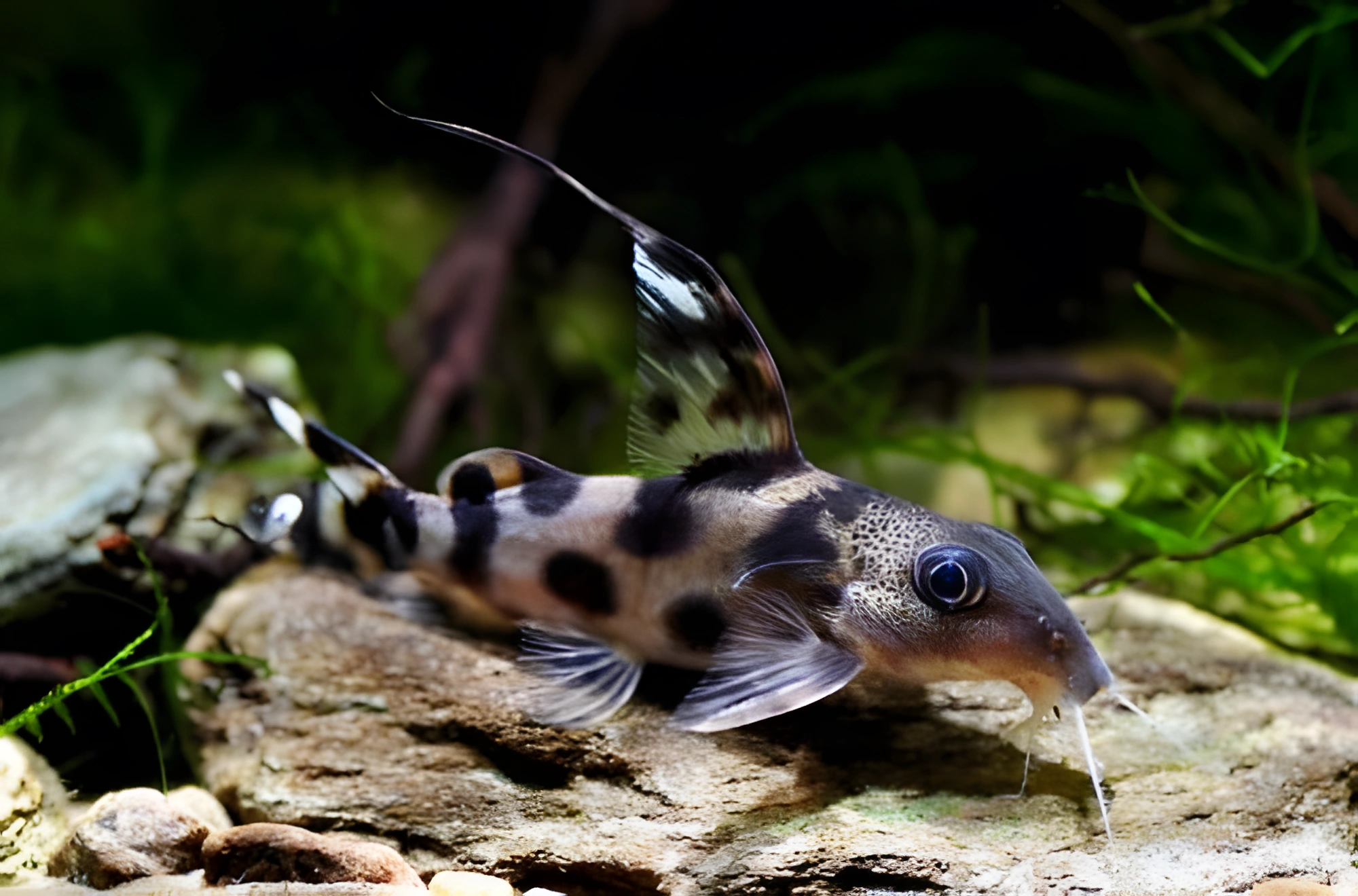
Synodontis decorus, known as the Flag Synodontis or Clown Synodontis, belongs to the family Mochokidae. This species is one of the most striking representatives of the Synodontis genus and can adorn almost any large freshwater aquarium. Its qualities, such as a peaceful disposition, unpretentiousness, and adaptability to various water conditions, significantly expand the range of potential tank mates.
- Required aquarium volume
- 200 L
- Size in aquarium
- 30 cm
- Temperature
- 22 – 27 °C
- Temperament
- Semi-peaceful (including aggression during spawning / intraspecific conflicts)
Parameters
Water pHSlightly acidic (6) – Slightly alkaline (8)
Water dHVery soft (3) – Very hard (25)
Water salinityno salt (freshwater)
Size in aquarium30 cm
Lifespan12 years
TemperamentSemi-peaceful (including aggression during spawning / intraspecific conflicts)
Toward small fishnot a predator
Required aquarium volume200 L
Lightingdimmed or moderate
Substratesoft peat-based
Water flowweak or moderate
FeedingSinking (any)
CareBoth solitary and in group (flexible)
Description
Adults can reach a length of approximately 30 cm. Their body color is pinkish-gray, with numerous black spots and a fine granular pattern on the head. One of their most distinctive features is their impressive dorsal and caudal fins. The high dorsal fin is adorned with a spotted pattern similar to the body's markings, and its first ray is very long, resembling a filament. The caudal fin has a striped coloration, consisting of alternating white and black bands. Sexual dimorphism in these fish is weakly expressed; males are only slightly smaller than females and have more intense coloration.
Habitat
The natural habitat of this species extends across the vast Congo River basin, covering territories of modern states such as the Democratic Republic of Congo, Cameroon, and the Republic of Congo. It prefers slow currents, backwaters, and pools, usually staying near various shelters.
Behavior and Compatibility
This peaceful and calm fish coexists well with other species, provided that potential tank mates are large enough not to fit into its mouth. Smaller fish can be accidentally swallowed due to the Clown Synodontis's indiscriminate feeding habits. Intraspecific relationships do not cause problems: the catfish feel perfectly fine both alone and in a group, if the aquarium is appropriately sized.
Care and Maintenance
For keeping an adult Synodontis, an aquarium of at least 200 liters will be required. In terms of decor, it is recommended to use a soft substrate and create shelters using driftwood and intertwined roots. Several robust plants with well-developed root systems can be planted, or artificial vegetation can be used. Small plants are likely to be uprooted by this rather large fish, so planting them is impractical. However, clusters of floating plants will be appropriate and serve as an additional source of dimming in the aquarium. Overall, aquarium decoration is quite simple; key elements are the presence of shelters and not overly bright lighting. Caring for Synodontis will also not cause significant difficulties. It is necessary to regularly clean the substrate of organic waste and weekly replace a portion of the water (15–20% of the total volume) with fresh water.
Diet
The Clown Synodontis is omnivorous and undemanding regarding its diet. It readily accepts all common types of food, including dry, frozen, live, and vegetable matter such as shelled peas, cucumber, and other vegetables. It is important that the food is sinking, although the catfish may sometimes rise to the water's surface.
Breeding and Reproduction
Breeding Synodontis in a home aquarium is almost impossible. Successful captive breeding is currently only achieved on commercial fish farms using hormonal injections.
Diseases
The main cause of most diseases in Leaf Fish is unsuitable keeping conditions and poor-quality nutrition. If initial symptoms are observed, it is first necessary to check water parameters and the concentration of dangerous substances such as ammonia, nitrites, and nitrates. If the indicators deviate from the norm, they should be brought back into order, and only then should treatment begin. More detailed information on symptoms and treatment methods can be found in the "Aquarium Fish Diseases" section.
How to choose
When choosing a Clown Synodontis, it is important to assess the fish's overall condition: the body should be clean, without visible damage, sores, or white spots, and the fins should be intact, without signs of deterioration or clamping. Pay special attention to the condition of the barbels: they should be whole, as their damage often indicates poor living conditions and the presence of bacterial infections in the seller's aquarium.
A healthy fish is active at dusk or under subdued lighting, while during daylight hours it may hide in shelters. Avoid purchasing individuals with signs of emaciation, sunken bellies, or fish that constantly stay near the water's surface, which may indicate gill problems or poor water quality. Since the species has sharp fin rays, caution should be exercised during examination and transport to avoid injury.
Frequently asked questions
The essentials: size, tank volume, water parameters and care
How big does Clown Synodontis get?
An adult reaches 30 cm in length. Plan the tank around the maximum size: the fish quickly outgrows a cramped setup.
What size aquarium does Clown Synodontis need?
The minimum recommended volume is 200 L. A smaller tank speeds up nitrate build-up and raises stress levels.
What water parameters does Clown Synodontis need?
Temperature 22–27 °C, pH 6–8, hardness 3–25 dGH. Stability matters more than exact values: sudden swings are harder on the fish than a small deviation from the ideal.
How long does Clown Synodontis live?
Around 12 years when kept properly. Lifespan depends directly on tank volume, water quality and a varied diet.
Is Clown Synodontis aggressive?
Temperament: semi-peaceful (including aggression during spawning / intraspecific conflicts). Keep this in mind when choosing tank mates.
How many Clown Synodontis should be kept together?
Recommended setup: both solitary and in group (flexible). Ignoring this is a common cause of stress and disease.
What does Clown Synodontis eat?
Diet type: sinking (any). Feed small portions that are finished within a couple of minutes — overfeeding does more harm than underfeeding.
What is the scientific name of Clown Synodontis?
The scientific name of the species is Synodontis decorus, family Fringe-lipped Catfish (Mochokidae). It also appears in the literature as: Synodontis vittatus.