Temperature21 – 25 °C
Natural range
- Congo River Basin
- Democratic Republic of the Congo area
- Cameroon area
- Republic of the Congo area
CatfishConservation status: Least concern LC
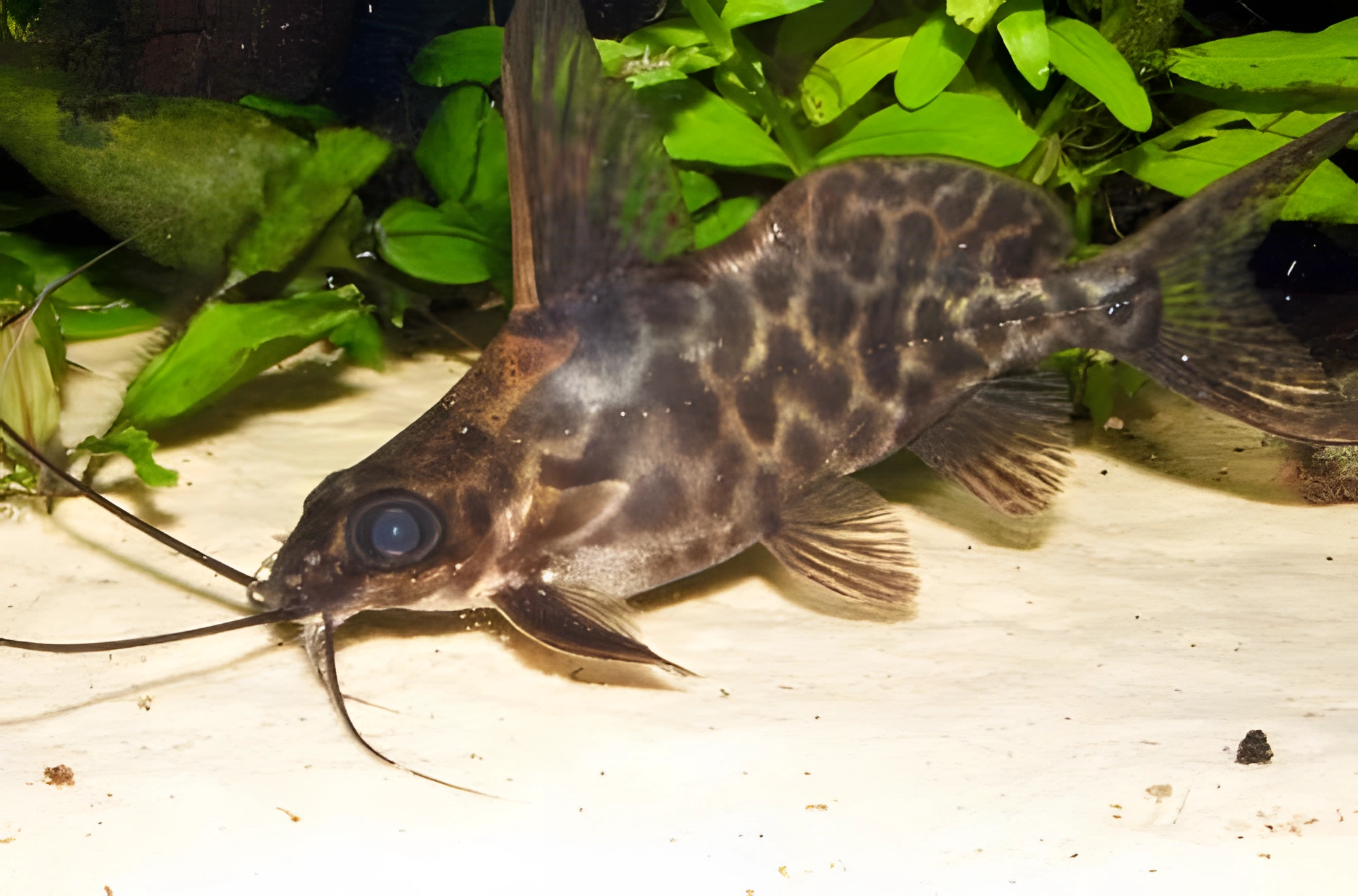
The scientific name Synodontis alberti belongs to the family Mochokidae, and this fish is also known as Albert's Synodontis, High-fin Synodontis, or Big-eyed Synodontis. Since it is most active in the dark, during the day this species prefers to stay hidden in the shelters of the community tank. Such a secretive lifestyle means that the Synodontis rarely becomes the center of attention; more often, it harmoniously complements an already established fish community. Its peaceful nature and ability to easily adapt to various conditions make it a very valuable addition.
- Required aquarium volume
- 80 L
- Size in aquarium
- 16 – 20 cm
- Temperature
- 21 – 25 °C
- Temperament
- Peaceful (regular)
Parameters
Water pHSlightly acidic (6) – Slightly alkaline (8)
Water dHSoft (5) – Very hard (25)
Water salinityno salt (freshwater)
Size in aquarium16 – 20 cm
Lifespan8 years
TemperamentPeaceful (regular)
Toward small fishnot a predator
Required aquarium volume80 L
Lightingdimmed or moderate
Substratesoft peat-based
Water flowweak or moderate
FeedingSinking (any)
CareBoth solitary and in group (flexible)
Description
These individuals can reach up to 20 cm in length. Their body is adorned with a brownish-marbled pattern, and their barbels are noticeably longer than those of other Synodontis species. The presence of large eyes indicates a nocturnal lifestyle, providing the catfish with excellent vision in low light conditions. The spotted coloration is most vibrant in young fish and persists in males as they mature, while females typically become less expressive in color with age.
Habitat
The natural habitat of this species covers a vast area of the Congo River basin, located in the territories of modern states such as the Democratic Republic of Congo, Cameroon, and the Republic of Congo. Synodontis predominantly inhabits numerous streams and tributaries, less frequently found in the main channel. Preferred habitats are characterized by dense aquatic vegetation and an abundance of natural shelters, which include submerged snags, branches, and tree root systems.
Behavior and Compatibility
The Big-eyed Synodontis exhibits a peaceful and calm disposition, allowing it to coexist harmoniously with other aquarium inhabitants. It gets along well with non-aggressive, medium-sized fish. As for small fish (up to 3 cm long), there is a possibility of accidental consumption, but this is not an indication of predatory behavior by the catfish, but rather its indiscriminate feeding, characteristic of many catfishes. This species can be kept either individually or in groups of its kind, without exhibiting intraspecific conflicts.
Care and Maintenance
For keeping a single fish, the minimum aquarium volume is 80 liters. When decorating, preference should be given to a soft sandy substrate, as well as several shelters made of driftwood or other decorative elements, complemented by dense thickets of rooted plants. Decorative elements made of natural wood, specially prepared for the aquarium, can promote the natural growth of algae, which will become an additional food source for the fish. Dim lighting is recommended, and floating plants can provide additional shading. It is important to note that while any lighting level can be used, under bright light, the catfish will more often remain in hiding, only emerging at night. When caring for the aquarium, special attention should be paid to the cleanliness of the substrate, regularly cleaning it of organic debris, as excessive silting of the substrate significantly increases the risk of barbels infection.
Diet
In the wild, a significant part of their diet consists of algae. Therefore, in a home aquarium, it is recommended to offer foods (flakes, granules, tablets) with added plant components. In addition to specialized dry foods, these fish readily accept live and frozen foods, such as bloodworms. It is important to remember that the food should be sinking.
Breeding and Reproduction
Breeding Synodontis alberti in home aquariums is extremely rare. The majority of fry available for sale come from commercial fish farms.
Diseases
The main cause of most diseases in Leaf Fish is unsuitable keeping conditions and poor-quality nutrition. If initial symptoms are observed, it is first necessary to check water parameters and the concentration of dangerous substances such as ammonia, nitrites, and nitrates. If the indicators deviate from the norm, they should be brought back into order, and only then should treatment begin. More detailed information on symptoms and treatment methods can be found in the "Aquarium Fish Diseases" section.
How to choose
When choosing an Albert's Synodontis, first inspect the condition of its skin and fins. A healthy individual should not have white patches, ulcers, hemorrhages, or signs of mucous membrane damage. Pay special attention to the condition of the barbels: they should be intact, without signs of erosion or broken tips, as damage to them hinders the fish's orientation and food search.
- activity in the evening or in shaded areas of the aquarium
- absence of pronounced emaciation and sunken belly
- clear eyes, which should be bright and without cloudiness
Avoid purchasing individuals that constantly stay near the water surface, breathe heavily, or display unnatural movements. Since this species has sharp spiny rays on its fins, thick bags should be used during transport to prevent punctures and minimize stress for the fish.
Frequently asked questions
The essentials: size, tank volume, water parameters and care
How big does Synodontis alberti get?
An adult reaches 16–20 cm in length. Plan the tank around the maximum size: the fish quickly outgrows a cramped setup.
What size aquarium does Synodontis alberti need?
The minimum recommended volume is 80 L. A smaller tank speeds up nitrate build-up and raises stress levels.
What water parameters does Synodontis alberti need?
Temperature 21–25 °C, pH 6–8, hardness 5–25 dGH. Stability matters more than exact values: sudden swings are harder on the fish than a small deviation from the ideal.
How long does Synodontis alberti live?
Around 8 years when kept properly. Lifespan depends directly on tank volume, water quality and a varied diet.
Is Synodontis alberti aggressive?
Temperament: peaceful (regular). Keep this in mind when choosing tank mates.
How many Synodontis alberti should be kept together?
Recommended setup: both solitary and in group (flexible). Ignoring this is a common cause of stress and disease.
What does Synodontis alberti eat?
Diet type: sinking (any). Feed small portions that are finished within a couple of minutes — overfeeding does more harm than underfeeding.
What is the scientific name of Synodontis alberti?
The scientific name of the species is Synodontis alberti, family Mochokidae.