Temperature26 – 30 °C
Natural range
- Eastern Colombia area
- Colombia area
CatfishConservation status: Vulnerable VU
The Blue Baryancistrus, also known as the Blue or Heavy Ancistrus (scientific name Baryancistrus beggini), belongs to the family Loricariidae. Its name, Baryancistrus, comes from the Greek word βαρύς (Barys), meaning “heavy,” which perfectly describes the catfish’s appearance – it seems massive and not very agile. Its rich blue color has made it popular among aquarists worldwide, but this species has quite specific requirements for its living conditions, which somewhat narrows its fan base.
- Required aquarium volume
- 100 L
- Size in aquarium
- 10 – 12 cm
- Temperature
- 26 – 30 °C
- Temperament
- Semi-peaceful (including aggression during spawning / intraspecific conflicts)
Parameters
Water pHSlightly acidic (5.5) – Neutral (7.5)
Water dHVery soft (1) – Medium hardness (10)
Water salinityno salt (freshwater)
Size in aquarium10 – 12 cm
Lifespan10 years
TemperamentSemi-peaceful (including aggression during spawning / intraspecific conflicts)
Toward small fishnot a predator
Required aquarium volume100 L
Lightingany
Substratefine sand
Water flowweak or moderate
FeedingSinking (plant-based)
CareBoth solitary and in group (flexible)
Description
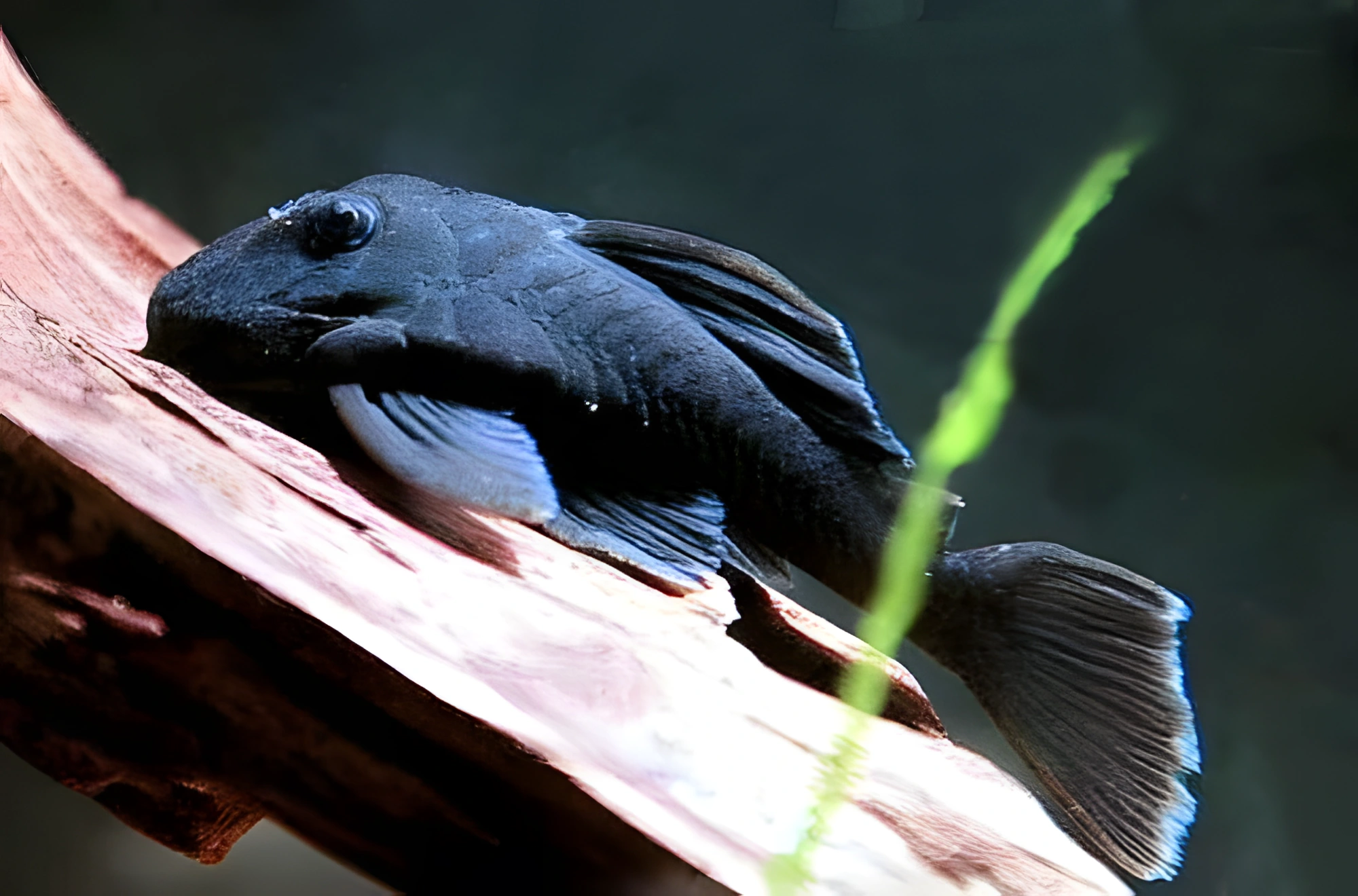
Adults of this species reach approximately 8 cm in length. Their dark blue coloration is a distinctive feature. The catfish has a large head relative to its body, and its eyes are located on the top of its head and protrude noticeably, providing an almost 360° view. Large pectoral and dorsal fins are equipped with thick, pointed first rays resembling spines.
Habitat
Its natural habitat is in Eastern Colombia, near the Venezuelan border, in a limited area of the lower Guaviare River, where it merges with the Orinoco. This region of South America is characterized by rather murky water and a sandy substrate, which forms extensive shoals and sand islands. The river flows through tropical forests, and its riparian zone abounds with fallen trees, the submerged parts of which create reliable shelters for many inhabitants, including the Blue Baryancistrus.
Behavior and Compatibility
This fish species has a relatively peaceful but territorial nature. Due to its modest size, it cannot compete with larger neighbors but can show rivalry towards conspecifics in smaller aquariums. In a spacious tank, with a sufficient number of hiding places, problems usually do not arise. It is recommended to choose tank mates that inhabit the water column or surface to minimize potential conflicts.
Care and Maintenance
For a single fish, an aquarium of at least 100 liters will be required. For decoration, it is recommended to use a sandy or gravel substrate, as well as several pieces of natural driftwood, which will serve not only as shelter but also as a place for algae to grow. The placement of aquatic plants is at the discretion of the aquarist and depends on the needs of other inhabitants. Since the Blue Baryancistrus lives in flowing waters, it is extremely important to maintain high water quality. It is necessary to regularly clean the substrate of organic waste, use a powerful filtration system, and perform weekly water changes of about half the volume with fresh water. It is important to remember that at the high temperatures the catfish prefers (up to 30°C), the level of dissolved oxygen significantly decreases, so it is recommended to install additional air diffusers.
Diet
In its natural habitat, this fish feeds on periphyton, i.e., various microorganisms and algae that cover snags, plants, and the substrate. When the fish is in an aquarium, it will readily accept high-quality sinking dry foods that contain many plant additives. For dietary variety, live or frozen foods such as bloodworms, as well as mosquito larvae, can be offered. Given their high metabolism, it may be necessary to feed the fish 2 or more times throughout the day. Algae naturally forming on wooden surfaces, such as driftwood, will become an additional food source.
Breeding and Reproduction
These fish are cave spawners. The breeding process occurs in shelters, where the male takes on the protection of the clutch and care of the eggs. After spawning, the female should be removed from the breeding tank. The species is known for its low fecundity, and the fry require high-quality, clean water and regular feeding for successful growth.
Diseases
The main cause of most diseases is unsuitable living conditions and poor-quality food. If you notice the first symptoms, you should immediately check the water parameters and ensure there are no high concentrations of dangerous substances (ammonia, nitrites, nitrates, etc.). The parameters must be brought back to normal, and only then can treatment measures begin. Detailed information on symptoms and treatment methods is provided in the "Aquarium Fish Diseases" section.
How to choose
When purchasing, it is important to consider that Baryancistrus species often tolerate transportation poorly and may be emaciated. A healthy specimen should be active, have clean fins without signs of damage, and a rounded, not sunken, abdomen. It is recommended to avoid fish with signs of apathy or visible skin lesions, and to plan a quarantine period in advance for adaptation to aquarium conditions.
Frequently asked questions
The essentials: size, tank volume, water parameters and care
How big does Blue Baryancistrus get?
An adult reaches 10–12 cm in length. Plan the tank around the maximum size: the fish quickly outgrows a cramped setup.
What size aquarium does Blue Baryancistrus need?
The minimum recommended volume is 100 L. A smaller tank speeds up nitrate build-up and raises stress levels.
What water parameters does Blue Baryancistrus need?
Temperature 26–30 °C, pH 5.5–7.5, hardness 1–10 dGH. Stability matters more than exact values: sudden swings are harder on the fish than a small deviation from the ideal.
How long does Blue Baryancistrus live?
Around 10 years when kept properly. Lifespan depends directly on tank volume, water quality and a varied diet.
Is Blue Baryancistrus aggressive?
Temperament: semi-peaceful (including aggression during spawning / intraspecific conflicts). Keep this in mind when choosing tank mates.
How many Blue Baryancistrus should be kept together?
Recommended setup: both solitary and in group (flexible). Ignoring this is a common cause of stress and disease.
What does Blue Baryancistrus eat?
Diet type: sinking (plant-based). Feed small portions that are finished within a couple of minutes — overfeeding does more harm than underfeeding.
What is the scientific name of Blue Baryancistrus?
The scientific name of the species is Baryancistrus beggini, family Armored Catfishes (Loricariidae).