Temperature20 – 25 °C
Natural range
- South America area
KillifishConservation status: Endangered EN
Other scientific names: Cynolebias santanae
Simpsonichthys santanae, or Santana's Pearlfish, belongs to the family Rivulidae. These fish are closely related to Nothobranchius, which inhabit a different continent—Africa, and this connection is evident in almost everything: from their appearance to their breeding methods. Their main difference is a milder temperament.
- Required aquarium volume
- 40 L
- Size in aquarium
- 2 – 3 cm
- Temperature
- 20 – 25 °C
- Temperament
- Territorial (often aggressive)
Parameters
Water pHSlightly acidic (6) – Neutral (7)
Water dHSoft (4) – Medium hardness (10)
Water salinityno salt (freshwater)
Size in aquarium2 – 3 cm
Lifespan1 years
TemperamentTerritorial (often aggressive)
Toward small fishnot a predator
Required aquarium volume40 L
Lightingdimmed
Substratesoft sandy (including silted)
Water flownone or stagnant (no flow)
FeedingPlant-based (algae, vegetables)
CarePair (male/female)
Description
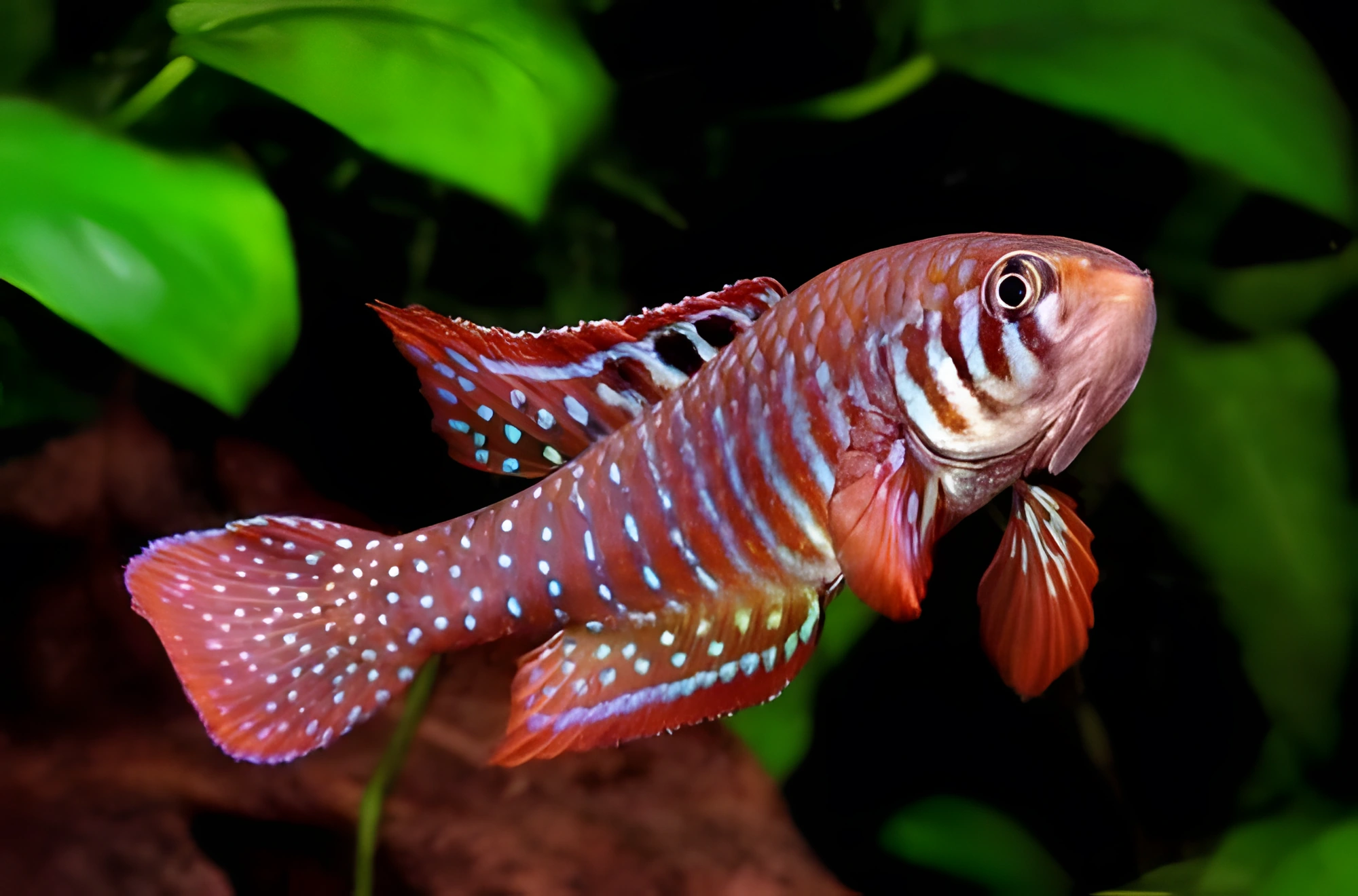
Adults reach approximately 3 cm in length. A distinctive feature is a slightly raised back, which gives them a “humpbacked” appearance. The tail of these fish is rounded, and the dorsal and anal fins are pointed. Males are characterized by a red body coloration, adorned with rows of blue speckles, which transition into vertical stripes in the front part of the body. Their fins are also colored like the body and have a pattern of blue spots. Females appear more modest: their main coloration is pale yellow, with rows of gray stripes. The fins of females are colorless and monochromatic.
Habitat
Originating from South America, these fish inhabit the Paraná River basin and are named after the Santana River. They prefer small, shallow tributaries where the depth rarely exceeds 20 centimeters. The natural habitat of these fish is subject to seasonal changes due to alternating dry and rainy periods. Water levels can fluctuate greatly, sometimes even temporarily drying up.
Behavior and Compatibility
Males exhibit territorial tendencies, striving to protect their area in the aquarium from rivals. However, such skirmishes are predominantly for display, which allows for keeping several males even in a relatively small volume. Females, on the other hand, are peaceful and get along well with their kin. These fish are compatible with many non-aggressive miniature species, such as tetras.
Care and Maintenance
For a small group of 3–5 individuals, an aquarium of 40 liters or more will be optimal. For long-term keeping, maintaining stable water parameters is particularly important: temperature and hydrochemical indicators must remain within acceptable limits. The aquarium decor should include plenty of shelters. These can be dense plant thickets, driftwood, as well as other natural or artificial decor. Simpsonichthys santanae are prone to jumping out of the water, so floating plants on the surface of the aquarium can be used to prevent this. They will not only serve as a barrier but also create additional shading. It has been noted that excessively bright lighting can negatively affect the intensity of the fish's coloration.
Diet
The diet of these fish should consist of live or frozen foods, such as Artemia, bloodworms, daphnia, and similar products. Some aquarists successfully acclimate Simpsonichthys to dry foods enriched with protein.
Breeding and Reproduction
Breeding Simpsonichthys presents certain difficulties due to their specific reproductive characteristics. In their natural environment, spawning occurs at the end of the wet season, heralding the onset of drought. The fish lay their eggs in a layer of substrate. As the body of water dries up, the fertilized eggs remain in the semi-dry substrate, where they stay for several months. With the first rains, the fry appear. In a home aquarium, it is necessary to recreate these seasonal changes. Specially prepared fibrous peat, coconut fibers, or their artificial analogues are used as a spawning substrate. The chosen material should be easy to remove from the aquarium and retain moisture well. As soon as eggs are visible on the surface of the substrate, it is carefully removed, gently squeezed, and dried for 2–3 hours on paper towels at room temperature. Then the substrate is placed in a plastic bag, which is tightly tied with a rubber band, or in a closed plastic container. It is stored in a dark place at a temperature of 26°C. The incubation period lasts 11 weeks. After this, the substrate is removed, placed in a container, and filled with soft water at a temperature of 23–24°C. The first fry usually appear in about an hour.
Diseases
The fish are hardy and undemanding. Diseases usually manifest only with a significant deterioration in keeping conditions. In a balanced aquarium ecosystem, health problems are generally absent. More detailed information on symptoms and treatment methods can be found in the "Diseases of Aquarium Fish" section.
How to choose
Only individuals obtained from breeders should be purchased, as the species is endangered in the wild. It is important to ensure that the fish are active, have clean fins without signs of damage, and do not show signs of emaciation, as due to their short life cycle, any diseases progress quickly. It is recommended to clarify the age of the individuals to understand their remaining lifespan, which is usually no more than 1–1.5 years.
Frequently asked questions
The essentials: size, tank volume, water parameters and care
How big does Simpsonichthys santanae get?
An adult reaches 2–3 cm in length. Plan the tank around the maximum size: the fish quickly outgrows a cramped setup.
What size aquarium does Simpsonichthys santanae need?
The minimum recommended volume is 40 L. A smaller tank speeds up nitrate build-up and raises stress levels.
What water parameters does Simpsonichthys santanae need?
Temperature 20–25 °C, pH 6–7, hardness 4–10 dGH. Stability matters more than exact values: sudden swings are harder on the fish than a small deviation from the ideal.
How long does Simpsonichthys santanae live?
Around 1 years when kept properly. Lifespan depends directly on tank volume, water quality and a varied diet.
Is Simpsonichthys santanae aggressive?
Temperament: territorial (often aggressive). Keep this in mind when choosing tank mates.
How many Simpsonichthys santanae should be kept together?
Recommended setup: pair (male/female). Ignoring this is a common cause of stress and disease.
What does Simpsonichthys santanae eat?
Diet type: plant-based (algae, vegetables). Feed small portions that are finished within a couple of minutes — overfeeding does more harm than underfeeding.
What is the scientific name of Simpsonichthys santanae?
The scientific name of the species is Simpsonichthys santanae, family Rivulidae. It also appears in the literature as: Cynolebias santanae.