Temperature23 – 27 °C
Natural range
- Lake Tanganyika area
- Zambia area
CichlidsConservation status: Least concern LC
Other scientific names: Neolamprologus signatus
Lamprologus signatus, also known as Signatus, is a member of the Cichlidae family. Its natural habitat is Lake Tanganyika, located in East Africa, where this species is endemic. Signatus individuals are most commonly found in the central areas of the lake, adjacent to Zambia. They prefer to stay near the bottom, choosing regions with soft substrate at a sufficient depth near the shoreline. For shelter, these fish typically use empty shells.
- Required aquarium volume
- 70 L
- Size in aquarium
- 3 – 5 cm
- Temperature
- 23 – 27 °C
- Temperament
- Aggressive / incompatible / unfriendly
Parameters
Water pHNeutral (7.5) – Alkaline (9)
Water dHMedium hardness (10) – Very hard (25)
Water salinityno salt (freshwater)
Size in aquarium3 – 5 cm
Lifespan8 years
TemperamentAggressive / incompatible / unfriendly
Toward small fishnot a predator
Required aquarium volume70 L
Lightingweak or moderate
Substratesandy (regular, light)
Water flowweak
FeedingHigh protein (predominantly meat)
CareHarem (1 male and several females)
Description
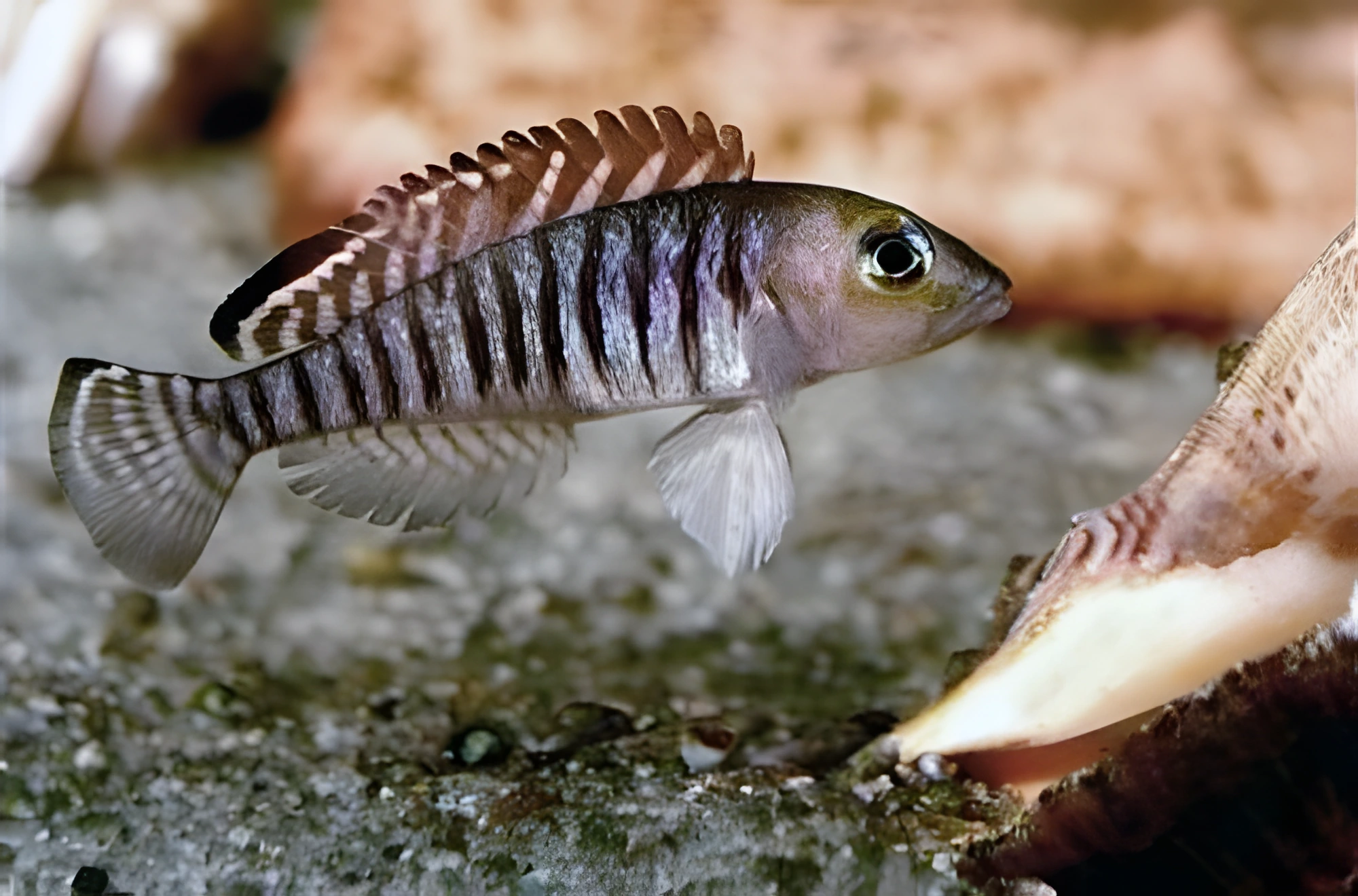
Adult males can reach up to 5 cm in length. Females are significantly smaller, growing no more than 3 cm. The pattern on the body of Signatus consists of alternating dark and light vertical stripes, which are most pronounced in male individuals. Apart from this, sexual dimorphism in this species is quite weakly expressed.
Habitat
The species is endemic to Lake Tanganyika in East Africa. In nature, the fish inhabit deep-water areas with soft or silty substrate, where they find shelter in empty mollusk shells. They primarily live in the bottom layer, preferring zones with moderate current and water parameters specific to the lake: high alkaline pH and significant general hardness.
Behavior and Compatibility
Despite its modest size, Signatus is a territorial and quite aggressive species. The fish actively defends its shelter (shell) from potential rivals. Males are particularly hostile towards each other, so in a small aquarium, it is recommended to keep only one male with several females. Coexistence is possible with fish of similar size that prefer to stay in the water column or near the surface.
Care and Maintenance
For keeping a pair of Signatus, an aquarium of at least 40 L will be required. Inside the aquarium, fine sand substrate is recommended for decoration, where the fish can dig in search of food. Several empty snail shells will provide them with natural shelters. Snail shells are ideal; in their absence, Signatus will find any other suitable hiding place. The presence of live plants is not mandatory. Successful keeping of Signatus is only possible if very clean water and high hydrochemical parameters of pH and dGH are maintained. To ensure proper water quality, it is necessary to weekly change 20–25% of its volume with fresh water, use an efficient filtration system, and regularly clean the substrate from organic debris.
Diet
The diet of these fish is primarily composed of live or frozen foods, such as bloodworms, Artemia, and Daphnia. Specialized dry sinking foods with high protein content are also suitable. When choosing, preference should be given to products from well-known manufacturers.
Breeding and Reproduction
If you plan to breed Signatus, it is important to provide a sufficient number of empty shells, as one female often requires up to five such shelters. Interestingly, unlike many other cichlids, during the breeding season, females are the first to show activity, attracting the male to their shell where spawning occurs. After the fry emerge, the shells serve as a reliable refuge for them. Although the parents do not pose a threat to their offspring, they also do not provide them with much protection. Therefore, it is advisable to transfer shells with fertilized eggs to a separate tank with similar water conditions.
Diseases
The main cause of most diseases in Lake Tanganyika cichlids is unsuitable keeping conditions and poor-quality food, which often leads, for example, to African Bloat. At the first symptoms, it is necessary first to check the water parameters and ensure there are no high concentrations of dangerous substances such as ammonia, nitrites, and nitrates. If the readings deviate from the norm, they should be brought into order, and only then should treatment begin. More detailed information on symptoms and treatment methods is available in the “Aquarium Fish Diseases” section.
How to choose
When purchasing, choose active fish with clean fins and no visible body damage. It is important to pay attention to behavior: healthy individuals show territorial interest in the substrate or shelters. Avoid specimens with signs of emaciation, sunken bellies, or atypical spots on their scales, as fish can be sensitive to stress during transportation and changes in keeping conditions.
Frequently asked questions
The essentials: size, tank volume, water parameters and care
How big does Signatus get?
An adult reaches 3–5 cm in length. Plan the tank around the maximum size: the fish quickly outgrows a cramped setup.
What size aquarium does Signatus need?
The minimum recommended volume is 70 L. A smaller tank speeds up nitrate build-up and raises stress levels.
What water parameters does Signatus need?
Temperature 23–27 °C, pH 7.5–9, hardness 10–25 dGH. Stability matters more than exact values: sudden swings are harder on the fish than a small deviation from the ideal.
How long does Signatus live?
Around 8 years when kept properly. Lifespan depends directly on tank volume, water quality and a varied diet.
Is Signatus aggressive?
Temperament: aggressive / incompatible / unfriendly. Keep this in mind when choosing tank mates.
How many Signatus should be kept together?
Recommended setup: harem (1 male and several females). Ignoring this is a common cause of stress and disease.
What does Signatus eat?
Diet type: high protein (predominantly meat). Feed small portions that are finished within a couple of minutes — overfeeding does more harm than underfeeding.
What is the scientific name of Signatus?
The scientific name of the species is Lamprologus signatus, family Cichlids (Cichlidae). It also appears in the literature as: Neolamprologus signatus.