Temperature20 – 26 °C
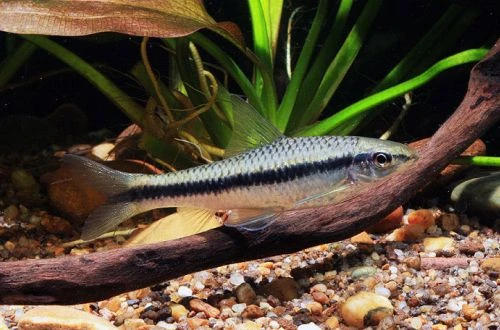
Other scientific names: Crossocheilus siamensis, Crossochilus oblongus, Epalzeorhynchos siamensis, Epalzeorhynchos stigmaeus, Epalzeorhynchus siamensis, Epalzeorhynchus stigmaeus
The Siamese Algae Eater, scientifically known as Crossocheilus oblongus, is a member of the Cyprinidae family. It is highly valued for its dietary preferences and is considered one of the most effective algae eaters. However, it's worth noting that its close relatives, which are not averse to feasting on ornamental aquarium plants, are often found in pet stores. If the primary goal of acquiring this species is specifically to combat algae, there is a risk of making the wrong choice.
Adult Siamese Algae Eaters reach a length of approximately 7–7.5 cm. Sexual dimorphism is weakly expressed: females are only slightly larger than males. For this reason, determining the sex of an individual fish, especially in a mixed age group, is extremely difficult. The body coloration is silvery, adorned with a dark horizontal stripe running from head to tail. The fins and tail remain translucent. Outwardly, this fish resembles Epalzeorhynchus, which leads to frequent identification errors. In addition, there are several closely related species with almost identical body patterns and coloration.
The natural habitat of these fish is Southeast Asia: Peninsular Malaysia, southern and western Thailand, and the Greater Sunda Islands (Borneo, Sumatra). Several nearly indistinguishable species of the genus are sold under the name “Siamese algae eater”, so the origin of any particular fish is usually impossible to establish. They inhabit small rivers and streams with fast currents, preferring areas among boulders and submerged snags. During the spawning period, they migrate to deeper and murkier waters. Normally, these fish prefer well-lit shallow areas where algae thickly cover the bottom.
The Siamese Algae Eater is a peaceful and calm fish that coexists well with other non-aggressive species of comparable size. Intraspecific relationships are based on a hierarchy, where stronger individuals dominate weaker ones. It is recommended to keep them in groups of at least 6–8 individuals. With fewer numbers, members of the school may show aggression towards weaker relatives.
For a comfortable existence, a school of six fish will require an aquarium of at least 100 liters. This species is undemanding and can adapt to various conditions, although it thrives best in an environment that closely mimics its natural habitat. In aquarium design, it is recommended to create a moderate current, imitating river flows, using accumulations of boulders, as well as a sandy or fine gravel substrate. Several snags and lush plant thickets will also be appropriate. Bright lighting is welcomed, as it promotes the growth of algae, which is an important part of the algae eater's diet. Like many fish species inhabiting flowing waters, the Siamese Algae Eater is sensitive to an excess of organic waste. Therefore, regular maintenance is necessary, including partial water changes and gravel vacuuming, as well as installing a powerful filtration system. The latter, in addition to its main function, can also create the necessary current in the aquarium.
In natural conditions, the diet of Siamese Algae Eaters consists of algae and various types of phytoplankton. In an aquarium environment, it is recommended to offer plant-based foods, such as flakes or pellets based on spirulina or similar components. The diet can be successfully supplemented with pieces of zucchini, cucumber, spinach, apples, and blanched peas. Algae naturally growing on the walls and decor elements in the aquarium can also serve as an additional food source. It is important to note that several closely related species are often supplied under one name, some of which, in addition to algae, may also eat the leaves of aquarium plants, damaging the flora of the underwater garden.
In natural conditions, the spawning process is accompanied by prolonged migrations and changes in water hydrochemical composition. Recreating such specific environmental conditions in a home aquarium presents significant difficulties. Consequently, at the time of writing this text, no successful cases of breeding Siamese Algae Eaters in home aquariums have been recorded. Breeding these fish on commercial farms is carried out using hormonal preparations.
The main cause of most fish diseases is unsuitable living conditions and insufficient quality food. Upon detecting the first signs of illness, the first step should be to measure water parameters and check the concentration of dangerous substances such as ammonia, nitrites, and nitrates. If the readings deviate from the norm, it is necessary to correct them first, and only then proceed with treatment.
When choosing Crossocheilus oblongus, it is important to be vigilant, as outwardly similar species, such as Epalzeorhynchus kalopterus (the "flying fox"), which are less effective at combating algae and can exhibit aggression, are often sold under this name. A healthy individual should be active, constantly exploring surfaces for food, have a clear black stripe running from the tip of the snout through the entire body to the very end of the caudal fin, and transparent fins without colored hues. Avoid fish with signs of emaciation, body or fin damage, or individuals that appear lethargic or stay near the water surface. Given that the species is often confused with relatives, it is recommended to carefully study the stripe pattern and fin shape before making a purchase.
The essentials: size, tank volume, water parameters and care
An adult reaches 7 cm in length. Plan the tank around the maximum size: the fish quickly outgrows a cramped setup.
The recommended volume is 100 L. A smaller tank speeds up nitrate build-up and raises stress levels.
Temperature 20–26 °C, pH 6–7.5, hardness 1–15 dGH. Stability matters more than exact values: sudden swings are harder on the fish than a small deviation from the ideal.
Around 10 years when kept properly. Lifespan depends directly on tank volume, water quality and a varied diet.
Temperament: peaceful (regular). Keep this in mind when choosing tank mates.
Recommended setup: medium group (6–8 individuals). Ignoring this is a common cause of stress and disease.
Diet type: plant-based (algae, vegetables). Feed small portions that are finished within a couple of minutes — overfeeding does more harm than underfeeding.
The scientific name of the species is Crossocheilus oblongus, family Cyprinids (Cyprinidae). It also appears in the literature as: Crossocheilus siamensis, Crossochilus oblongus, Epalzeorhynchos siamensis.
Matched by family, categories and overlapping keeping conditions
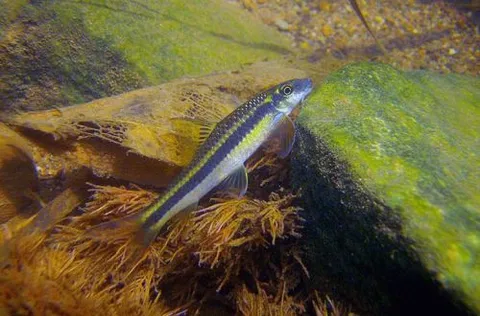
Ceratogarra cambodgiensis
Ceratogarra cambodgiensis, also known as the false Siamese algae eater or Cambodian Garra, belongs to the family Cyprinidae (Carps). This herbivorous inhabitant of mountain rivers has high demands for water quality and…
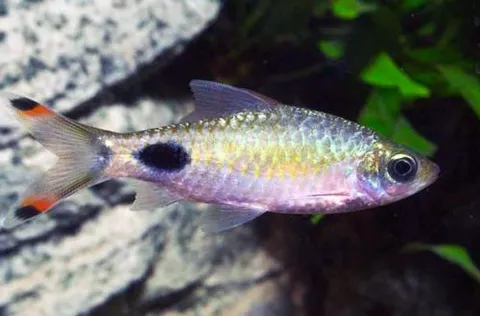
Puntius mahecola
The fish known as Mahecola Barb (scientific name Puntius mahecola) is classified within the family Cyprinidae. It is very popular in Asian countries, especially India, but outside of this region, in Europe and America,…
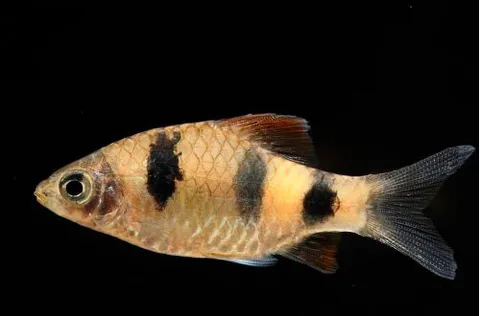
Pethia setnai
Pethia setnai, known as the Setnai Barb, belongs to the family Cyprinidae. This species of barb was named after the Indian ichthyologist Setna, who was involved in its classification. This fish is easy to keep and…
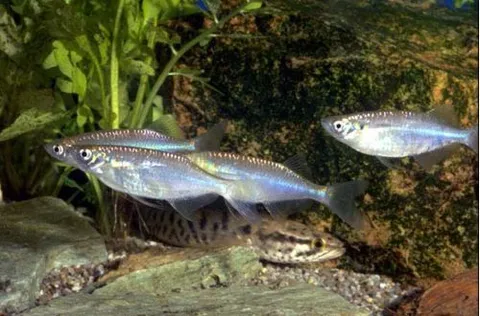
Laubuka caeruleostigmata
Laubuka caeruleostigmata, also known as the blue-spotted chela, is a member of the carp family (Cyprinidae). This species originates from extensive regions of Southeast Asia, where it inhabits the Mekong and Chao Phraya…