Temperature10 – 22 °C
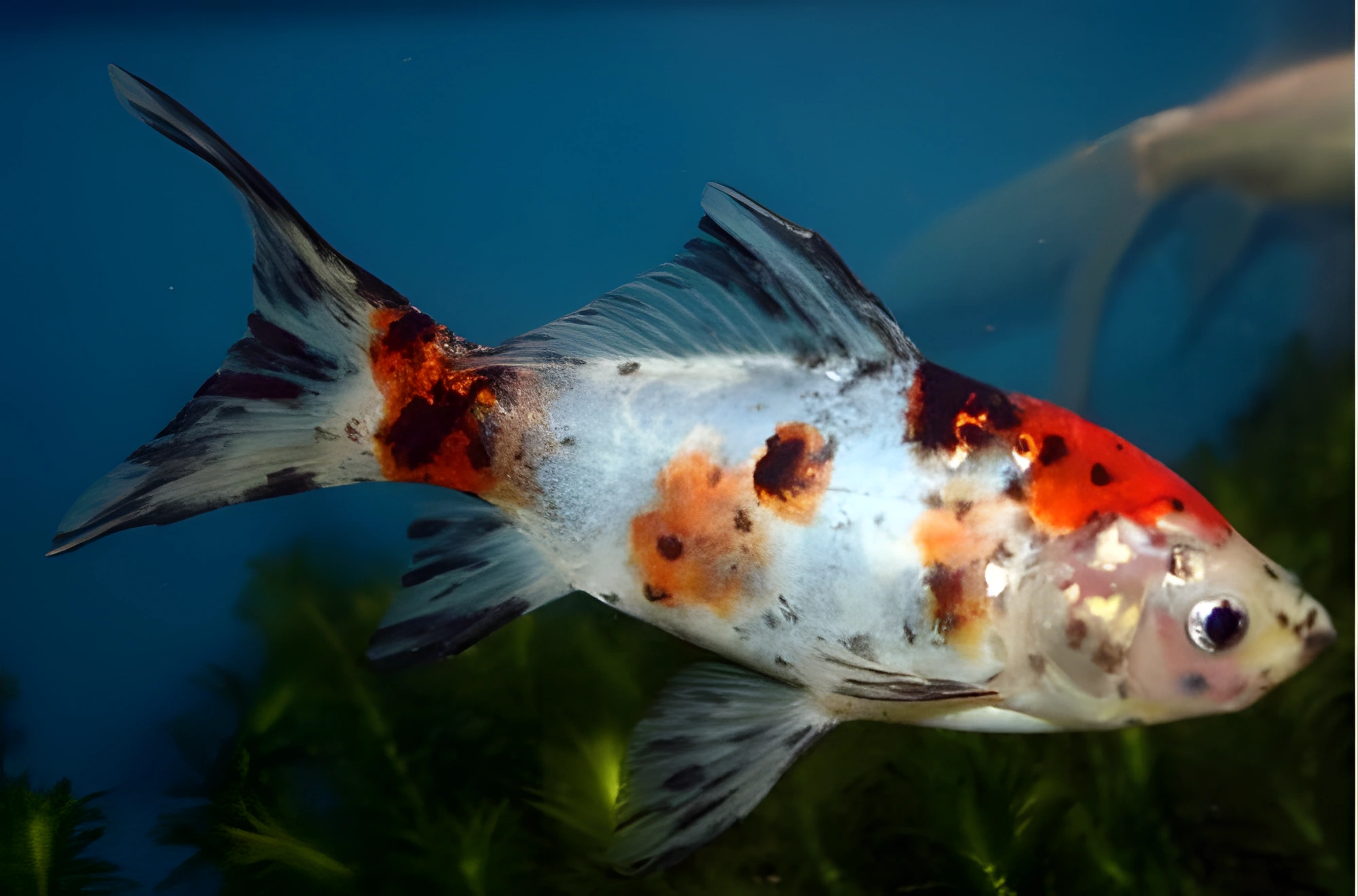
GoldfishConservation status: Least concern LC
Other scientific names: Carasius auratus, Carassius buergeri, Carassius burgeri, Carassius carassius, Carassius chinensis, Carassius coeruleus
The history of the Shubunkin begins in Japan, where in 1892, breeder Yoshigoro Akiyama created this variety. He crossed a common Goldfish, a Calico Telescope Eye, and a single-tailed Wakin. In 1900, the new form received the official Japanese name Syubunkin (Jap. 朱文金), which became known in Russian transcription as Shubunkin. This name in Japan is associated with red brocade used to make kimonos.
- Required aquarium volume
- 100 L
- Size in aquarium
- 16 – 18 cm
- Temperature
- 10 – 22 °C
- Temperament
- Peaceful (regular)
Parameters
Water pHSlightly acidic (6) – Slightly alkaline (8)
Water dHSoft (5) – Very hard (19)
Water salinityno salt (freshwater)
Size in aquarium16 – 18 cm
Lifespan15 years
TemperamentPeaceful (regular)
Toward small fishnot a predator
Required aquarium volume100 L
Lightingmoderate (regular)
Substrateany (no restrictions)
Water flowweak
FeedingAny (universal)
CareBoth solitary and in group (flexible)
Description
The Shubunkin is a selective breeding form of goldfish with an elongated, streamlined body and a single caudal fin. A distinctive feature is its calico coloration, which is a combination of red, orange, white, black, and blue spots on translucent scales. Depending on the fin shape, several types are distinguished, including the London Shubunkin (with short fins) and the Bristol Shubunkin (with a broad, rounded tail). Sexual differences become noticeable during spawning: males develop small white tubercles on their gill covers, while females become more rounded due to eggs.
Habitat
This species was bred in Japan at the beginning of the 20th century through selective breeding of crucian carp. Shubunkins do not occur in nature, as they are an exclusively artificially bred form. They are adapted to life in stagnant or slow-moving bodies of water, ponds, and artificial aquariums. In captivity, they prefer cool water with good aeration and filtration, as their active lifestyle and intense metabolism produce a large amount of organic waste.
Behavior and Compatibility
These are active, hardy, and peaceful fish that prefer to stay in schools. Thanks to their mobility and streamlined body shape, they are excellent swimmers, allowing them to successfully coexist with other types of goldfish (e.g., Comets or common goldfish). It is not recommended to keep them with slow-moving veiled goldfish forms or aggressive species capable of nipping fins. In an aquarium, they often show curiosity and may dig in the substrate, so plants should be chosen with strong root systems or artificial alternatives should be used.
Care and Maintenance
This fish inherited hardiness and undemanding feeding habits from its ancestors. The Shubunkin's ability to successfully adapt to a wide range of temperatures and hydrochemical parameters makes it possible to keep them in both home aquariums and outdoor ponds. They do not have special requirements for decor elements. They coexist perfectly with other peaceful species of similar size.
Diet
Shubunkins are omnivorous fish. Their diet should combine high-quality dry foods in the form of flakes or pellets with vegetable additives and protein components. It is useful to include frozen or live foods in their menu, such as daphnia, artemia, or bloodworms, as well as blanched vegetables (peas, spinach, zucchini). Feeding should be done in small portions 1–2 times a day, strictly ensuring that the fish eat everything offered within a couple of minutes, which helps avoid water pollution and digestive problems.
Breeding and Reproduction
Breeding Shubunkins is considered a relatively simple process, as they do not have specific body structure features that hinder spawning. A rise in water temperature and an increase in daylight hours usually stimulate reproduction. For spawning, it is recommended to use a separate aquarium with a substrate of fine-leaved plants or special spawning mops. After egg-laying, the parents should be removed to prevent them from eating the eggs. Fry begin to feed independently a few days after hatching and require frequent feeding with small foods.
Diseases
The most common health problems are associated with poor water quality, high levels of nitrogenous compounds, or an improper diet. Bacterial infections, such as fin rot, are common, as are fungal skin lesions. Due to the anatomical features of their digestive system, these fish are prone to swim bladder disorders, which can manifest as loss of balance or swimming sideways. Prevention involves maintaining water cleanliness, regular water changes, and avoiding overfeeding.
How to choose
When choosing a healthy specimen, pay attention to the fish's activity: it should swim smoothly, without visible effort, and not hover at the surface or bottom. The body should be clean, without visible ulcers, spots, fin damage, or signs of film. The eyes should be clear, and the gills should be actively working. Avoid purchasing fish with deformed mouths or signs of emaciation. It is recommended to acquire specimens that show interest in food and actively interact with tank mates.
Frequently asked questions
The essentials: size, tank volume, water parameters and care
How big does Shubunkin get?
An adult reaches 16–18 cm in length. Plan the tank around the maximum size: the fish quickly outgrows a cramped setup.
What size aquarium does Shubunkin need?
The minimum recommended volume is 100 L. A smaller tank speeds up nitrate build-up and raises stress levels.
What water parameters does Shubunkin need?
Temperature 10–22 °C, pH 6–8, hardness 5–19 dGH. Stability matters more than exact values: sudden swings are harder on the fish than a small deviation from the ideal.
How long does Shubunkin live?
Around 15 years when kept properly. Lifespan depends directly on tank volume, water quality and a varied diet.
Is Shubunkin aggressive?
Temperament: peaceful (regular). Keep this in mind when choosing tank mates.
How many Shubunkin should be kept together?
Recommended setup: both solitary and in group (flexible). Ignoring this is a common cause of stress and disease.
What does Shubunkin eat?
Diet type: any (universal). Feed small portions that are finished within a couple of minutes — overfeeding does more harm than underfeeding.
What is the scientific name of Shubunkin?
The scientific name of the species is Carassius auratus, family Cyprinids (Cyprinidae). It also appears in the literature as: Carasius auratus, Carassius buergeri, Carassius burgeri.