Temperature24 – 30 °C
Natural range
- South America area
CatfishConservation status: Least concern LC
Other scientific names: Doras costatus, Doras dentatus, Doras helicophilus, Mystus ascita, Platydoras dentatus, Platydoras helicophilus
The Chocolate Raphael Catfish, scientifically known as Platydoras costatus, belongs to the family Doradidae and has acquired several common names such as Striped Raphael Catfish, Platydoras striped, or Thorny Platydoras. This species is particularly popular among aquarists, its friendly nature highly valued, even though it is carnivorous.
- Required aquarium volume
- 280 L
- Size in aquarium
- 25 cm
- Temperature
- 24 – 30 °C
- Temperament
- Peaceful, active/mobile
Parameters
Water pHSlightly acidic (5.8) – Neutral (7)
Water dHSoft (4) – Very hard (18)
Water salinityno salt (freshwater)
Size in aquarium25 cm
Lifespan15 years
TemperamentPeaceful, active/mobile
Toward small fishnot a predator
Required aquarium volume280 L
Lightingmoderate (regular)
Substratecoarse sand / gravel / pebbles
Water flowmoderate
FeedingMeat with plant additives (omnivores)
CareMixed (solitary / pair / group)
Description
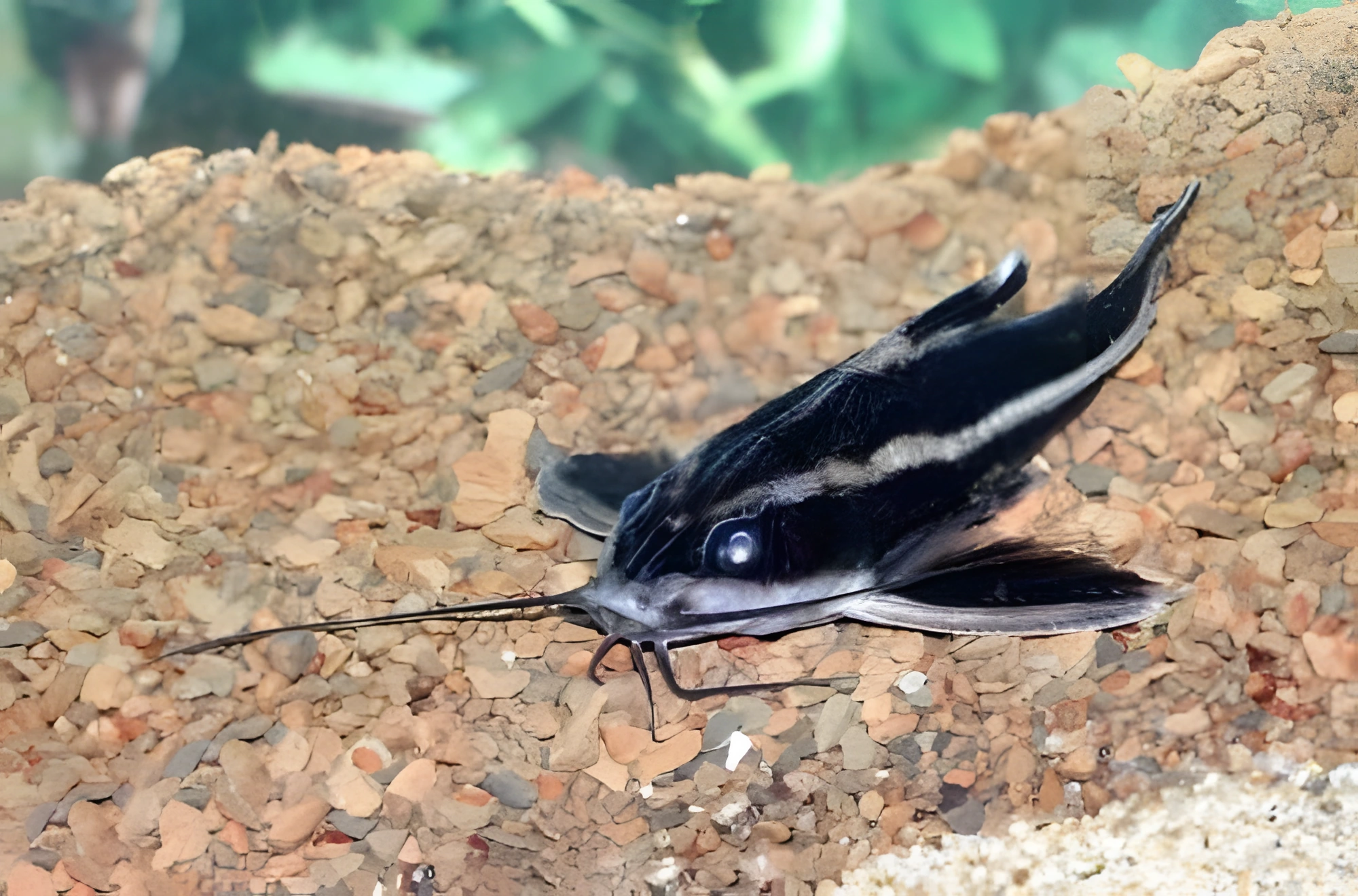
The body of the Platydoras is adorned with broad black and white stripes that extend from head to tail, with similar patterns present on the fins. Its pelvic fins are significantly larger than the caudal fin and spread out during movement, resembling wings. Near the mouth are sensitive whisker-like barbels, equipped with numerous receptors that help the catfish locate food. The catfish defends itself from larger predators using small, curved spines that cover its entire body. Although the catfish is nocturnal, it can often be observed swimming freely around the aquarium during the day.
Habitat
In its natural habitat, the Striped Platydoras is found in the Amazon and Orinoco river basins, preferring the soft mouths of numerous tributaries of these large water bodies. These catfish like to hide on the bottom or in dense plant thickets. Their diet in the wild consists of mollusks, crustaceans, as well as plant debris such as fallen leaves and fruits.
Behavior and Compatibility
The Chocolate Raphael Catfish demonstrates friendliness towards most fish species, with the exception of very small individuals up to 3–4 cm in size, which could potentially become its prey. Its defensive mechanisms allow it to be kept even with aggressive species, such as some cichlids.
Care and Maintenance
The fish inhabits the bottom layers of the water, making it vulnerable to poisoning by ammonia compounds formed from decomposing organic matter. To maintain cleanliness, it is recommended to siphon debris from the substrate every two weeks, which also contributes to partial water changes. The catfish needs an aquarium of at least 280 liters, equipped with many bottom shelters—snags, grottoes, as well as thickets of plants with sturdy leaves and a strong root system. Coarse sand or fine, smooth gravel should be used as substrate so that the catfish does not injure itself when burrowing. Due to its sharp spines, which can easily damage bags, the fish should be transported in plastic or glass containers. When working in the aquarium, it is recommended to wear gloves, as an accidental prick from a spine can be quite painful.
Diet
It is important to provide the catfish with a sufficient amount of protein food. In a home aquarium, it can be fed bloodworms, earthworms, tubifex, or frozen foods. Commercial dry foods such as tablets, granules, or flakes are suitable as supplementary nutrition. Feeding is recommended daily before turning off the aquarium lights, optimally in the morning and evening. It should be remembered that overfeeding the fish is strictly forbidden, as it lacks a sense of satiety, which can lead to death from stomach rupture.
Breeding and Reproduction
Breeding of this species is practically non-existent in amateur aquariums. In their natural environment, the fish lay their eggs in bottom depressions or nests made of plant debris, sometimes building them near the water surface. After spawning, the male leaves the clutch, abandoning the offspring. Reliable information on stimulating spawning and successfully raising fry in captivity is unavailable.
Diseases
The species has a strong immune system but is sensitive to water quality and the accumulation of organic waste. With poor care, fin and barbel necrosis, as well as corneal opacity due to excessive water hardness, are possible. The main preventive measure is regular substrate siphoning and maintaining stable environmental parameters. The fish is prone to overeating, which can lead to life-threatening digestive disorders.
How to choose
When purchasing, active individuals with intact skin and fins should be chosen. It is important to ensure there are no signs of emaciation or damage sustained during transport due to sharp spines. It is recommended to avoid individuals with cloudy eyes or a film on their body. Transport should be strictly carried out in rigid plastic or glass containers, as the fish can easily tear ordinary plastic bags with its spiny rays.
Frequently asked questions
The essentials: size, tank volume, water parameters and care
How big does Chocolate Raphael Catfish get?
An adult reaches 25 cm in length. Plan the tank around the maximum size: the fish quickly outgrows a cramped setup.
What size aquarium does Chocolate Raphael Catfish need?
The minimum recommended volume is 280 L. A smaller tank speeds up nitrate build-up and raises stress levels.
What water parameters does Chocolate Raphael Catfish need?
Temperature 24–30 °C, pH 5.8–7, hardness 4–18 dGH. Stability matters more than exact values: sudden swings are harder on the fish than a small deviation from the ideal.
How long does Chocolate Raphael Catfish live?
Around 15 years when kept properly. Lifespan depends directly on tank volume, water quality and a varied diet.
Is Chocolate Raphael Catfish aggressive?
Temperament: peaceful, active/mobile. Keep this in mind when choosing tank mates.
How many Chocolate Raphael Catfish should be kept together?
Recommended setup: mixed (solitary / pair / group). Ignoring this is a common cause of stress and disease.
What does Chocolate Raphael Catfish eat?
Diet type: meat with plant additives (omnivores). Feed small portions that are finished within a couple of minutes — overfeeding does more harm than underfeeding.
What is the scientific name of Chocolate Raphael Catfish?
The scientific name of the species is Platydoras costatus, family Doradidae (Thorny Catfishes). It also appears in the literature as: Doras costatus, Doras dentatus, Doras helicophilus.