Temperature23 – 30 °C
Natural range
- Malay Peninsula area
- Sumatra area
Labyrinth fishConservation status: Data deficient DD
Other scientific names: Osphromenus malayanus, Sphaerichthys malayanus, Sphaerichthys osphronemoides
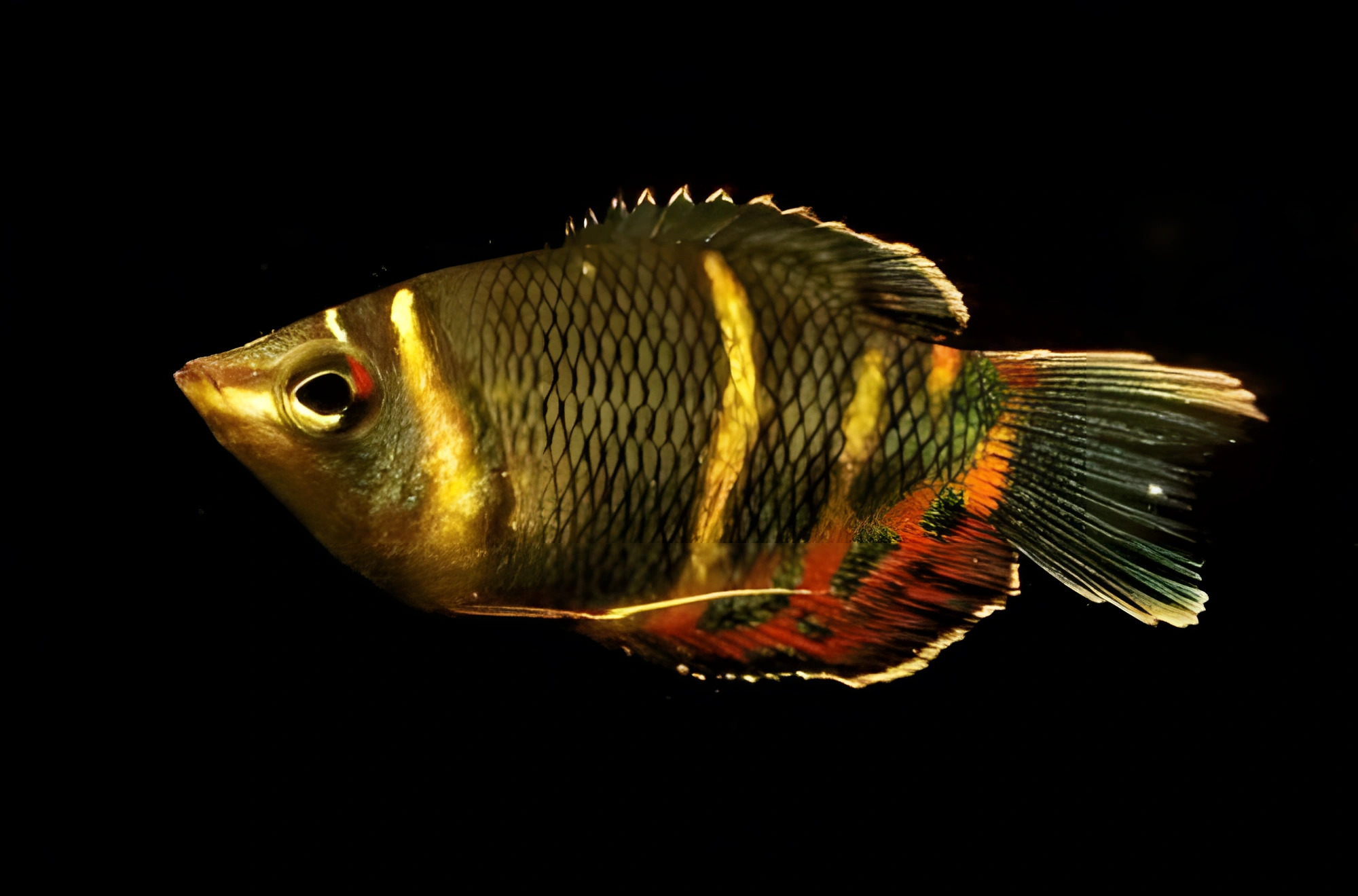
Sphaerichthys osphromenoides, known as the Chocolate Gourami, belongs to the family Osphronemidae. This peaceful fish is distinguished by its attractive appearance and coexists well with many species that require similar living conditions. Its keeping and breeding are not particularly difficult. The fish exhibits developed parental instincts: care for the offspring is primarily the responsibility of the female, which is unusual for labyrinth fish.
- Required aquarium volume
- 50 L
- Size in aquarium
- 5 cm
- Temperature
- 23 – 30 °C
- Temperament
- Peaceful (regular)
Parameters
Water pHAcidic (4) – Neutral (6.5)
Water dHVery soft (1) – Soft (5)
Water salinityno salt (freshwater)
Size in aquarium5 cm
Lifespan4 years
TemperamentPeaceful (regular)
Toward small fishnot a predator
Required aquarium volume50 L
Lightingdimmed
Substratesoft silted
Water flownone or stagnant (no flow)
FeedingAny (universal)
CareBoth solitary and in group (flexible)
Description
Adults grow up to 5 cm in length. Their coloration is predominantly brown, complemented by several lighter vertical stripes. Depending on their geographical origin, red markings can sometimes be seen on the fins. The differences between males and females are subtle, so sexual dimorphism is practically imperceptible in their coloration.
Habitat
The natural habitat of the Chocolate Gourami spans Southeast Asia, including Indochina and the Malay Peninsula. These fish inhabit peat swamps and adjacent streams, where the water is acidic (low pH) and takes on a rich brown hue. This color is due to a high concentration of humic acids and other substances released during the decomposition of plant organic matter. Dense canopies of tropical forests almost completely block sunlight from reaching the water surface, and the bottom of these bodies of water is covered with fallen branches, leaves, and tree fruits.
Behavior and Compatibility
This peaceful species thrives both when kept alone and in a group. No conflicts are observed between individuals of the same species; only minor skirmishes may occur during the breeding season, which do not cause injury and serve to establish hierarchy. When choosing tank mates, caution should be exercised: the Chocolate Gourami cannot successfully compete with active schooling or large fish. In such conditions, it will be pushed away from feeders and become timid. It is recommended to prefer small species, such as Rasboras.
Care and Maintenance
For keeping a single pair of fish, an aquarium of at least 50 liters is required. A soft substrate is preferable as a bottom material. The aquascape should include dense thickets of rooted and floating plants that prefer shade, as well as various shelters — these can be driftwood or decorative elements like sunken ships and castles. Optimal conditions are achieved with an acidic pH, low carbonate hardness, dim lighting, and no strong internal current. Equipment should be selected based on these requirements. To mimic natural conditions, a filter with a peat insert can be used, which helps lower the pH, and dried tree leaves can be placed on the aquarium bottom. As they decompose, the leaves release humic acids and other chemicals into the water, giving it a light brown tint. Leaves should be dried beforehand, then soaked until they sink. Aquarium maintenance includes regular cleaning of the substrate from organic debris, weekly 10–15% water changes with fresh water, and replacement of leaves, if used, every one to two weeks.
Diet
The diet of the Chocolate Gourami includes all types of dry, frozen, and live foods suitable for their size. To maintain vibrant coloration, it is recommended to alternate several types of food, for example, combining flakes with bloodworms or brine shrimp.
Breeding and Reproduction
The breeding strategy of the Chocolate Gourami is unique among labyrinth fish. While males of most related species build airy bubble nests at the surface or mouthbrood eggs throughout the incubation period, the female Chocolate Gourami takes full responsibility for the future offspring. Spawning can occur at any time of year under favorable conditions. During the breeding period, females acquire a richer chocolate coloration, and their light stripes become golden. If the fish are kept in a group, courtship begins at the initiative of the alpha male. The spawning process can last several hours. Immediately after laying the eggs, the female collects them in her mouth, similar to males of related species, and then hides in a secure shelter. Fry appear after 7–10 days; their number rarely exceeds 30 individuals. To increase the chances of survival, it is advisable to transfer the fry to a separate aquarium with similar water parameters.
Diseases
The main cause of most diseases in Leaf Fish is unsuitable keeping conditions and poor-quality nutrition. If initial symptoms are observed, it is first necessary to check water parameters and the concentration of dangerous substances such as ammonia, nitrites, and nitrates. If the indicators deviate from the norm, they should be brought back into order, and only then should treatment begin. More detailed information on symptoms and treatment methods can be found in the "Aquarium Fish Diseases" section.
How to choose
When choosing Chocolate Gouramis, pay attention to their activity and skin condition. Healthy individuals should be active, without visible damage, ulcers, white film, or signs of emaciation. Avoid purchasing fish with sunken bellies or signs of apathy, as this species is sensitive to stress and water quality. In the store, fish often appear timid, which is normal, but they should show interest in food during feeding. It is recommended to acquire a group of 6 or more individuals for better adaptation and display of natural behavior, and to inquire about the conditions in which they were kept, as an abrupt change in water parameters can be detrimental.
Frequently asked questions
The essentials: size, tank volume, water parameters and care
How big does Chocolate Gourami get?
An adult reaches 5 cm in length. Plan the tank around the maximum size: the fish quickly outgrows a cramped setup.
What size aquarium does Chocolate Gourami need?
The minimum recommended volume is 50 L. A smaller tank speeds up nitrate build-up and raises stress levels.
What water parameters does Chocolate Gourami need?
Temperature 23–30 °C, pH 4–6.5, hardness 1–5 dGH. Stability matters more than exact values: sudden swings are harder on the fish than a small deviation from the ideal.
How long does Chocolate Gourami live?
Around 4 years when kept properly. Lifespan depends directly on tank volume, water quality and a varied diet.
Is Chocolate Gourami aggressive?
Temperament: peaceful (regular). Keep this in mind when choosing tank mates.
How many Chocolate Gourami should be kept together?
Recommended setup: both solitary and in group (flexible). Ignoring this is a common cause of stress and disease.
What does Chocolate Gourami eat?
Diet type: any (universal). Feed small portions that are finished within a couple of minutes — overfeeding does more harm than underfeeding.
What is the scientific name of Chocolate Gourami?
The scientific name of the species is Sphaerichthys osphromenoides, family Osphronemidae. It also appears in the literature as: Osphromenus malayanus, Sphaerichthys malayanus, Sphaerichthys osphronemoides.