Temperature21 – 26 °C
Natural range
- Mexico area
- Central America area
- Colombia area
- Venezuela area
LivebearersConservation status: Least concern LC
Other scientific names: Gambusia modesta, Gambusia plumbea, Lembesseia parvianalis, Mollienesia altissima, Mollienesia macrura, Mollienesia pallida
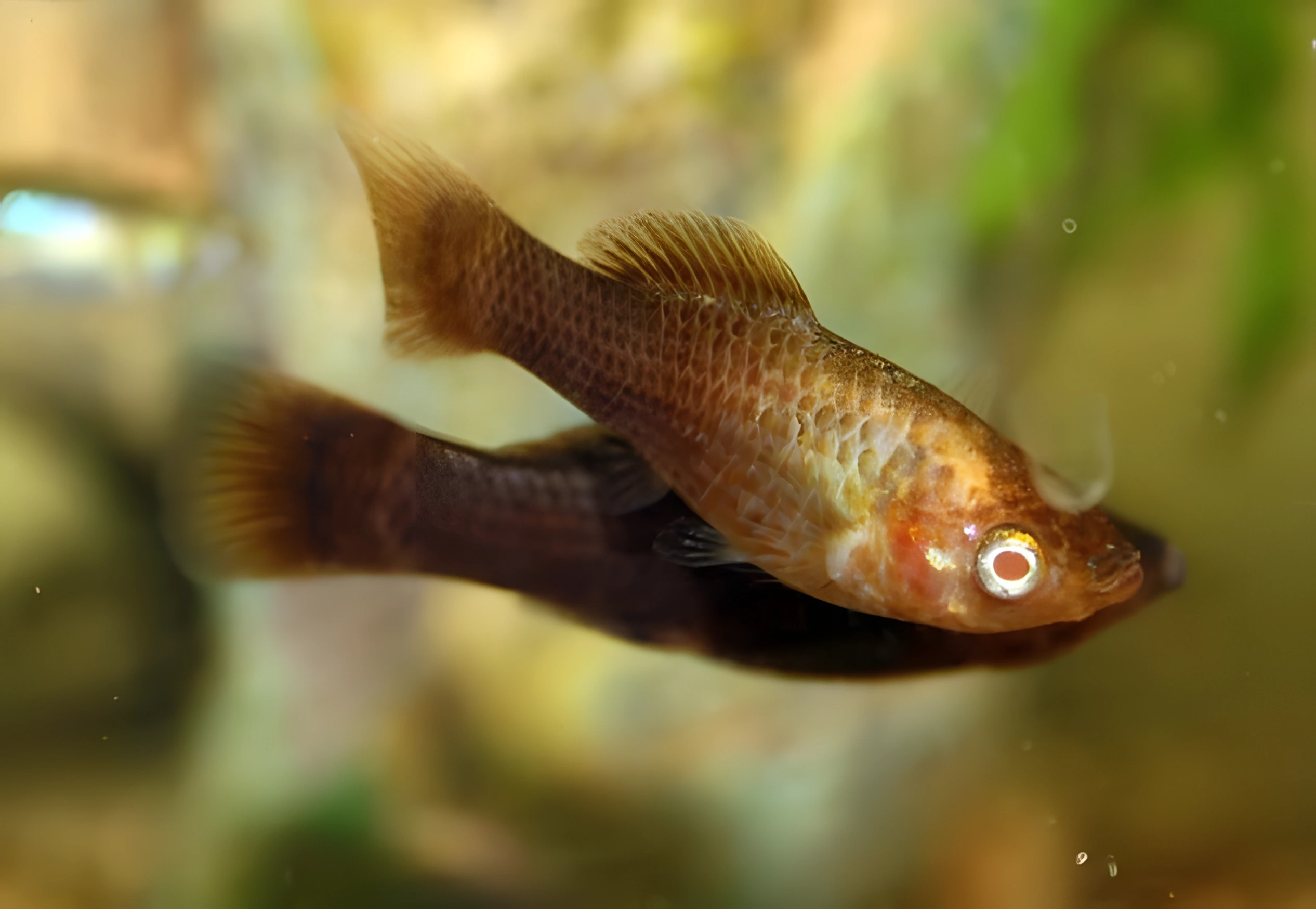
Among the numerous selective breeding forms of mollies, the Chocolate Molly is frequently encountered, also known in the trade as Chocolate Molly. Its characteristic feature is the brownish coloration of its body and fins. This color can appear unevenly, sometimes resembling a fusion of chocolate speckles, or it can vary from light to dark shades, and at times include pigments of other tones, such as red.
- Required aquarium volume
- 150 L
- Size in aquarium
- 12 – 18 cm
- Temperature
- 21 – 26 °C
- Temperament
- Peaceful (regular)
Parameters
Water pHNeutral (7) – Slightly alkaline (8.5)
Water dHMedium hardness (11) – Very hard (30)
Water salinitymoderate (5–10 g/L)
Size in aquarium12 – 18 cm
Lifespan4 years
TemperamentPeaceful (regular)
Toward small fishnot a predator
Required aquarium volume150 L
Lightingany
Substrateany (no restrictions)
Water flowweak
FeedingMixed diet (meat + plant-based)
CareMixed (solitary / pair / group)
Description
The Chocolate Molly is a selectively bred variation of the species Poecilia sphenops. The fish have an elongated body, moderately compressed laterally, and rounded fins. The coloration is characterized by rich chocolate or dark brown hues, sometimes with a velvety sheen. Sexual dimorphism is clearly expressed: males are slimmer and smaller than females, possessing a modified anal fin — the gonopodium, while females are larger, more massive, and have a rounded abdomen.
Habitat
The natural species Poecilia sphenops inhabits fresh and brackish waters of Central and South America, including territories from Mexico to Colombia and Venezuela. In nature, the fish are often found in coastal zones where fresh and marine waters mix. The chocolate form is a result of artificial selection and is not found in natural conditions.
Behavior and Compatibility
These are peaceful and active fish, suitable for a community tank with non-aggressive neighbors. Within the species, males may show increased attention to females, so it is recommended to keep them in groups with a predominance of females. The fish prefer to stay in the middle water layers and need an aquarium with sufficient free swimming space and plant thickets for shelter.
Care and Maintenance
In the wild, these fish prefer shallow waters abundant with dense aquatic vegetation. In a home aquarium, it is desirable to recreate a similar environment, arranging plant thickets in such a way that open areas remain for swimming. Females, juveniles, and fry can find shelter in these thickets. Large dominant males, striving for reproduction, may show excessive attention to females, so the presence of shelters for the latter becomes a necessity. In small tanks, for the same purpose, it is recommended to form a group based on the “harem” principle, where females predominate. Other aspects of aquarium design are left to the aquarist's discretion, based on their personal preferences and capabilities. The minimum permissible aquarium volume is determined by the specific species of molly. For example, for 3–4 Chocolate Mollienisia sphenops, 100 L will be sufficient, while Mollienisia velifera will require at least 150 L. As with most other aquarium inhabitants, successful keeping depends on several key factors: maintaining water purity with optimal pH and GH values, balanced nutrition, and the presence of peaceful tankmates. Dry foods (flakes, granules) with a high content of vegetable components can be used as the basis of the daily diet. A lack of plant food can lead to fish damaging delicate parts of aquatic plants. Aqvium flake food, which has become a bestseller on Ozon with a rating of 4.9, is suitable for most aquarium fish. It is made from raw materials that comply with new European Union standards (EU 2018/848) and is enriched with vitamins A, C, D3, E, as well as Omega 3-6. The product can be purchased on Ozon. Coexistence with other livebearing species, such as Guppies, Platies, Swordtails, as well as with representatives of other groups of comparable size, is usually successful.
Diet
The species is omnivorous. The diet should include both animal and plant components. It is recommended to use high-quality dry foods with added spirulina or other vegetable ingredients, and also periodically offer blanched lettuce leaves, zucchini, or cucumbers. A lack of fiber can negatively affect the fish's digestion.
Breeding and Reproduction
Breeding is not difficult, as the species is livebearing. Fertilization occurs inside the female's body, after which she gives birth to fully formed fry. The incubation period lasts from 4 to 6 weeks. Since adults are prone to cannibalism, it is recommended to move the pregnant female to a separate breeding tank with dense vegetation, where the fry can find shelter.
Diseases
Fish are susceptible to typical livebearer diseases, including ichthyophthiriasis, fin rot, and fungal infections. The main cause of diseases is often non-compliance with water parameters or sharp temperature fluctuations. Prevention includes maintaining cleanliness, regular water changes, and observing quarantine when purchasing new specimens.
How to choose
When choosing, pay attention to the fish's activity, the cleanliness of their skin, and the absence of white film or damage to the fins. Healthy specimens should have a robust physique and show interest in food. Avoid purchasing fish with signs of emaciation, clamped fins, or unnatural behavior, such as prolonged hovering in one place or attempts to rub against the substrate.
Frequently asked questions
The essentials: size, tank volume, water parameters and care
How big does Chocolate Molly get?
An adult reaches 12–18 cm in length. Plan the tank around the maximum size: the fish quickly outgrows a cramped setup.
What size aquarium does Chocolate Molly need?
The minimum recommended volume is 150 L. A smaller tank speeds up nitrate build-up and raises stress levels.
What water parameters does Chocolate Molly need?
Temperature 21–26 °C, pH 7–8.5, hardness 11–30 dGH. Stability matters more than exact values: sudden swings are harder on the fish than a small deviation from the ideal.
How long does Chocolate Molly live?
Around 4 years when kept properly. Lifespan depends directly on tank volume, water quality and a varied diet.
Is Chocolate Molly aggressive?
Temperament: peaceful (regular). Keep this in mind when choosing tank mates.
How many Chocolate Molly should be kept together?
Recommended setup: mixed (solitary / pair / group). Ignoring this is a common cause of stress and disease.
What does Chocolate Molly eat?
Diet type: mixed diet (meat + plant-based). Feed small portions that are finished within a couple of minutes — overfeeding does more harm than underfeeding.
What is the scientific name of Chocolate Molly?
The scientific name of the species is Poecilia sphenops, family Poeciliidae. It also appears in the literature as: Gambusia modesta, Gambusia plumbea, Lembesseia parvianalis.