Temperature20 – 26 °C
Natural range
- Mae Hong Son Province area
- Thailand area
LoachesConservation status: Data deficient DD
Other scientific names: Noemacheilus maepaiensis
The fish, known scientifically as Schistura maepaiensis, belongs to the family Nemacheilidae and is called Schistura Mae Hong Son. This name was given to it in honor of the mountainous province in northeastern Thailand where it was first discovered. Although this species is not widely popular among aquarists, it can sometimes be found for sale. Schistura Mae Hong Son is relatively undemanding; however, successful keeping requires creating a fairly strong current, which, in turn, imposes certain restrictions on the choice of compatible species.
- Required aquarium volume
- 80 L
- Size in aquarium
- 4 cm
- Temperature
- 20 – 26 °C
- Temperament
- Peaceful (regular)
Parameters
Water pHSlightly acidic (6) – Neutral (7.5)
Water dHVery soft (2) – Hard (12)
Water salinityno salt (freshwater)
Size in aquarium4 cm
Lifespan5 years
TemperamentPeaceful (regular)
Toward small fishnot a predator
Required aquarium volume80 L
Lightingdimmed or moderate
Substraterocky (rock formations, boulders, etc.)
Water flowmoderate or strong
FeedingSinking (any)
CareBoth solitary and in group (flexible)
Description
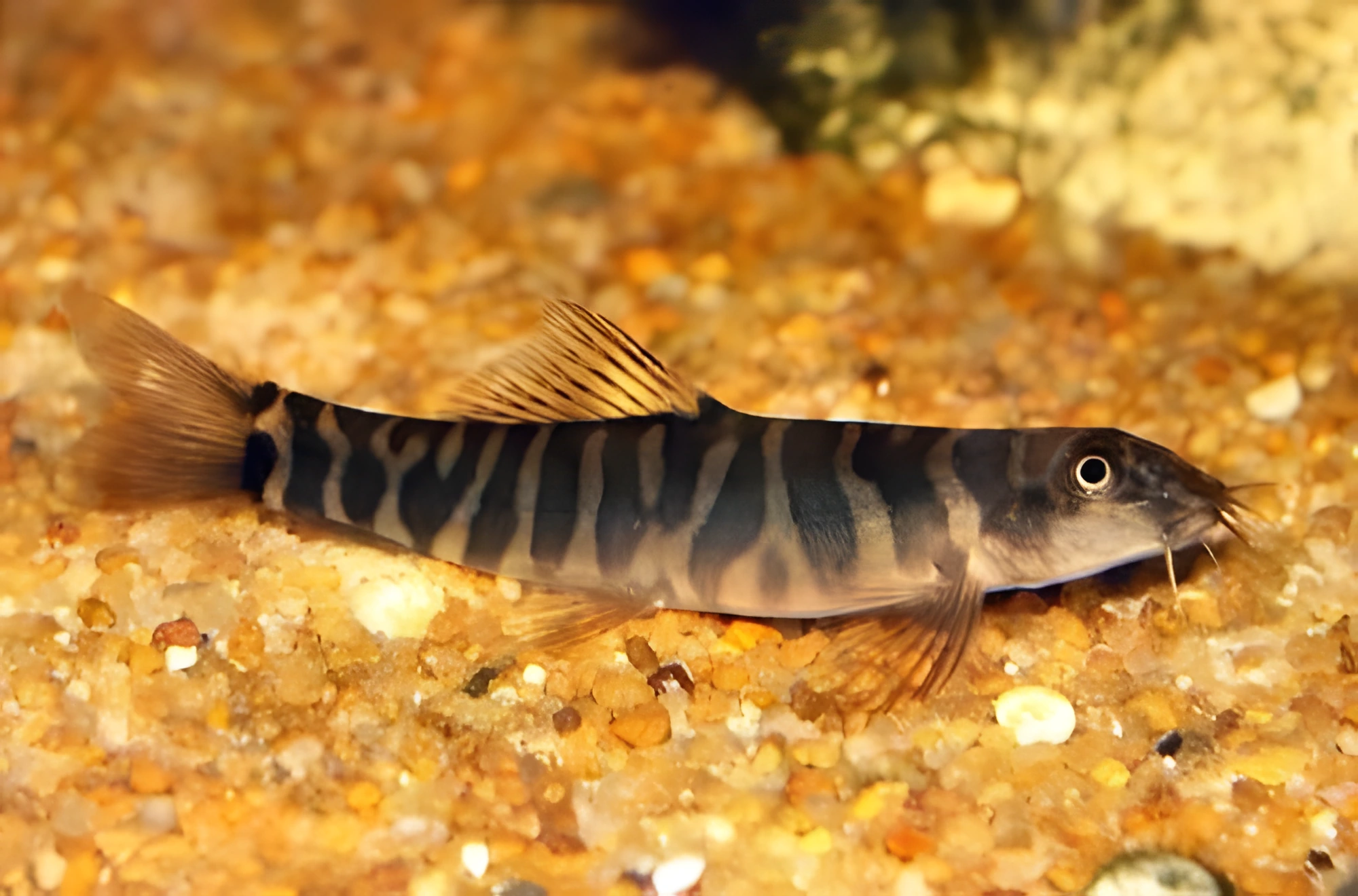
Adult fish reach a length of about 4 centimeters. They have an elongated body with a rather plump belly. Small barbels can be seen near the mouth on the head. The fins, like the tail, are short. The coloration is usually pale yellow, adorned with a pattern of 10–13 uneven dark vertical stripes. Distinguishing between male and female is quite difficult, as sexual dimorphism is weakly expressed.
Habitat
The natural habitat of this species is in Southeast Asia, within Thailand. Schistura Mae Hong Son is endemic to the mountainous Mae Hong Son River, which gave its name to the eponymous province. The typical biotope is a shallow stream, 0.5 to 1.5 meters deep, flowing down mountain slopes under the canopy of a tropical forest. Such streams are characterized by a strong current and a bottom covered with boulders.
Behavior and Compatibility
These fish exhibit territorial behavior. They prefer to occupy a specific area on the bottom, choosing suitable crevices or small caves for shelter. If there are enough such shelters in the aquarium, an entire group of Schistura can coexist peacefully. They are peaceful towards other species. However, the strong current required for their keeping significantly narrows the range of possible tankmates. Other loaches, Corydoras catfish, or kuhli loaches can be considered as companions. With a more moderate water flow, cohabitation with barbs, danios, and other cyprinids is possible.
Care and Maintenance
For a small group consisting of 4–5 Schistura Mae Hong Son fish, the optimal aquarium volume starts from 80 liters. Successful keeping of this species is possible by creating conditions as close as possible to its natural environment. In terms of decor, it is recommended to recreate a mountain stream bed, using stony substrate, large boulders, rock fragments, and snags. Live or artificial plants, such as Anubias, Bucephalandra, some types of mosses, and ferns, will work if they can grow on rocks or driftwood. It is extremely important to ensure powerful water movement, mimicking a river current, and to maintain a high concentration of dissolved oxygen. Productive internal filters can successfully handle these tasks. Like many inhabitants of flowing waters, this species is sensitive to the accumulation of organic waste. Therefore, in addition to effective filtration, it is necessary to perform weekly water changes of 30–50% of the volume with fresh water, and to regularly clean the aquarium of biofilm, leftover food, and excrement.
Diet
This species is omnivorous. In their natural habitat, the fish find food among the stones on the bottom, feeding on small aquatic insects and other invertebrates. In a home aquarium, Schistura Mae Hong Son readily accepts dry sinking foods, such as flakes or granules. To enrich their diet, live or frozen foods, such as artemia or bloodworms, can be offered.
Breeding and Reproduction
At the time of writing this article, the authors could not find reliable information about the successful breeding of this species in home aquariums. This is likely due to the low prevalence of Schistura Mae Hong Son among hobby aquarists.
Diseases
Health problems in these fish arise only in the presence of injuries or keeping in unsuitable conditions, which leads to a weakening of the immune system and the subsequent occurrence of various diseases. At the first signs of illness, it is necessary first to check the water parameters for exceeding permissible values or the presence of toxic substances (such as nitrites, nitrates, ammonia). If deviations are found, all indicators should be normalized, and then treatment should begin. More detailed information on symptoms and treatment methods is available in the "Diseases of Aquarium Fish" section.
How to choose
When purchasing Schistura Mae Hong Son, it is important to carefully assess the condition of the fish in the aquarium. Healthy individuals should be active, show natural curiosity, and explore the substrate or decorations. Avoid specimens with signs of emaciation, such as a sunken belly, or fish that appear apathetic, constantly lie on their side, or breathe heavily at the water surface. Examine the skin: there should be no white film, ulcers, red streaks, or visible parasites. Fins should be intact, without signs of deterioration, clamping, or white tips.
Since this species is territorial, skirmishes between individuals can often be observed in the store, which is normal behavior if the fish do not appear severely injured. Nevertheless, it is preferable to choose fish from aquariums with a sufficient number of hiding places where they can retreat. Given their sensitivity to water quality, ensure that the aquarium with the fish shows no signs of heavy pollution, and that the water is clear and well-aerated. If possible, confirm whether the fish accept the offered food, as healthy individuals usually show interest in food.
Frequently asked questions
The essentials: size, tank volume, water parameters and care
How big does Schistura Mae Hong Son get?
An adult reaches 4 cm in length. Plan the tank around the maximum size: the fish quickly outgrows a cramped setup.
What size aquarium does Schistura Mae Hong Son need?
The minimum recommended volume is 80 L. A smaller tank speeds up nitrate build-up and raises stress levels.
What water parameters does Schistura Mae Hong Son need?
Temperature 20–26 °C, pH 6–7.5, hardness 2–12 dGH. Stability matters more than exact values: sudden swings are harder on the fish than a small deviation from the ideal.
How long does Schistura Mae Hong Son live?
Around 5 years when kept properly. Lifespan depends directly on tank volume, water quality and a varied diet.
Is Schistura Mae Hong Son aggressive?
Temperament: peaceful (regular). Keep this in mind when choosing tank mates.
How many Schistura Mae Hong Son should be kept together?
Recommended setup: both solitary and in group (flexible). Ignoring this is a common cause of stress and disease.
What does Schistura Mae Hong Son eat?
Diet type: sinking (any). Feed small portions that are finished within a couple of minutes — overfeeding does more harm than underfeeding.
What is the scientific name of Schistura Mae Hong Son?
The scientific name of the species is Schistura maepaiensis, family Nemacheilidae. It also appears in the literature as: Noemacheilus maepaiensis.