Temperature20 – 26 °C
Natural range
CatfishConservation status: Least concern LC
Other scientific names: Bagrus laticeps, Bagrus nigrita, Chrysichthys macropogon, Chrysichthys nigrita, Chrysichthys pitmani, Clarotes heuglini
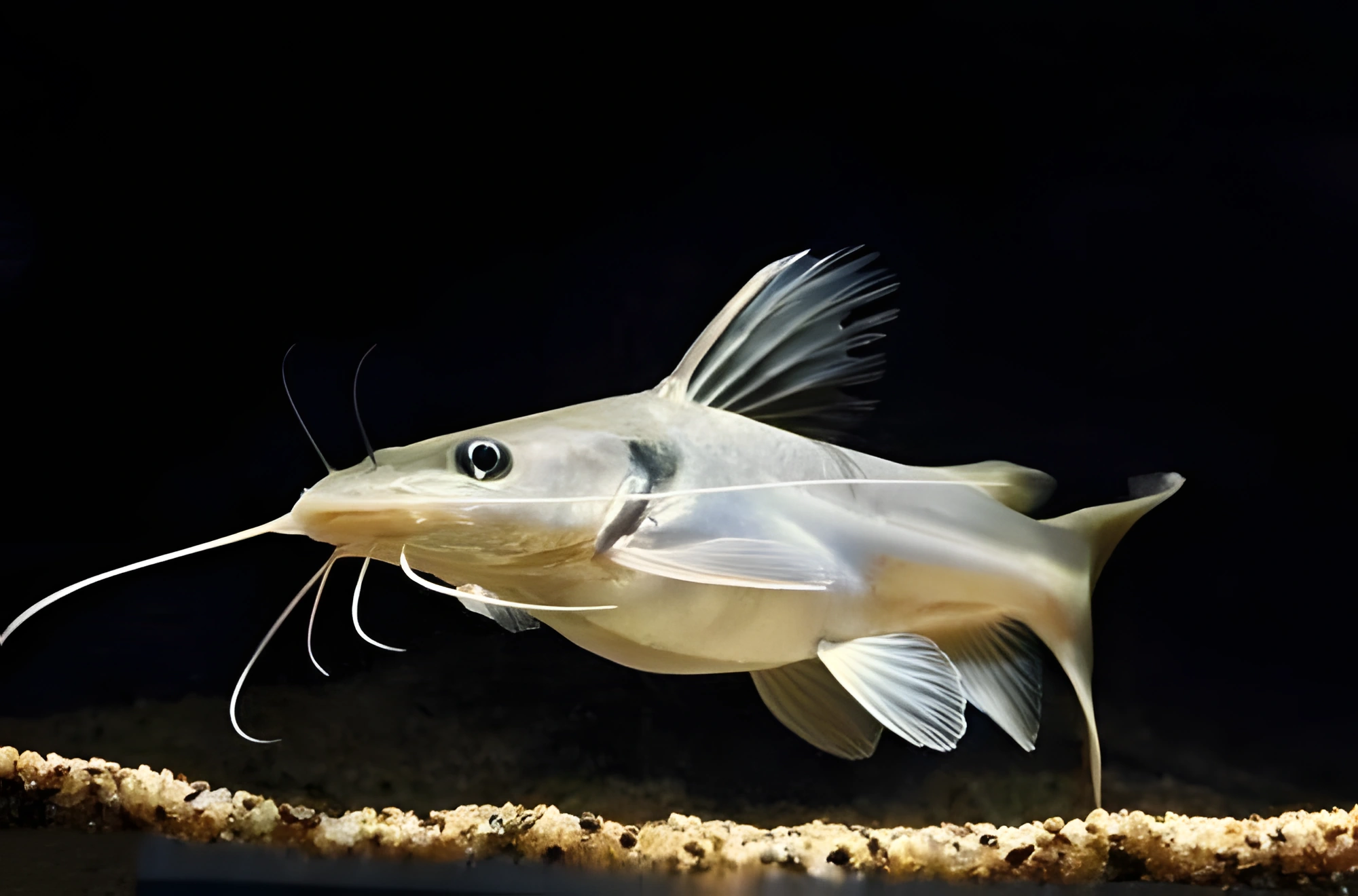
Clarotes laticeps, also known as the Broadhead Catfish, is a member of the family Claroteidae. These fish are native to Africa, where they can be found in almost all large river systems across the continent.
- Required aquarium volume
- 500 L
- Size in aquarium
- 80 cm
- Temperature
- 20 – 26 °C
- Temperament
- Semi-peaceful (including aggression during spawning / intraspecific conflicts)
Parameters
Water pHNeutral (6.5) – Slightly alkaline (8)
Water dHSoft (5) – Very hard (25)
Water salinityno salt (freshwater)
Size in aquarium80 cm
Lifespan12 years
TemperamentSemi-peaceful (including aggression during spawning / intraspecific conflicts)
Toward small fishnot a predator
Required aquarium volume500 L
Lightingdimmed
Substrateany (no restrictions)
Water flowany
FeedingSinking (any)
CareBoth solitary and in group (flexible)
Description
In their natural habitat, adult specimens of this catfish can reach 80 cm in length and weigh up to 10 kg. It has an elongated body with large fins, and its characteristic feature is a large head. The dorsal coloration is usually gray, while the belly is a lighter shade.
Habitat
The species is widespread in large river systems and lakes in Africa, including the Nile, Niger, Senegal, Volta basins, and Lake Chad [seriouslyfish.com]. It inhabits waters with moderate currents, preferring areas with sandy or fine-gravel bottoms. In its natural environment, it lives a benthic lifestyle, often hiding among large rocks and snags in dimly lit conditions [my-fish.org].
Behavior and Compatibility
This fish is characterized by its non-aggressive behavior and high mobility. It prefers to actively move through the water column in search of food rather than hiding in shelters. It is important to remember that the catfish can jump out of the water if food is above the surface. Clarotes laticeps coexists easily with both its own kind and other fish species of comparable size. However, due to its feeding habits, any small or even medium-sized fish that can fit into its mouth will likely become part of its diet.
Care and Maintenance
For a single catfish, the minimum aquarium volume should be at least 500 liters. Since Clarotes laticeps inhabits diverse natural conditions, it adapts well to both simulated tropical swamps and conditions of fast-flowing mountain rivers with strong currents. Its keeping does not present any particular difficulties. The fish exhibits low requirements for water hydrochemical parameters, adapting well to a wide range of pH and dGH values. One of the key conditions for successful keeping is maintaining water cleanliness. Therefore, it is critically important to pay attention to the filtration system and adhere to regular aquarium maintenance.
Diet
Regarding diet, this catfish is not picky. It readily accepts most common foods intended for aquarium fish. However, it should be noted that it may feast on smaller aquarium inhabitants!
Breeding and Reproduction
Based on available sources, a separate block cannot be compiled: the data is insufficient or contradictory. The entry can be updated later when verified information becomes available.
Diseases
Based on available sources, a separate block cannot be compiled: the data is insufficient or contradictory. The entry can be updated later when verified information becomes available.
How to choose
When selecting specimens, it should be considered that this species is a predator capable of swallowing prey comparable in size to its own body [theaquariumwiki.com]. A healthy fish should show activity during twilight hours and have clean skin without damage or ulcers. Due to their large size and aggressive territorial behavior, it is recommended to acquire only young specimens, understanding the need for future relocation to very spacious aquariums or specialized tanks [my-fish.org].
Frequently asked questions
The essentials: size, tank volume, water parameters and care
How big does Broadhead Catfish get?
An adult reaches 80 cm in length. Plan the tank around the maximum size: the fish quickly outgrows a cramped setup.
What size aquarium does Broadhead Catfish need?
The minimum recommended volume is 500 L. A smaller tank speeds up nitrate build-up and raises stress levels.
What water parameters does Broadhead Catfish need?
Temperature 20–26 °C, pH 6.5–8, hardness 5–25 dGH. Stability matters more than exact values: sudden swings are harder on the fish than a small deviation from the ideal.
How long does Broadhead Catfish live?
Around 12 years when kept properly. Lifespan depends directly on tank volume, water quality and a varied diet.
Is Broadhead Catfish aggressive?
Temperament: semi-peaceful (including aggression during spawning / intraspecific conflicts). Keep this in mind when choosing tank mates.
How many Broadhead Catfish should be kept together?
Recommended setup: both solitary and in group (flexible). Ignoring this is a common cause of stress and disease.
What does Broadhead Catfish eat?
Diet type: sinking (any). Feed small portions that are finished within a couple of minutes — overfeeding does more harm than underfeeding.
What is the scientific name of Broadhead Catfish?
The scientific name of the species is Clarotes laticeps, family Claroteidae. It also appears in the literature as: Bagrus laticeps, Bagrus nigrita, Chrysichthys macropogon.