Temperature20 – 27 °C
Natural range
- Gabon area
- Equatorial Guinea area
- Ghana area
- Cameroon area
KillifishConservation status: Least concern LC
Other scientific names: Aplocheilus sexfasciatus, Epiplatys sexifasciatus, Haplochilus andamanicus, Haplochilus rubropunctatus, Haplochilus sexfasciatus, Panchax sexfasciatus
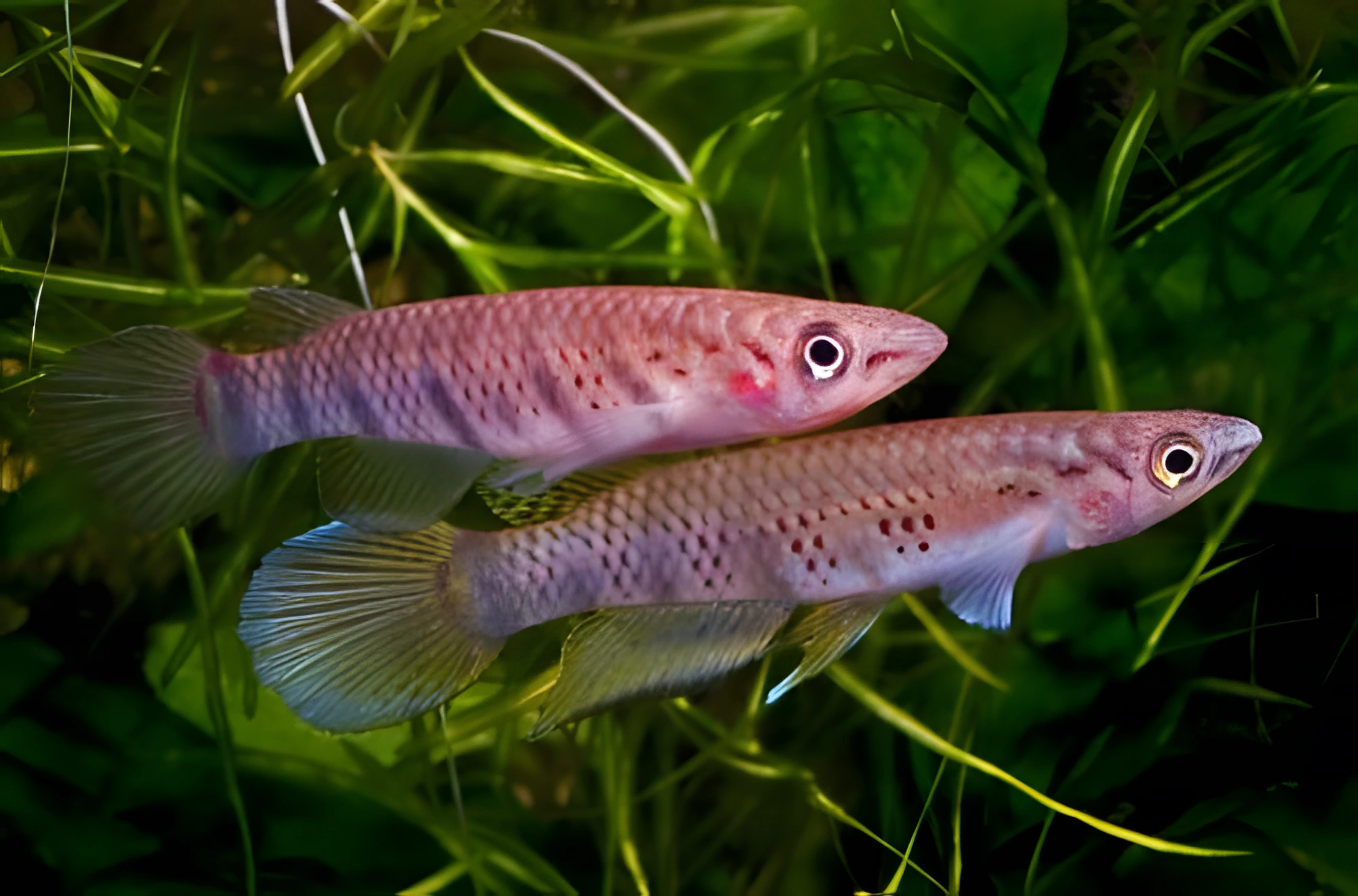
The Six-banded Epiplatys, or Six-banded Panchax, scientifically known as Epiplatys sexfasciatus, belongs to the family Nothobranchiidae. This species is a rare exception among Killifish, adapting perfectly to life in mixed groups of males and females, despite their usual propensity for internecine conflicts. Active and friendly, these fish can adorn any freshwater aquarium, requiring no special care, which makes them a suitable choice even for beginner aquarists.
- Required aquarium volume
- 100 L
- Size in aquarium
- 7 cm
- Temperature
- 20 – 27 °C
- Temperament
- Peaceful (regular)
Parameters
Water pHSlightly acidic (5) – Neutral (7)
Water dHVery soft (2) – Hard (12)
Water salinityno salt (freshwater)
Size in aquarium7 cm
Lifespan6 years
TemperamentPeaceful (regular)
Toward small fishnot a predator
Required aquarium volume100 L
Lightingmoderate (regular)
Substratesandy (regular, light)
Water flowweak or moderate
FeedingSinking (meat / protein)
CareSchooling (usually from 5–6 individuals and more)
Description
Males of this species are distinguished by their larger size, reaching up to 7 cm in length, as well as a pronounced pink coloration. Six characteristic vertical stripes are present in individuals of both sexes. The special body structure, with the dorsal and anal fins shifted towards the tail, indicates their predatory lifestyle.
Habitat
The natural habitat of this species spans the African continent, where it is found in grassy savannas and tropical forests. Their range includes the modern territories of Gabon, Equatorial Guinea, Ghana, Cameroon, and Nigeria. They inhabit freshwater swamps, small tributaries of large rivers, and some lakes.
Behavior and Compatibility
This active and peaceful species coexists well with other fish of similar size and temperament. It is recommended to keep them in a school of at least 6 individuals. A remarkable feature is the absence of conflicts between males even during spawning, which is a very rare phenomenon among Killifish.
Care and Maintenance
For a school of these fish, an aquarium with a volume of at least 100 liters is necessary, providing ample free space. The tank's decor should ideally mimic their natural habitat: roots and branches of trees, various snags, as well as areas with rooted and floating plants should be placed. A sandy substrate can be supplemented with several dry leaves, which not only give the aquarium a natural look but also enrich the water with humic substances characteristic of the Epiplatys sexfasciatus' habitat. Leaves need to be replaced every 1–2 weeks to prevent excessive decomposition. The minimum equipment set includes heating, lighting, aeration, and filtration systems. When choosing a filter, it is important to ensure effective water purification with minimal current, as fish from stagnant waters do not tolerate strong flows well. If popular internal canister filters are used, the outflow can be directed towards an obstacle to disperse the water jet. Water parameters for these fish correspond to the conditions of most swamps: pH and dGH values should be slightly acidic and soft, respectively. When filling and subsequently refreshing the water in the aquarium, these parameters must be carefully monitored, as tap water may have different values. More detailed information on pH and dGH values, as well as methods for their correction, is available in the “Hydrochemical Composition of Water” section. Aquarium care includes regular partial water changes (10–15% of the total volume) and periodic cleaning of the substrate from waste products and other organic pollutants. If necessary, the internal surfaces of the glass should also be cleaned of film.
Diet
In natural conditions, these miniature predators primarily feed on invertebrates, both aquatic and terrestrial. In aquarium conditions, they readily accept dry foods, as well as frozen or live products of suitable size, such as daphnia, bloodworms, brine shrimp, and grindal worms. Including small insects, such as Drosophila flies or mosquitoes, in their diet is also possible, but it is recommended to offer them dry flakes with plant components beforehand. This improves digestion and reduces the risk of constipation.
Breeding and Reproduction
Spawning at home is not difficult; adults regularly reproduce offspring, even in a community tank. However, the best breeding results can be achieved in a specially prepared spawning tank, where egg-laying and fry development occur. The spawning aquarium should contain abundant plant thickets, such as Riccia, Java moss, and the like. Equipment will include a simple sponge filter, heater, and lamp. The water composition should be identical to the parameters of the main aquarium. As soon as you notice an increase in the female's abdomen, a change in the males' behavior towards increased attention to the rounded female, and an intensification of their coloration, this will indicate the beginning of the breeding period. The female should be moved to the spawning aquarium, and the next day, a pair of males should be joined with her. Within a few days, the female will lay eggs in the plant thickets, which the males will fertilize. During this period, it is important not to forget to feed the fish and regularly refresh part of the water, as it quickly becomes contaminated in a small tank. After spawning is complete, the adults are returned to the community tank to prevent them from eating their own offspring. Fry appear after 12–14 days; they should be fed microorganisms, such as brine shrimp nauplii or infusoria.
Diseases
No hereditary diseases have been identified in this species. The main health problems are usually associated with unsuitable keeping conditions or improper nutrition. By following all recommendations, the occurrence of any diseases can be avoided. More detailed information on symptoms and treatment methods is available in the “Diseases of Aquarium Fish” section.
How to choose
When purchasing, choose active fish with clean fins and no visible damage or whitish film on the body. It is important to ensure there are no signs of emaciation, as fish should show interest in food. Since the species is often sold with an indication of the specific catch location, it is recommended to clarify the origin of the individuals to maintain line purity. In the store, fish may appear timid due to bright lighting, which is normal for this species.
Frequently asked questions
The essentials: size, tank volume, water parameters and care
How big does Six-banded Panchax get?
An adult reaches 7 cm in length. Plan the tank around the maximum size: the fish quickly outgrows a cramped setup.
What size aquarium does Six-banded Panchax need?
The minimum recommended volume is 100 L. A smaller tank speeds up nitrate build-up and raises stress levels.
What water parameters does Six-banded Panchax need?
Temperature 20–27 °C, pH 5–7, hardness 2–12 dGH. Stability matters more than exact values: sudden swings are harder on the fish than a small deviation from the ideal.
How long does Six-banded Panchax live?
Around 6 years when kept properly. Lifespan depends directly on tank volume, water quality and a varied diet.
Is Six-banded Panchax aggressive?
Temperament: peaceful (regular). Keep this in mind when choosing tank mates.
How many Six-banded Panchax should be kept together?
Recommended setup: schooling (usually from 5–6 individuals and more). Ignoring this is a common cause of stress and disease.
What does Six-banded Panchax eat?
Diet type: sinking (meat / protein). Feed small portions that are finished within a couple of minutes — overfeeding does more harm than underfeeding.
What is the scientific name of Six-banded Panchax?
The scientific name of the species is Epiplatys sexfasciatus, family Nothobranchiidae. It also appears in the literature as: Aplocheilus sexfasciatus, Epiplatys sexifasciatus, Haplochilus andamanicus.