Temperature27 – 30 °C
Natural range
- Orinoco River
- Rio Negro area
- Colombia area
- Venezuela area
CichlidsConservation status: Least concern LC
Other scientific names: Crenicara filamentosa
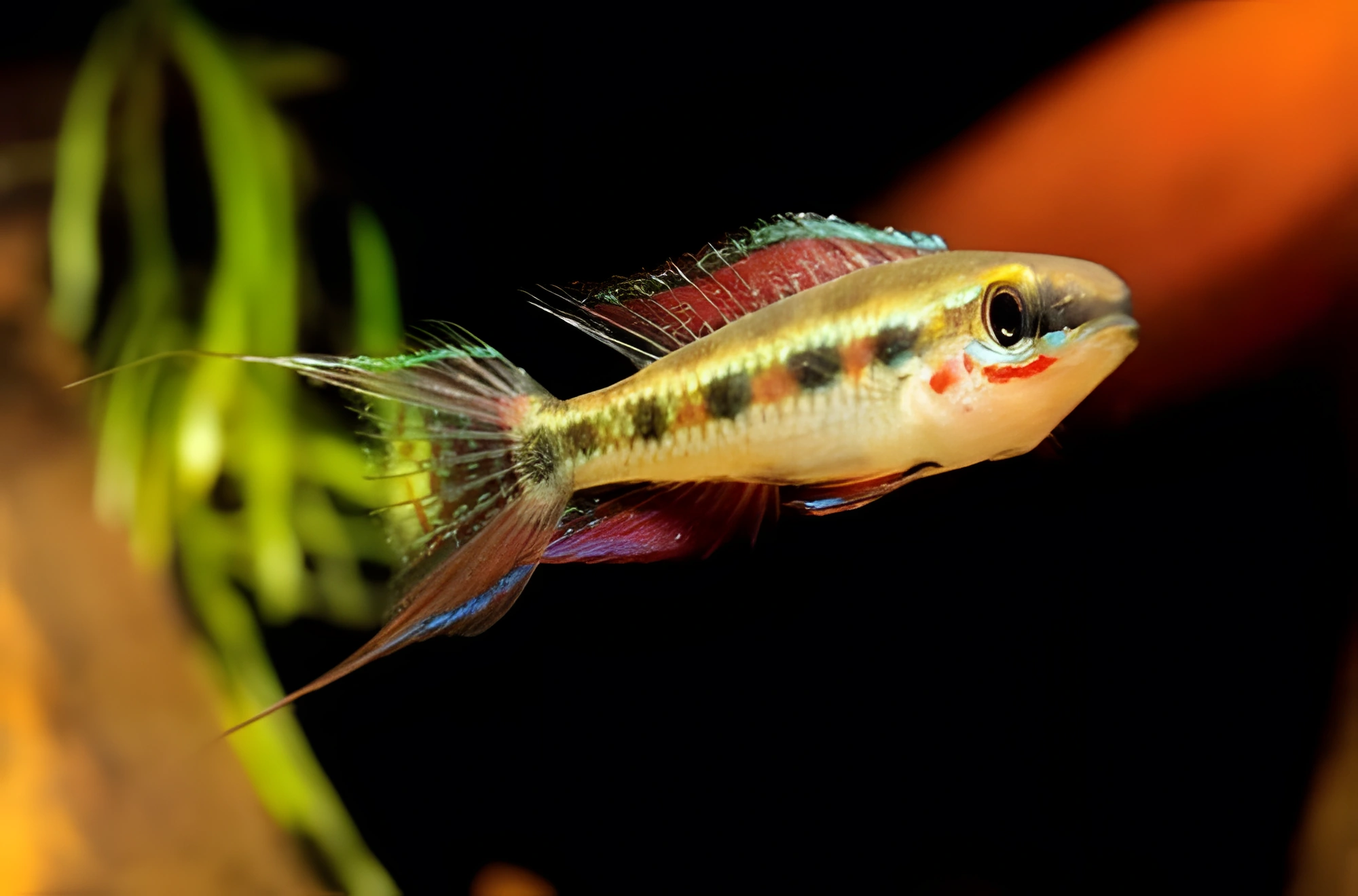
The Lyretail Crenicara, also known by its scientific name Dicrossus filamentosus or commonly as the Chessboard Cichlid, is a member of the family Cichlidae. It is sometimes also referred to as the “Checkerboard” Cichlid. This fish attracts attention with its bright appearance and peaceful disposition. However, its widespread distribution in amateur aquaristics is limited by strict requirements for water quality and composition, so it is more often found in the aquariums of professionals.
- Required aquarium volume
- 60 L
- Size in aquarium
- 3 – 4 cm
- Temperature
- 27 – 30 °C
- Temperament
- Peaceful (regular)
Parameters
Water pHAcidic (4.5) – Slightly acidic (5.8)
Water dHVery soft (1) – Soft (5)
Water salinityno salt (freshwater)
Size in aquarium3 – 4 cm
Lifespan4 years
TemperamentPeaceful (regular)
Toward small fishnot a predator
Required aquarium volume60 L
Lightingdimmed
Substratesandy (regular, light)
Water flowweak or moderate
FeedingAny (universal)
CareSchooling (usually from 5–6 individuals and more)
Description
Adult males reach approximately 4 cm in length, while females remain somewhat smaller, rarely exceeding 3 cm. The fish's body is adorned with a pattern of dark, square spots with rounded edges, arranged in a checkerboard fashion. The fins of males are additionally marked with red speckles and edging. The overall coloration of both sexes is more subdued, with a predominance of gray and yellowish tones.
Habitat
Its natural habitat covers the equatorial and subequatorial regions of South America, namely the Orinoco and Rio Negro rivers and their tributaries, flowing through the territories of modern-day Colombia, Venezuela, and northern Brazil. The waters here are dark in color due to the high content of tannins. The beds of these rivers, flowing through tropical forests, are often strewn with numerous snags and tree debris.
Behavior and Compatibility
This fish is by nature timid and quite peaceful, which is understandable given its small size. However, despite this, it can compete for territory with other small species. In a community tank, the Chessboard Cichlid coexists well with many calm and friendly inhabitants.
Care and Maintenance
An aquarium of 60–70 L will be sufficient for these miniature creatures. When decorating, it is advisable to use a sandy substrate, as well as various snags and other reliable shelters. Clusters of floating and rooted aquatic plants are also appropriate. Lighting should be subdued. A key aspect is maintaining specific water parameters: the water must be very soft and acidic (low dGH and pH values, respectively), and at a high temperature. To maintain stable hydrochemical composition and water purity, an effective filtration system with powerful biological purification will be required, as well as regular weekly water changes of 15–20% of the volume with fresh water. To imitate the natural environment, characterized by brown water, fallen tree leaves can be used, for example, Indian almond leaves are successfully applied, or special ready-made essences.
Diet
The diet of these fish should be varied, including both protein and plant components. Specialized food designed for South American cichlids would be an excellent option. To further enrich the diet, it is recommended to offer Daphnia and bloodworms.
Breeding and Reproduction
Breeding the Chessboard Cichlid at home presents significant difficulties, mainly due to very strict requirements for water parameters. The range of acceptable water quality and composition values is extremely narrow, and even slight fluctuations in pH or dGH levels can negatively affect the eggs and lead to the death of fry.
Diseases
The main cause of most diseases in Leaf Fish is unsuitable keeping conditions and poor-quality nutrition. If initial symptoms are observed, it is first necessary to check water parameters and the concentration of dangerous substances such as ammonia, nitrites, and nitrates. If the indicators deviate from the norm, they should be brought back into order, and only then should treatment begin. More detailed information on symptoms and treatment methods can be found in the "Aquarium Fish Diseases" section.
How to choose
When selecting individuals, pay attention to their activity and the cleanliness of their skin. Healthy fish should show curiosity, have no visible spots, ulcers, fin damage, or signs of emaciation. Avoid purchasing fish that appear apathetic, constantly stay near the surface, or display an unnaturally bloated abdomen.
- Evaluate the keeping conditions in the store: the water should be clear, without strong odors, and there should be no dead individuals in the aquarium.
- Ask the seller about the current water parameters (pH and general hardness), as this species is very sensitive to sudden changes during transfer.
- Preference should be given to individuals that show interest in the offered food, which is an indicator of their overall health.
Frequently asked questions
The essentials: size, tank volume, water parameters and care
How big does Chessboard Cichlid get?
An adult reaches 3–4 cm in length. Plan the tank around the maximum size: the fish quickly outgrows a cramped setup.
What size aquarium does Chessboard Cichlid need?
The minimum recommended volume is 60 L. A smaller tank speeds up nitrate build-up and raises stress levels.
What water parameters does Chessboard Cichlid need?
Temperature 27–30 °C, pH 4.5–5.8, hardness 1–5 dGH. Stability matters more than exact values: sudden swings are harder on the fish than a small deviation from the ideal.
How long does Chessboard Cichlid live?
Around 4 years when kept properly. Lifespan depends directly on tank volume, water quality and a varied diet.
Is Chessboard Cichlid aggressive?
Temperament: peaceful (regular). Keep this in mind when choosing tank mates.
How many Chessboard Cichlid should be kept together?
Recommended setup: schooling (usually from 5–6 individuals and more). Ignoring this is a common cause of stress and disease.
What does Chessboard Cichlid eat?
Diet type: any (universal). Feed small portions that are finished within a couple of minutes — overfeeding does more harm than underfeeding.
What is the scientific name of Chessboard Cichlid?
The scientific name of the species is Dicrossus filamentosus, family Cichlids (Cichlidae). It also appears in the literature as: Crenicara filamentosa.