Temperature22 – 28 °C
Natural range
- Salween River basin
- Ataran River
- Gyaing River
- Myanmar area
LoachesConservation status: Data deficient DD
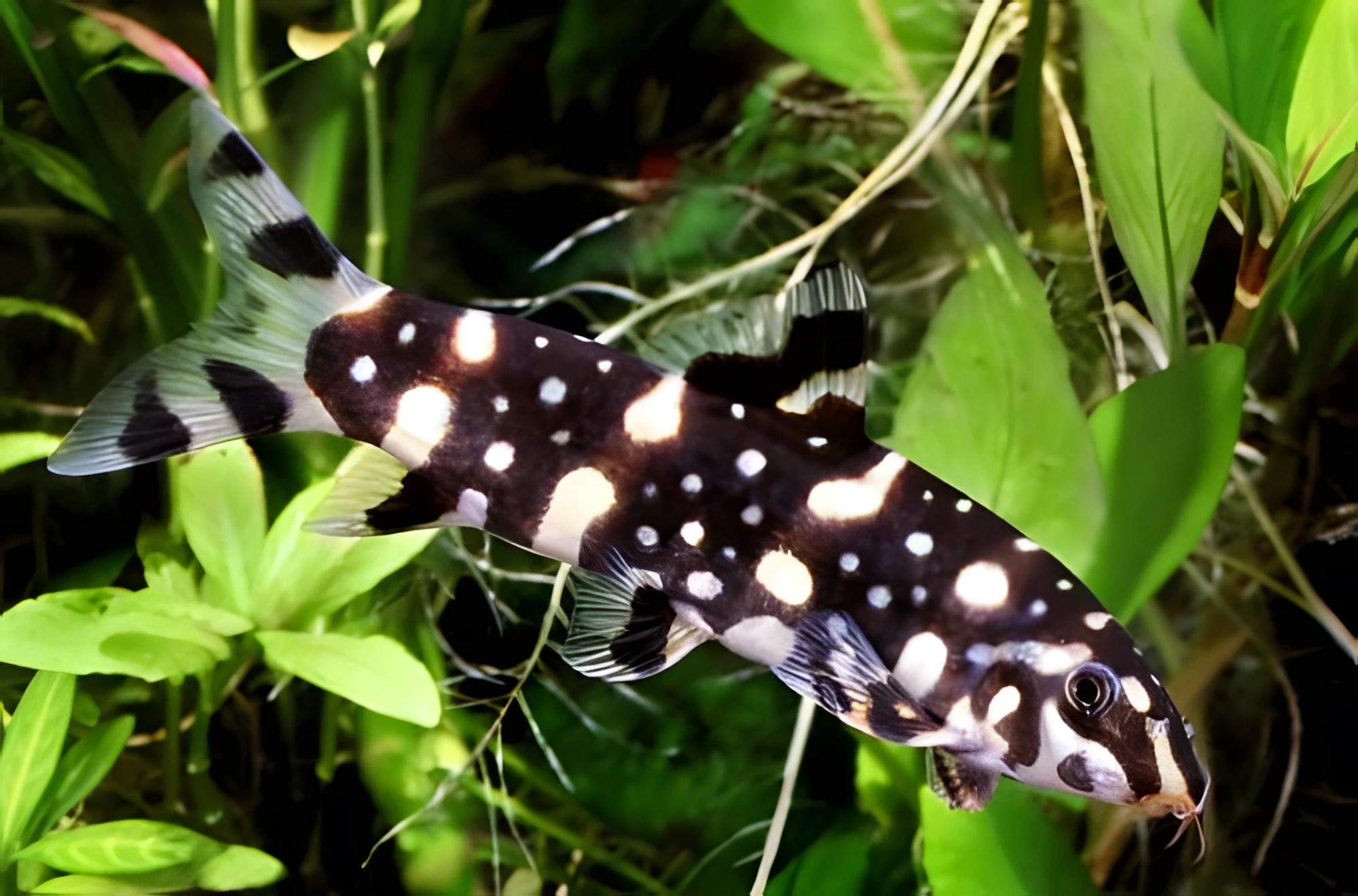
Kubotai Loach, also known as the Chessboard Botia (scientific name Botia kubotai), belongs to the family Cobitidae, or true loaches. Before the species received a formal scientific description, it was already actively present in aquaristics, which led to some confusion with externally similar species. It can often be found under the trade names Histrionic Botia or Imperial Botia. This fish usually does not require significant effort, either financial or temporal, as it is considered quite unpretentious and easy to keep. It successfully coexists with other tropical fish species and can therefore be confidently recommended even to beginner aquarists.
- Required aquarium volume
- 240 L
- Size in aquarium
- 14 – 15 cm
- Temperature
- 22 – 28 °C
- Temperament
- Peaceful (regular)
Parameters
Water pHSlightly acidic (6) – Neutral (7.5)
Water dHVery soft (2) – Medium hardness (10)
Water salinityno salt (freshwater)
Size in aquarium14 – 15 cm
Lifespan10 years
TemperamentPeaceful (regular)
Toward small fishnot a predator
Required aquarium volume240 L
Lightingweak or moderate
Substraterocky (rock formations, boulders, etc.)
Water flowweak or moderate
FeedingAny (universal)
CareSmall group (5–6 individuals)
Description
Adults grow up to 15 cm in length. It is quite difficult to distinguish males from females, as sexual dimorphism is weakly expressed; females are usually only slightly larger than males. The body coloration consists of contrasting black and white areas that form a pattern of symmetrical light spots, resembling a chessboard. This particular pattern feature gave this species of loach its name.
Habitat
The natural habitats of this fish are located in Southeast Asia, in the territories of modern Myanmar (formerly Burma) and Thailand. Its range mainly occupies the Salween River basin, which serves as a natural border between these two countries. The Chessboard Botia is also found in tributaries flowing into the Salween Delta, such as the Ataran and Gyaing. Its natural environment is characterized by clear, flowing waters, a sandy-gravel bottom, and an abundance of snags.
Behavior and Compatibility
This fish exhibits peaceful and friendly behavior, although periods of calm are sometimes replaced by bursts of activity, especially during feeding. Kubotai Loach coexists well with many non-aggressive fish species of comparable size. However, it is advisable to avoid keeping fish with large flowing fins in the same aquarium to prevent accidental injury. Within a group of botias, a hierarchy is established, where stronger individuals dominate weaker ones. It is desirable to keep these fish in groups of 5 to 6 individuals, as solitary keeping can provoke aggression towards other aquarium inhabitants.
Care and Maintenance
For a comfortable living environment for a group of 5–6 Chessboard Botias, an aquarium of at least 240 liters will be required. This species is distinguished by its hardiness and unpretentiousness. The most important condition for successful keeping is maintaining high water quality and regular weekly water changes of 30–50% of the total volume. It is recommended to create a moderate current and subdued lighting, although the latter is not strictly mandatory. The aquarium decoration is at the discretion of the aquarist. However, for the Chessboard Botia, it is essential to have secluded places, which can be formed by snags or any other decorative elements, such as sunken ships or castles. When choosing plants, preference should be given to shade-loving species, among which mosses and ferns have proven to be a good choice.
Diet
The diet of these fish includes both protein components and plant-based food. In aquarium conditions, they can be offered a variety of foods: dry granules or flakes, as well as live and frozen foods. Additionally, pieces of vegetables and fruits, such as zucchini, cucumbers, or apples, which can be conveniently secured to the bottom, are included in the diet. Dry foods enriched with plant additives are also well-suited as a staple diet.
Breeding and Reproduction
To date, successful reproduction of the Chessboard Botia in aquarium conditions is extremely rare and sporadic. The main breeding of these fish is carried out on large commercial farms, where hormonal preparations are used to stimulate spawning.
Diseases
Non-ornamental fish species that have retained a close resemblance to their wild relatives usually exhibit high endurance, strong immunity, and resistance to various diseases. The occurrence of health problems most often indicates unsuitable keeping conditions. Therefore, before proceeding with treatment, it is strongly recommended to check the water quality and parameters. Only after all indicators have been brought back to normal should treatment begin, if it is still necessary. Detailed information on diseases, their symptoms, and therapy methods can be found in the “Aquarium Fish Diseases” section.
How to choose
When purchasing Chessboard Botias, choose active individuals with a clear, contrasting pattern. Avoid fish with signs of emaciation, sunken bellies, skin damage, or an unnatural film on the body. It is important to consider that these fish are scaleless, so they are extremely sensitive to water quality and transport conditions.
- pay attention to behavior: healthy botias constantly explore the bottom and show curiosity
- check the integrity of the fins and the absence of visible ulcers or spots
- make sure the fish in the aquarium do not look apathetic or stay near the water surface
Remember that botias have suborbital spines that can get caught in a net during capture, so when purchasing, ensure the seller handles them carefully. Also, keep in mind that under stress from relocation, the fish's coloration may temporarily fade, which is a normal reaction and not a sign of illness.
Frequently asked questions
The essentials: size, tank volume, water parameters and care
How big does Chessboard Botia get?
An adult reaches 14–15 cm in length. Plan the tank around the maximum size: the fish quickly outgrows a cramped setup.
What size aquarium does Chessboard Botia need?
The minimum recommended volume is 240 L. A smaller tank speeds up nitrate build-up and raises stress levels.
What water parameters does Chessboard Botia need?
Temperature 22–28 °C, pH 6–7.5, hardness 2–10 dGH. Stability matters more than exact values: sudden swings are harder on the fish than a small deviation from the ideal.
How long does Chessboard Botia live?
Around 10 years when kept properly. Lifespan depends directly on tank volume, water quality and a varied diet.
Is Chessboard Botia aggressive?
Temperament: peaceful (regular). Keep this in mind when choosing tank mates.
How many Chessboard Botia should be kept together?
Recommended setup: small group (5–6 individuals). Ignoring this is a common cause of stress and disease.
What does Chessboard Botia eat?
Diet type: any (universal). Feed small portions that are finished within a couple of minutes — overfeeding does more harm than underfeeding.
What is the scientific name of Chessboard Botia?
The scientific name of the species is Botia kubotai, family Cobitidae (Loaches).