Temperature22 – 29 °C
Natural range
- Rio Negro area
- Brazil area
CichlidsConservation status: Least concern LC
Other scientific names: Centrarchus notatus
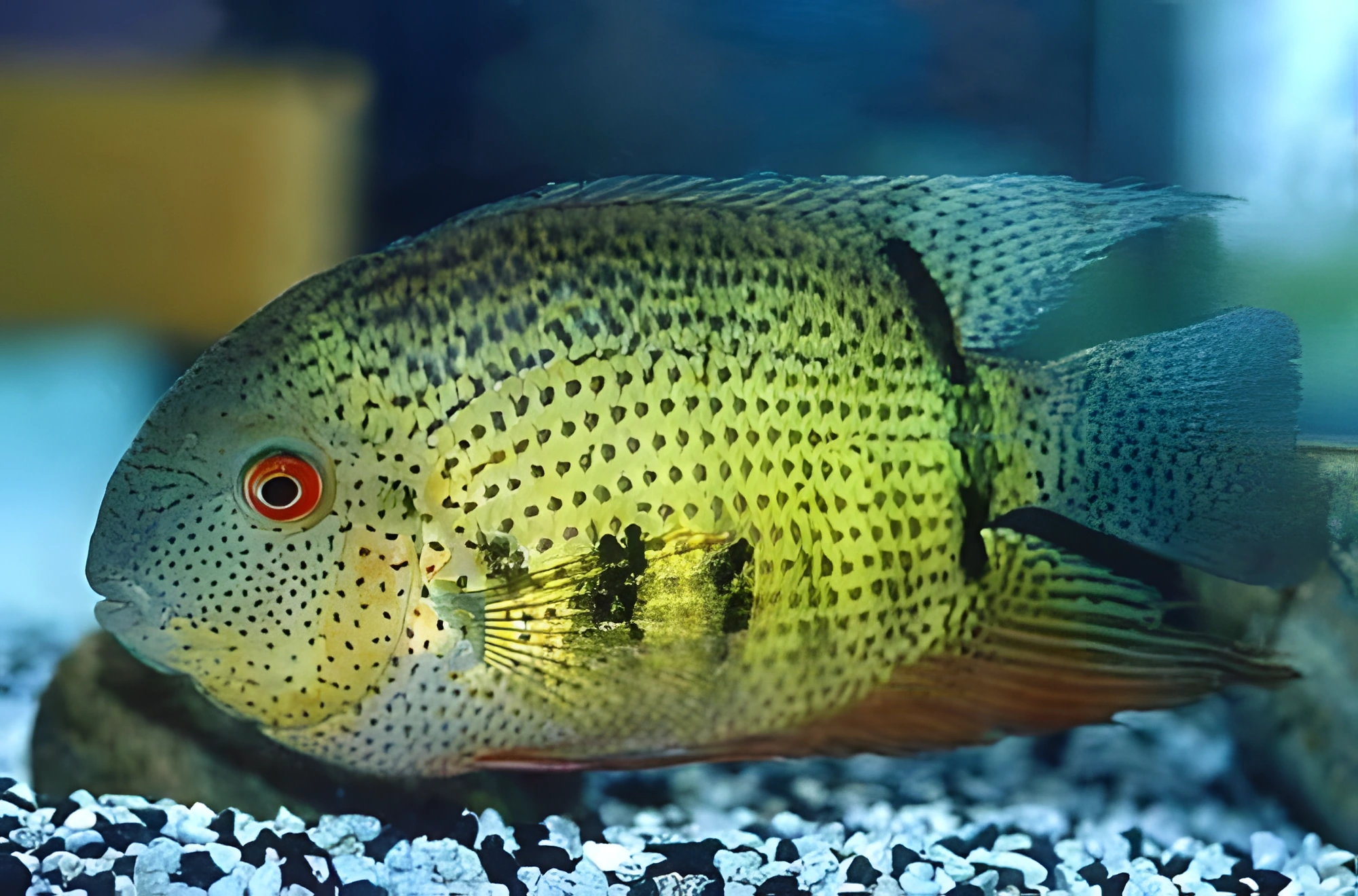
The Cichlasoma Severum Notatus, scientifically known as Heros notatus, is a member of the Cichlidae family. This large and beautiful fish possesses a range of qualities highly valued by hobbyists: it is hardy, easy to care for, omnivorous, peaceful, and coexists well with many other species. The only aspect to consider when keeping them is the significant size of adult specimens, which, in turn, necessitates a sufficiently large aquarium.
- Required aquarium volume
- 250 L
- Size in aquarium
- 20 – 25 cm
- Temperature
- 22 – 29 °C
- Temperament
- Peaceful (regular)
Parameters
Water pHSlightly acidic (6) – Neutral (7)
Water dHVery soft (1) – Medium hardness (10)
Water salinityno salt (freshwater)
Size in aquarium20 – 25 cm
Lifespan15 years
TemperamentPeaceful (regular)
Toward small fishnot a predator
Required aquarium volume250 L
Lightingany
Substratesandy (regular, light)
Water flowweak or moderate
FeedingAny (universal)
CareSmall group (3–4 individuals)
Description
Although adult Heros notatus can reach 30 cm in length, in aquarium conditions, their size rarely exceeds 25 cm. Fish of this species have a high, rounded body, slightly flattened laterally. In males, the dorsal and anal fins are more elongated and pointed; their coloration is a bluish-yellow background with red spots, while in females, these spots are dark. Both sexes share a common pattern: large black spots on the belly and a characteristic curved vertical stripe at the base of the caudal fin.
Habitat
Its natural habitat is the waters of the Rio Negro in Brazil, which is the largest left tributary of the Amazon. This river is characterized by its rich brown hue, explained by the high content of dissolved tannins formed during the decomposition of organic materials. Cichlasoma Severum Notatus is found in both the main channel of the river and its numerous tributaries, preferring to stay near the shoreline, among submerged roots and branches of tropical trees.
Behavior and Compatibility
This fish species is considered relatively peaceful; although males may engage in skirmishes with each other, this primarily occurs during the breeding season. At other times, they are quite calm towards their conspecifics, including close relatives like Cichlasoma Severum Efasciatus, and can be kept in small groups. Regarding interaction with other fish species, problems usually do not arise, provided they are not too small to accidentally become prey. It is advisable to choose tank mates of similar size and temperament, inhabiting similar biotopes.
Care and Maintenance
The minimum aquarium volume for keeping a single fish should be at least 250 liters. The tank can be decorated quite simply, using a sandy substrate, large snags, as well as artificial or live plants. The lighting level is not critically important for the Severum Cichlid (Cichlasoma notatus) and can be adapted to the needs of plants or according to the aquarist's preferences. The water environment should have slightly acidic and soft pH and dGH values. To give the aquarium a more natural look, you can add a few dried tree leaves or Indian almond branches, or use a few drops of tannin essence to give the water a characteristic "tea" tint. Before adding leaves to the aquarium, they should be pre-dried (for example, in the traditional way between book pages), then soaked for several days until they start to sink. It is recommended to replace them every few weeks. If using Indian almond or essence, follow the instructions on the label.
Diet
The diet of this fish is very diverse and includes almost all types of food: dry granules, frozen foods, live organisms, and plant supplements. It is worth noting that the composition of the diet directly affects the intensity of the fish's coloration. Therefore, it is recommended to combine various products, such as chopped shrimp or white fish meat with blanched vegetables (for example, peas or spinach) and spirulina flakes. A specialized food for South American cichlids, available from many well-known manufacturers, can be an excellent choice.
Breeding and Reproduction
Fish form pairs, but they are quite selective in choosing a mate, and not every combination of male and female will result in offspring. To increase the chances of success, you can purchase several young Cichlasoma, which, growing up together, can naturally form at least one pair. However, this approach is not suitable for a typical home aquarium, as it requires an enormous volume. This species, like many other cichlids, is known for its diligent care of offspring. Eggs are laid on any flat surface or in a shallow pit, after which they are fertilized. Parents jointly guard the clutch from any encroachments by other fish. Fry hatch in just 2–3 days and also remain under supervision, staying close to one of the parents. In case of danger, they can hide in their parent's mouth — this is an original, evolutionarily developed defense mechanism.
Diseases
The main cause of most diseases in Leaf Fish is unsuitable keeping conditions and poor-quality nutrition. If initial symptoms are observed, it is first necessary to check water parameters and the concentration of dangerous substances such as ammonia, nitrites, and nitrates. If the indicators deviate from the norm, they should be brought back into order, and only then should treatment begin. More detailed information on symptoms and treatment methods can be found in the "Aquarium Fish Diseases" section.
How to choose
When selecting fish in a store, pay attention to the activity of the individuals and the cleanliness of their skin. A healthy specimen should show interest in its surroundings, have clean fins without signs of erosion, white film, or ulcers, and be well-fed, without a sunken abdomen. Avoid purchasing fish that appear lethargic, constantly stay near the surface, or show signs of emaciation, as these symptoms often indicate hidden infections or chronic stress due to unsuitable keeping conditions.
Frequently asked questions
The essentials: size, tank volume, water parameters and care
How big does Severum Notatus get?
An adult reaches 20–25 cm in length. Plan the tank around the maximum size: the fish quickly outgrows a cramped setup.
What size aquarium does Severum Notatus need?
The minimum recommended volume is 250 L. A smaller tank speeds up nitrate build-up and raises stress levels.
What water parameters does Severum Notatus need?
Temperature 22–29 °C, pH 6–7, hardness 1–10 dGH. Stability matters more than exact values: sudden swings are harder on the fish than a small deviation from the ideal.
How long does Severum Notatus live?
Around 15 years when kept properly. Lifespan depends directly on tank volume, water quality and a varied diet.
Is Severum Notatus aggressive?
Temperament: peaceful (regular). Keep this in mind when choosing tank mates.
How many Severum Notatus should be kept together?
Recommended setup: small group (3–4 individuals). Ignoring this is a common cause of stress and disease.
What does Severum Notatus eat?
Diet type: any (universal). Feed small portions that are finished within a couple of minutes — overfeeding does more harm than underfeeding.
What is the scientific name of Severum Notatus?
The scientific name of the species is Heros notatus, family Cichlids (Cichlidae). It also appears in the literature as: Centrarchus notatus.