Temperature22 – 29 °C
Natural range
- South America area
CichlidsConservation status: Least concern LC
Other scientific names: Chromys appendiculata, Chromys fasciata, Cichlasoma severum, Heros appendiculatus, Uarus centrarchoides
Cichlidae is the family to which the Severum Efasciatus cichlid belongs, known by its scientific name Heros efasciatus. This cichlid, native to South America, is one of the most popular, alongside Discus. It attracts attention with its peaceful nature, beautiful coloration, and ease of care. However, it's important to remember that many hobbyists underestimate their future size when purchasing young specimens, which can lead to difficulties in keeping them.
- Required aquarium volume
- 250 L
- Size in aquarium
- 20 – 25 cm
- Temperature
- 22 – 29 °C
- Temperament
- Peaceful (regular)
Parameters
Water pHSlightly acidic (5.5) – Neutral (7)
Water dHVery soft (1) – Medium hardness (8)
Water salinityno salt (freshwater)
Size in aquarium20 – 25 cm
Lifespan10 years
TemperamentPeaceful (regular)
Toward small fishnot a predator
Required aquarium volume250 L
Lightingdimmed
Substratesandy (regular, light)
Water flowweak or moderate
FeedingAny (universal)
CareSmall group (3–4 individuals)
Description
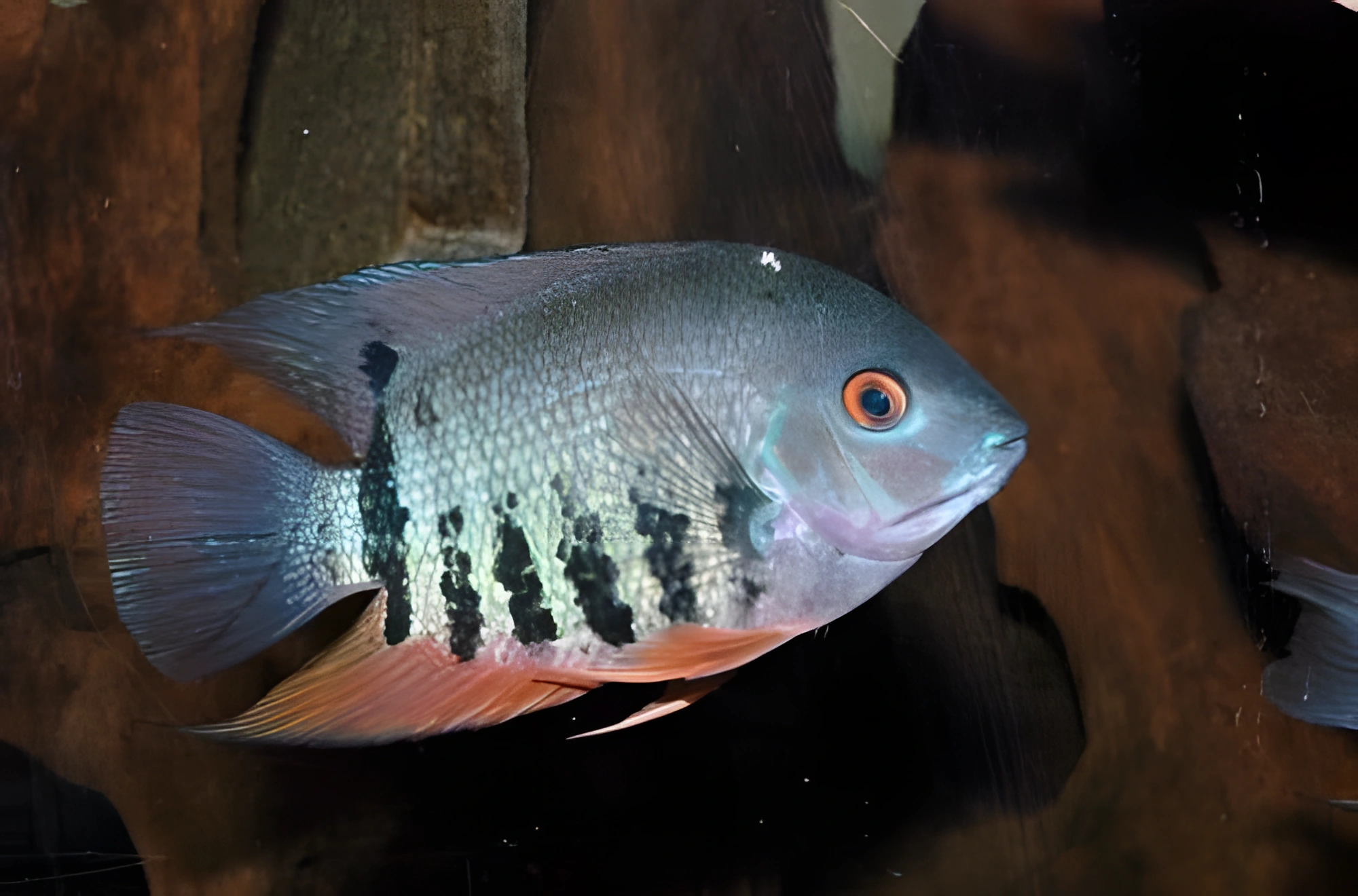
Adult fish in their natural habitat can reach up to 30 cm, while in aquarium conditions, they usually do not exceed 25 cm. The fish has a high, oval body, noticeably flattened on the sides, giving it a disc-like appearance. The coloration is usually blue or grayish-blue; males may have a red pigment behind the head. The dorsal and anal fins start near the head and extend to the tail; in males, they are longer and have a reddish hue.
Habitat
This species is widely distributed throughout the Amazon River system, inhabiting large river channels, small tributaries, and floodplains. Individuals prefer to stay near the banks, among submerged branches and tree roots.
Behavior and Compatibility
Except during the spawning period, the Severum Efasciatus cichlid exhibits a calm and friendly disposition towards both its conspecifics and other species. This species is compatible with most fish that can live in similar conditions. It coexists wonderfully with its close relative, the Severum Notatus cichlid. It is recommended to keep these fish in small groups; if an individual has been alone for a long time or grew up in a separate aquarium, aggression may occur when new tankmates are introduced.
Care and Maintenance
For a single pair of these fish, an aquarium of at least 250 liters is recommended. The decor can be quite simple: a sandy substrate, several snags, and twisted roots that will serve as shelters. Since these fish do not often inhabit dense vegetation in their natural environment, the presence of live plants is not mandatory. Lighting should be subdued. In their natural habitat, the rivers and lakes of the Amazon, the water is often stained brown due to a large amount of plant debris (fruits, fallen leaves, branches) rich in tannins. Those who wish can recreate similar conditions in the aquarium by using dried tree leaves: they are pre-soaked until they start to sink, and then placed on the bottom. Another option is to purchase special tannin essences or Indian almond leaves and bark. Leaves should be replaced every one to two weeks. Aquarium care involves maintaining optimal water parameters, regular substrate cleaning, and weekly replacement of 10–15% of the water volume with fresh water.
Diet
This species is omnivorous and not demanding in terms of diet. Its diet can include a variety of high-quality dry foods, such as flakes, tablets, and pellets. The fish also readily accept live, frozen, and fresh plant supplements: earthworms, shrimp, mussels, bloodworms, blanched peas, spinach, and spirulina flakes.
Breeding and Reproduction
Fish of this species form pairs, but they are very selective in choosing a partner, and not every male and female pair is capable of producing offspring. The likelihood of successful breeding significantly increases if young cichlids are acquired that will grow up together and naturally form at least one pair. Like many other cichlids, this species exhibits parental care. Eggs are usually laid on any flat surface and, after fertilization, are jointly guarded by the parents. The hatched fry also remain under supervision, staying close to one of the parents, and in case of danger, they hide in its mouth — this is an amazing evolutionary defense mechanism.
Diseases
The main cause of most diseases in Leaf Fish is unsuitable keeping conditions and poor-quality nutrition. If initial symptoms are observed, it is first necessary to check water parameters and the concentration of dangerous substances such as ammonia, nitrites, and nitrates. If the indicators deviate from the norm, they should be brought back into order, and only then should treatment begin. More detailed information on symptoms and treatment methods can be found in the "Aquarium Fish Diseases" section.
How to choose
When selecting individuals, attention should be paid to the fish's overall activity and the cleanliness of its skin. A healthy severum should show curiosity, have clear eyes without cloudiness, and tightly pressed fins without signs of erosion or damage. Avoid specimens with sunken bellies, which may indicate internal parasitic infections or emaciation, as well as fish that constantly hide in the corners of the aquarium or show signs of apathy.
It is important to consider the following factors:
- absence of visible ulcers, white spots, or film on scales and fins
- normal breathing without rapid gill cover movement
- absence of spinal or jaw deformities, which may be a consequence of improper breeding
- quarantine is mandatory for all new individuals before introducing them into the main aquarium to prevent the introduction of infections.
When purchasing, clarify the keeping conditions at the store: fish kept in overcrowded tanks with high nitrate levels may be weakened and susceptible to Hexamitosis, characteristic of cichlids. It is better to prefer young individuals from the same group, which facilitates their further adaptation and the formation of a natural hierarchy in the aquarium.
Frequently asked questions
The essentials: size, tank volume, water parameters and care
How big does Severum Efasciatus get?
An adult reaches 20–25 cm in length. Plan the tank around the maximum size: the fish quickly outgrows a cramped setup.
What size aquarium does Severum Efasciatus need?
The minimum recommended volume is 250 L. A smaller tank speeds up nitrate build-up and raises stress levels.
What water parameters does Severum Efasciatus need?
Temperature 22–29 °C, pH 5.5–7, hardness 1–8 dGH. Stability matters more than exact values: sudden swings are harder on the fish than a small deviation from the ideal.
How long does Severum Efasciatus live?
Around 10 years when kept properly. Lifespan depends directly on tank volume, water quality and a varied diet.
Is Severum Efasciatus aggressive?
Temperament: peaceful (regular). Keep this in mind when choosing tank mates.
How many Severum Efasciatus should be kept together?
Recommended setup: small group (3–4 individuals). Ignoring this is a common cause of stress and disease.
What does Severum Efasciatus eat?
Diet type: any (universal). Feed small portions that are finished within a couple of minutes — overfeeding does more harm than underfeeding.
What is the scientific name of Severum Efasciatus?
The scientific name of the species is Heros efasciatus, family Cichlids (Cichlidae). It also appears in the literature as: Chromys appendiculata, Chromys fasciata, Cichlasoma severum.