Temperature20 – 24 °C
Natural range
- China area
- Vietnam area
- Cambodia area
- Mekong River Basin
LoachesConservation status: Vulnerable VU
Other scientific names: Balitora lineolata
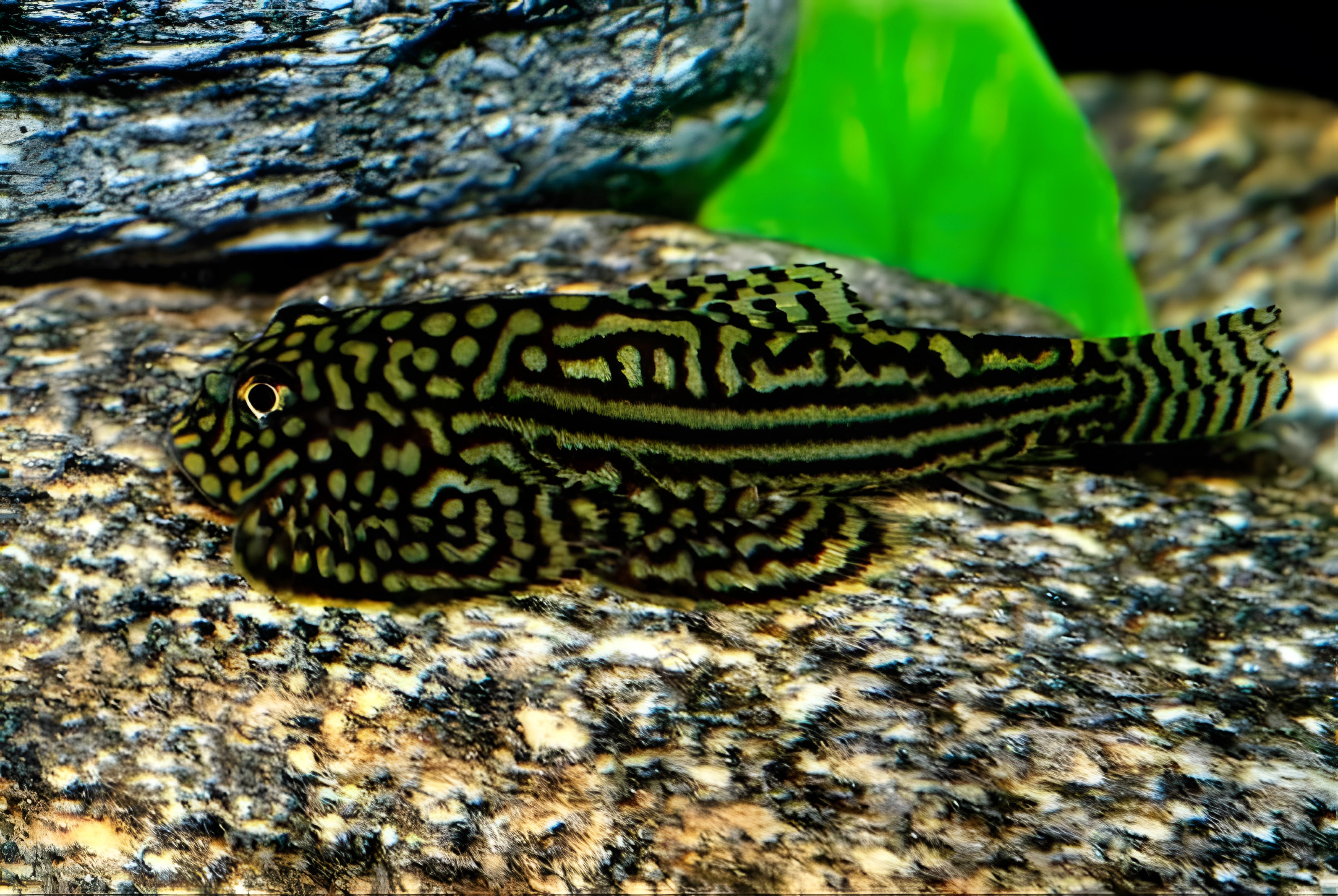
Sewellia lineolata, scientifically known as Sewellia lineolata, belongs to the family Balitoridae, or river loaches. This species of gastromyzon is quite popular due to its unique body pattern and relative ease of keeping and breeding in home aquariums.
- Required aquarium volume
- 70 L
- Size in aquarium
- 5 – 6 cm
- Temperature
- 20 – 24 °C
- Temperament
- Peaceful (regular)
Parameters
Water pHSlightly acidic (6) – Neutral (7.5)
Water dHSoft (4) – Hard (12)
Water salinityno salt (freshwater)
Size in aquarium5 – 6 cm
Lifespan8 years
TemperamentPeaceful (regular)
Toward small fishnot a predator
Required aquarium volume70 L
Lightingdimmed
Substrateany (no restrictions)
Water flowweak or moderate
FeedingPlant-based with meat additives
CareSmall group (5–6 individuals)
Description
Adults reach a length of 5–6 cm. A distinctive feature of Sewellia lineolata is its flat body and large, almost rounded paired fins. These fins significantly increase the contact area of the body with surfaces, allowing the fish to firmly cling to rocks and successfully withstand strong currents. The body pattern consists of a contrasting alternation of yellow and brownish lines and spots. Interestingly, fry initially have a more typical fish body shape, and the characteristic “flattening” occurs as they mature.
Habitat
These fish inhabit Asia, found in the waters of China, Vietnam, and Cambodia. Their preferred habitats are shallow headwaters of small rivers and streams. Such water bodies are typically characterized by strong currents, crystal clear, oxygen-rich water, and rocky bottoms. In the wild, individuals have been found both in turbulent streams with water speeds exceeding one meter per second and in calm backwaters formed near waterfalls and cascades.
Behavior and Compatibility
This is a peaceful and friendly species. Sewellia get along well with their own kind and with other fish species adapted to life in fast-flowing waters. If an excessively strong current is not created, suitable tank mates can include Danios, Rasboras, Akysis catfish, as well as loaches from the Nemacheilidae family, and others. Since they live in large groups in their natural environment, it is preferable to acquire at least 5–6 fish. It is important to avoid cohabitation with bottom-dwelling territorial species.
Care and Maintenance
For a group of 5–6 Sewellia lineolata, an aquarium of 70–80 liters will be suitable. In the aquarium's design, the main focus is on the lower stratum. Large stones, boulders, and securely anchored driftwood are recommended as substrate. As a rule, aquatic vegetation is absent in such an aquarium. Plants, mosses, and ferns are allowed if they can attach to stone or wood surfaces and withstand strong currents. Suitable species can be found in the “Aquarium Plants” section using the filter “Can grow on driftwood, rocks, etc.” The presence of a strong current in the aquarium is highly desirable; the water flow rate can reach up to 15–20 full volumes per hour. This means that for a 70-liter aquarium, the filter or pump must circulate at least 1000 liters of water per hour. A more moderate current is also acceptable if other fish species are kept in the aquarium. Sewellia lineolata needs clean, oxygen-rich, flowing water. When choosing a filter, preference should be given to models that not only purify but also actively aerate the water. Otherwise, an additional aerator will be required. Standard aquarium maintenance procedures include regular cleaning of the substrate from organic debris, weekly partial water changes with fresh water, and preventive equipment maintenance. In nature, their diet consists of algae, microorganisms living on rocks, and small invertebrates. In a home aquarium, it is recommended to use specialized plant-based foods, presented as tablets or gels, which can be affixed to the bottom. Ordinary flakes and granules in a strong current will be quickly carried away and settle in the filtration system, which can lead to water pollution.
Diet
In their natural environment, Sewellia feed on algal growth from rocks, as well as microorganisms and small invertebrates living within it. In a home aquarium, special plant-based foods, such as tablets or gels that can be securely attached to the bottom, are used for feeding. Ordinary flakes or granules will be quickly carried away by a strong current and settle in the filtration system, becoming a source of water pollution. Many aquarists report successful breeding of this species at home. To initiate spawning, it is sufficient to keep a group of several fish, which will very likely include at least one female, which is quite enough. If there are other inhabitants in the aquarium, spawning is recommended in a separate tank. In the spawning tank, it is desirable to use large river gravel. Such a substrate creates many crevices and voids between the stones where the eggs will be laid. These shelters allow the emerging fry to hide from adult fish, who may accidentally eat their offspring at an early age. In addition, organic detritus accumulates in the crevices, which is an important food source for the fry. The spawning tank should be equipped with one or more large sponge-based airlift filters, which will provide moderate water movement and adequate dissolved oxygen content. One of the advantages of such filters is the minimal risk of sucking fry into the system. The stimulus for spawning is a gradual increase in water temperature to 25–26°C. After 5–6 days, it is necessary to replace part of the water (can be combined with aquarium cleaning) with cooler water — 19–20°C. This simulates the onset of the rainy season. Then the temperature is maintained at the lower end of the comfortable range, approximately 20°C. After some time, spawning should begin. The eggs may be hidden between the stones, and the fry remain in place for a while, so the exact incubation period is difficult to determine. Once the fry are discovered, the adult fish can be moved back to the main tank. At this point, grown fry 5 mm or longer can safely be with their parents. The main difficulty lies in choosing the right food. Initially, infusoria are preferred, then, as they grow, Artemia nauplii, and after that, micro-worms (Panagrellus redivivus). Subsequently, they transition to adult fish food. Source of scientific data: The Catalogue of Life
Breeding and Reproduction
There are many successful examples of breeding Sewellia lineolata in home aquariums. To start breeding, a group of several fish is sufficient, among which there will very likely be at least one female, which will be quite enough. If there are other fish in the main aquarium, it is better to conduct spawning in a separate tank. For the spawning tank, it is recommended to use large river gravel. Such a substrate will provide many crevices and voids between the stones where the eggs will later be laid. These shelters will allow the emerging fry to hide from adult fish, who may accidentally eat their own offspring while they are too small. In addition, organic detritus will accumulate in such crevices, serving as an important food source for the fry. The spawning tank should be equipped with one or more large sponge-based airlift filters, which will provide moderate water movement and a sufficient amount of dissolved oxygen. The advantage of airlift filters over others is the low risk of sucking fry into the filtration system. The stimulus for spawning is a gradual increase in water temperature to 25–26°C. After 5–6 days, it is necessary to perform a partial water change (can be combined with general aquarium cleaning) with cooler water — 19–20°C. This step simulates the onset of the rainy season. After this, the temperature is maintained at the lower end of the comfortable range, approximately 20°C. After some time, spawning should begin. Since the eggs are often hidden between stones, and the fry remain in place for a while, the exact incubation period remains unknown. Once the fry are discovered, the adult fish can be moved back to the main aquarium. At this point, grown fry 5 mm or longer can safely be with their parents. The main difficulty lies in selecting appropriate food for the fry. Initially, infusoria are preferred, then, as they grow, Artemia nauplii, and later micro-worms (Panagrellus redivivus). Subsequently, the fry can be transitioned to adult fish food. Source of scientific data: The Catalogue of Life
Diseases
Sewellia lineolata are sensitive to water quality and dissolved oxygen levels. Due to the absence of scales, these fish tolerate sudden changes in environmental parameters, accumulation of nitrogenous compounds, and exposure to chemical treatments poorly. Lack of oxygen or stagnant water quickly leads to weakened immunity and the development of secondary infections.
The main problems are bacterial infections, manifesting as fin damage, loss of coloration, or the appearance of whitish patches on the body. The species is also susceptible to ichthyophthiriasis. Prevention involves maintaining high aeration, powerful filtration, and regular water changes, which mimics the conditions of their natural habitat in mountain streams.
How to choose
When purchasing, choose active fish that confidently move across solid surfaces or hold onto them with their suction-cup fins. It is important to carefully examine the abdomen: it should be rounded and full. A sunken belly is a sign of emaciation, which is often difficult to treat at home.
Avoid individuals with signs of fin damage, white spots or film on the body, or fish that appear lethargic or lie on the bottom without attempting to attach to decor. It is advisable to acquire a group of 5–6 individuals, as fish in a school behave more naturally and adapt more quickly to new conditions.
Frequently asked questions
The essentials: size, tank volume, water parameters and care
How big does Sewellia lineolata get?
An adult reaches 5–6 cm in length. Plan the tank around the maximum size: the fish quickly outgrows a cramped setup.
What size aquarium does Sewellia lineolata need?
The minimum recommended volume is 70 L. A smaller tank speeds up nitrate build-up and raises stress levels.
What water parameters does Sewellia lineolata need?
Temperature 20–24 °C, pH 6–7.5, hardness 4–12 dGH. Stability matters more than exact values: sudden swings are harder on the fish than a small deviation from the ideal.
How long does Sewellia lineolata live?
Around 8 years when kept properly. Lifespan depends directly on tank volume, water quality and a varied diet.
Is Sewellia lineolata aggressive?
Temperament: peaceful (regular). Keep this in mind when choosing tank mates.
How many Sewellia lineolata should be kept together?
Recommended setup: small group (5–6 individuals). Ignoring this is a common cause of stress and disease.
What does Sewellia lineolata eat?
Diet type: plant-based with meat additives. Feed small portions that are finished within a couple of minutes — overfeeding does more harm than underfeeding.
What is the scientific name of Sewellia lineolata?
The scientific name of the species is Sewellia lineolata, family Balitoridae. It also appears in the literature as: Balitora lineolata.