Temperature24 – 28 °C
Natural range
- Sumatra area
- Nias Island area
CyprinidsConservation status: Least concern LC
Rasbora reticulata, known as the Reticulated Rasbora, is a member of the carp family (Cyprinidae). This fish originates from Southeast Asia. It is found exclusively on Nias Island, located west of Sumatra. It prefers shallow, swampy areas of rivers and other bodies of water where the current is not strong and aquatic plants are abundant.
- Required aquarium volume
- 80 L
- Size in aquarium
- 6 cm
- Temperature
- 24 – 28 °C
- Temperament
- Peaceful (regular)
Parameters
Water pHSlightly acidic (6) – Neutral (7.5)
Water dHVery soft (1) – Hard (15)
Water salinityno salt (freshwater)
Size in aquarium6 cm
Lifespan5 years
TemperamentPeaceful (regular)
Toward small fishnot a predator
Required aquarium volume80 L
Lightingdimmed
Substrateany (no restrictions)
Water flowweak
FeedingAny (universal)
CareGroup (8–10 individuals)
Description
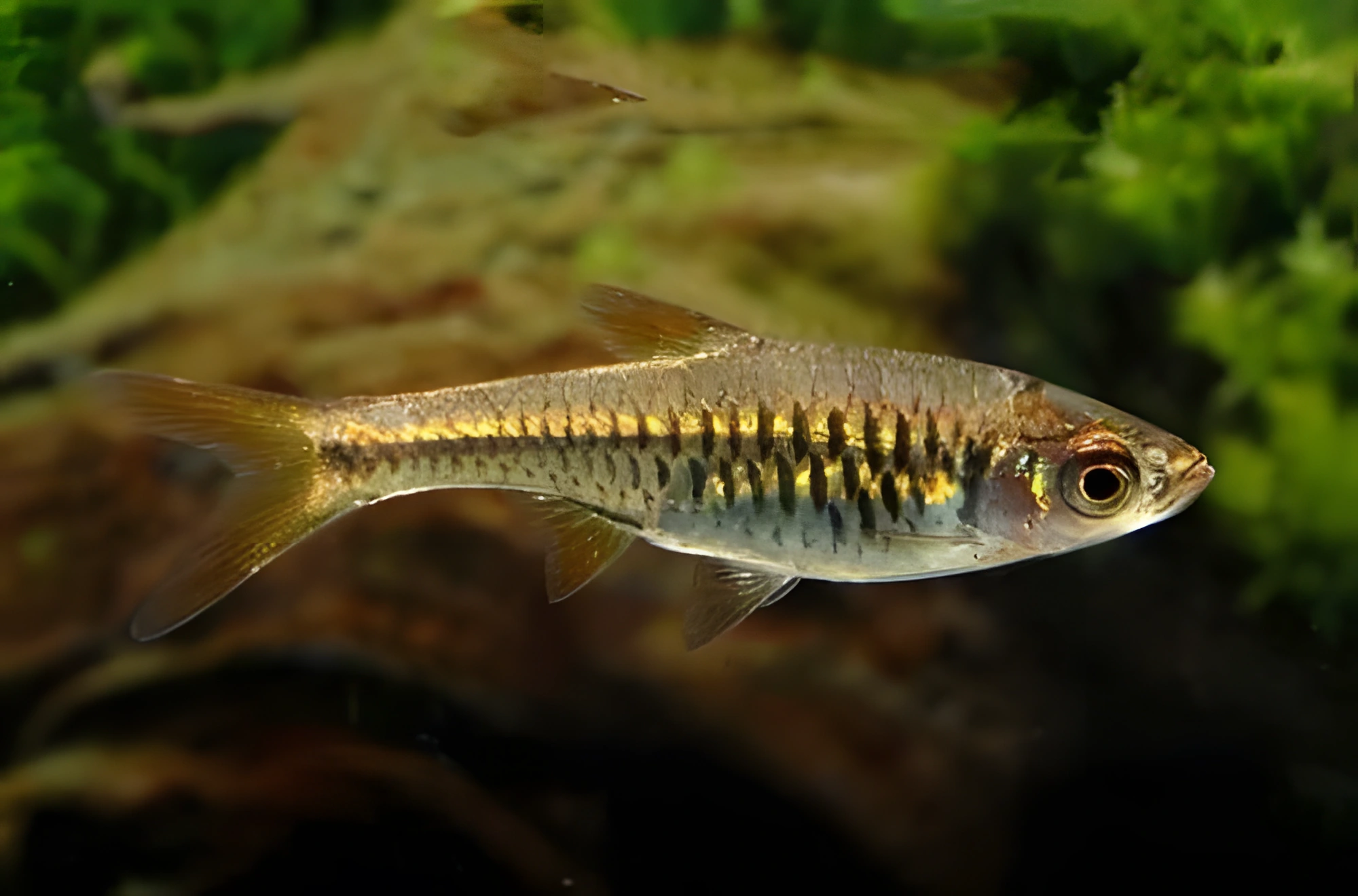
Adults typically do not exceed 6 cm in length. Their bodies are light golden in color. The edges of the scales have dark outlines, forming a characteristic reticulated pattern on the body, which gives this fish its name. However, it should be noted that this pattern is not always pronounced; in such cases, the fish may resemble Rasbora vulcanus, its close relative from the neighboring island of Sumatra. Sexual dimorphism in these fish is quite weak. No significant differences between males and females are observed, although females may appear slightly larger, especially during spawning.
Habitat
The Reticulated Rasbora inhabits forest streams and peat swamps of Southeast Asia, including the Malay Peninsula, Singapore, and the islands of Sumatra and Nias in Indonesia. In nature, this species prefers bodies of water with soft, slightly acidic water rich in humic substances, and dense aquatic vegetation. The water in such biotopes often has a characteristic brownish tint due to decomposing organic matter.
Behavior and Compatibility
These peaceful fish thrive in schools and get along well with each other, as well as with other non-aggressive species of comparable size. Good tank mates for them include small cyprinids, such as barbs, danios, and other rasbora species.
Care and Maintenance
For a group of 8–10 individuals, an aquarium of at least 80 liters will be required. It is advisable to create shelters within the aquarium using dense thickets of plants and snags. Lighting should preferably be subdued. To give the environment a more natural look, some aquarists use dried and pre-soaked tree leaves, distributing them across the bottom. As these leaves decompose, the water gradually becomes saturated with tannins, acquiring a slight brownish tint. More detailed information on this topic can be found in the article “Which Tree Leaves Can Be Used in an Aquarium”. Caring for these fish is considered relatively simple, provided that the necessary water parameters are maintained and regular aquarium maintenance is performed. Being omnivores, they readily accept most popular foods of appropriate size.
Diet
Being an omnivorous species, this fish readily accepts most common foods of appropriate size. Reproduction in the Reticulated Rasbora occurs similarly to other Rasbora species. They spawn in groups, preferring dense plant thickets where active courtship rituals precede. There is no parental care for the offspring, so there is a possibility that eggs and fry may be eaten.
Breeding and Reproduction
The breeding process for these fish is similar to other Rasbora species. Spawning occurs in groups among dense vegetation, preceded by active courtship displays. There is no parental care for the offspring, so eggs and fry may be eaten.
Diseases
The species has moderate resilience when kept in stable conditions but is sensitive to sharp fluctuations in water parameters and high levels of nitrogenous compounds. The main risk factors are stress from overcrowding or unsuitable tank mates, which reduces immunity and provokes the development of bacterial infections. To prevent diseases, it is necessary to maintain water cleanliness, ensure quality filtration without strong currents, and quarantine new individuals.
How to choose
When selecting Reticulated Rasboras, attention should be paid to the activity of the fish: healthy individuals should stay in a school and show curiosity, constantly moving through the water column. Inspect the scales for damage, white spots, or film, and check for signs of emaciation or fin deformation. Avoid purchasing fish if there are deceased specimens or individuals with clear signs of distress in their tank, as this may indicate problems with the entire batch.
Frequently asked questions
The essentials: size, tank volume, water parameters and care
How big does Reticulated Rasbora get?
An adult reaches 6 cm in length. Plan the tank around the maximum size: the fish quickly outgrows a cramped setup.
What size aquarium does Reticulated Rasbora need?
The minimum recommended volume is 80 L. A smaller tank speeds up nitrate build-up and raises stress levels.
What water parameters does Reticulated Rasbora need?
Temperature 24–28 °C, pH 6–7.5, hardness 1–15 dGH. Stability matters more than exact values: sudden swings are harder on the fish than a small deviation from the ideal.
How long does Reticulated Rasbora live?
Around 5 years when kept properly. Lifespan depends directly on tank volume, water quality and a varied diet.
Is Reticulated Rasbora aggressive?
Temperament: peaceful (regular). Keep this in mind when choosing tank mates.
How many Reticulated Rasbora should be kept together?
Recommended setup: group (8–10 individuals). Ignoring this is a common cause of stress and disease.
What does Reticulated Rasbora eat?
Diet type: any (universal). Feed small portions that are finished within a couple of minutes — overfeeding does more harm than underfeeding.
What is the scientific name of Reticulated Rasbora?
The scientific name of the species is Rasbora reticulata, family Cyprinids (Cyprinidae).