Temperature20 – 28 °C
Natural range
- Rio Negro area
- Brazil area
CichlidsConservation status: Least concern LC
Other scientific names: Geophagus acuticeps
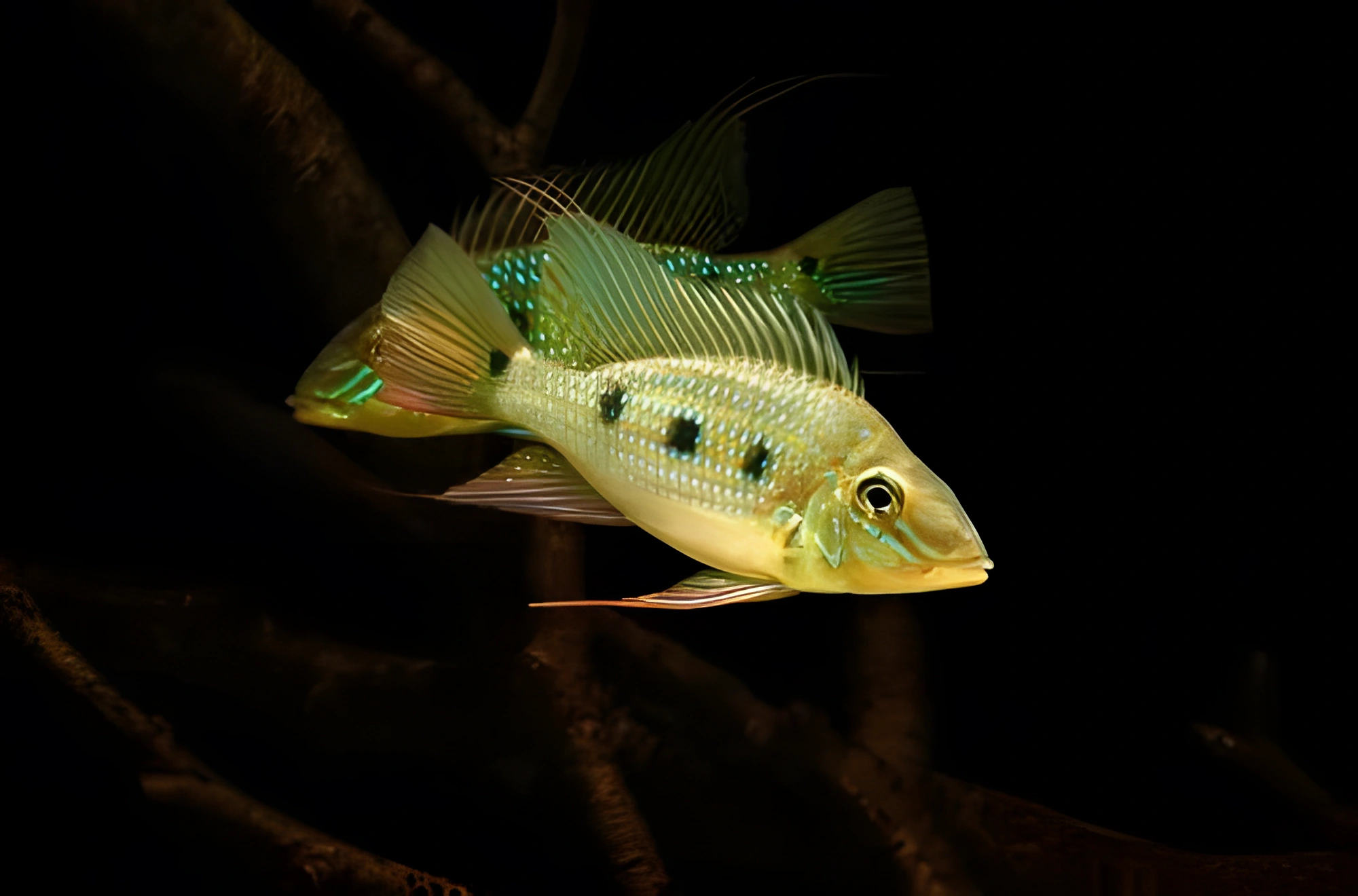
Satanoperca acuticeps, formerly known as Geophagus heckelii, belongs to the family Cichlidae. This South American cichlid did not get its name by chance: it is characterized by a distinctive pointed head. This feature is, perhaps, its main distinguishing characteristic. Otherwise, Satanoperca acuticeps is a typical representative of the Satanoperca genus, similar in characteristics to Geophagus. Keeping this species does not cause great difficulties, and it coexists well with various freshwater fish.
- Required aquarium volume
- 600 L
- Size in aquarium
- 14 – 17 cm
- Temperature
- 20 – 28 °C
- Temperament
- Peaceful (regular)
Parameters
Water pHSlightly acidic (5.5) – Neutral (7.5)
Water dHVery soft (1) – Medium hardness (10)
Water salinityno salt (freshwater)
Size in aquarium14 – 17 cm
Lifespan10 years
TemperamentPeaceful (regular)
Toward small fishnot a predator
Required aquarium volume600 L
Lightingdimmed
Substratesandy (regular, light)
Water flowweak
FeedingAny (universal)
CareMedium group (6–8 individuals)
Description
Adult fish reach a length of 14 to 17 cm. Males are somewhat larger and have elongated outer rays on their dorsal and anal fins. Their coloration is silvery-beige, with rows of horizontal stripes formed by bluish speckles. Under certain lighting angles, the coloration can acquire a golden hue. The fins have a reddish tint. Three black spots are visible on the body.
Habitat
The natural habitat of Satanoperca acuticeps is located in the central Amazon River basin, in Brazil, extending from the Rio Negro to the Tapajós. These fish prefer to live in small tributaries and floodplains of rivers, where the water can be both clear and turbid. The bottom in such places usually consists of silt and sand, covered with a layer of fallen leaves, among which numerous snags are found.
Behavior and Compatibility
Satanoperca acuticeps are peaceful and calm fish. The only exception is during spawning periods, when they may show intolerance towards other species, striving to protect their offspring. At other times, they get along perfectly with most non-aggressive fish of comparable size. Within their own species, relationships are built on hierarchy, with alpha males holding the dominant position. To maintain stability in the group, it is recommended to keep at least 5–8 individuals. With fewer numbers, weaker fish may become targets of aggression from larger and stronger relatives.
Care and Maintenance
For comfortable keeping of a group of 5–8 Satanoperca acuticeps, an aquarium of at least 600 liters is required. These cichlids are not demanding regarding design and feel great in various aquarium conditions. However, to fully reveal their beauty, it is recommended to create an environment that mimics their natural habitat. For this, fine-grained sand substrate can be used, and several snags resembling tree roots and branches can be placed. Lighting should be subdued. The presence of live plants is not a strict requirement, but if desired, shade-loving species such as mosses and ferns can be planted. Experienced aquarists often add fallen leaves from certain trees to the water to enhance the natural look. These leaves, as they decompose, release tannins that give the water a characteristic brown tint. More detailed information on this topic can be found in the article “What tree leaves can be used in an aquarium.” The key to successful and long-term keeping is maintaining stable water conditions within the optimal range of temperatures and hydrochemical parameters. It is important to prevent the accumulation of nitrogen cycle products, such as ammonia, nitrites, and nitrates, to concentrations dangerous for fish. To ensure the desired stability, it is recommended to install a powerful filtration system and regularly maintain the aquarium. Maintenance includes weekly water changes of approximately 50% of the volume with fresh water, timely removal of organic waste (uneaten food, excrement), equipment prophylaxis, and constant monitoring of basic water parameters, particularly pH and dGH.
Diet
This omnivorous species is capable of finding food both in the water column and on the bottom. They sift small portions of substrate through their mouths, searching for small invertebrates. In aquarium conditions, Satanoperca acuticeps readily accept most popular foods of appropriate size. Their diet can include dry flakes, pellets, as well as live or frozen brine shrimp, daphnia, and bloodworm pieces. It is advisable to feed them 3–4 times a day.
Breeding and Reproduction
Breeding this species in a home aquarium is possible, although there is relatively little information about documented successful cases. This is likely due to their insufficient prevalence among aquarists. The breeding process of Satanoperca acuticeps is largely similar to other members of the genus. During the breeding period, the alpha male forms a temporary pair with one of the females. Together, they dig a small pit, where the female lays several dozen eggs, which are then covered with a thin layer of sand. The female remains to guard the clutch, while the male stays at a distance, chasing away any fish perceived as a potential threat. Fry appear after 2–3 days. The female continues to care for the young, while the male begins courting a new female.
Diseases
The main cause of diseases often lies in the keeping conditions: if they go beyond acceptable limits, immunity decreases, making the fish vulnerable to various infections inevitably present in the environment. At the first suspicion of illness, it is important first of all to check the water parameters and ensure there are no dangerous concentrations of nitrogen cycle products. Often, restoring normal, suitable conditions promotes recovery. However, in some cases, medication may be required. Detailed information on symptoms and treatment methods is presented in the "Aquarium Fish Diseases" section.
How to choose
When selecting individuals, attention should be paid to their activity and the cleanliness of their skin. Healthy fish should show interest in their surroundings, have no visible injuries, ulcers, white film, or signs of emaciation. Avoid purchasing fish that appear sluggish, constantly hide in corners, or have sunken bellies. Since this species is schooling and sensitive to hierarchical interactions, it is recommended to acquire a group of 5–8 individuals simultaneously to minimize stress and the risk of aggression from dominant individuals. Before purchasing, ensure that the aquarium in the store is equipped with a quality filtration system, as the species is extremely susceptible to water quality and the accumulation of nitrogenous compounds.
Frequently asked questions
The essentials: size, tank volume, water parameters and care
How big does Satanoperca acuticeps get?
An adult reaches 14–17 cm in length. Plan the tank around the maximum size: the fish quickly outgrows a cramped setup.
What size aquarium does Satanoperca acuticeps need?
The minimum recommended volume is 600 L. A smaller tank speeds up nitrate build-up and raises stress levels.
What water parameters does Satanoperca acuticeps need?
Temperature 20–28 °C, pH 5.5–7.5, hardness 1–10 dGH. Stability matters more than exact values: sudden swings are harder on the fish than a small deviation from the ideal.
How long does Satanoperca acuticeps live?
Around 10 years when kept properly. Lifespan depends directly on tank volume, water quality and a varied diet.
Is Satanoperca acuticeps aggressive?
Temperament: peaceful (regular). Keep this in mind when choosing tank mates.
How many Satanoperca acuticeps should be kept together?
Recommended setup: medium group (6–8 individuals). Ignoring this is a common cause of stress and disease.
What does Satanoperca acuticeps eat?
Diet type: any (universal). Feed small portions that are finished within a couple of minutes — overfeeding does more harm than underfeeding.
What is the scientific name of Satanoperca acuticeps?
The scientific name of the species is Satanoperca acuticeps, family Cichlids (Cichlidae). It also appears in the literature as: Geophagus acuticeps.