Temperature18 – 22 °C
Natural range
- Ganges River Basin
- Brahmaputra River Basin
- India area
- Bangladesh area
LoachesConservation status: Least concern LC
Other scientific names: Canthophrys albescens, Canthophrys bispinosa, Cobitis amnicola, Cobitis cucura, Cobitis gongota, Cobitis oculata
The Gongota Loach, scientifically known as Canthophrys gongota, belongs to the family Cobitidae, or true loaches. This species inhabits natural waters of Nepal, northern India, and Bangladesh, where it populates the Ganges and Brahmaputra river basins. It prefers small rivers and streams with gentle currents, as well as soft sandy or silty bottom substrates.
- Required aquarium volume
- 300 L
- Size in aquarium
- 13 cm
- Temperature
- 18 – 22 °C
- Temperament
- Peaceful (regular)
Parameters
Water pHSlightly acidic (6) – Neutral (7)
Water dHVery soft (2) – Hard (12)
Water salinityno salt (freshwater)
Size in aquarium13 cm
Lifespan5 years
TemperamentPeaceful (regular)
Toward small fishnot a predator
Required aquarium volume300 L
Lightingdimmed
Substratesandy (regular, light)
Water flowweak or moderate
FeedingSinking (any)
CareMedium group (6–8 individuals)
Description
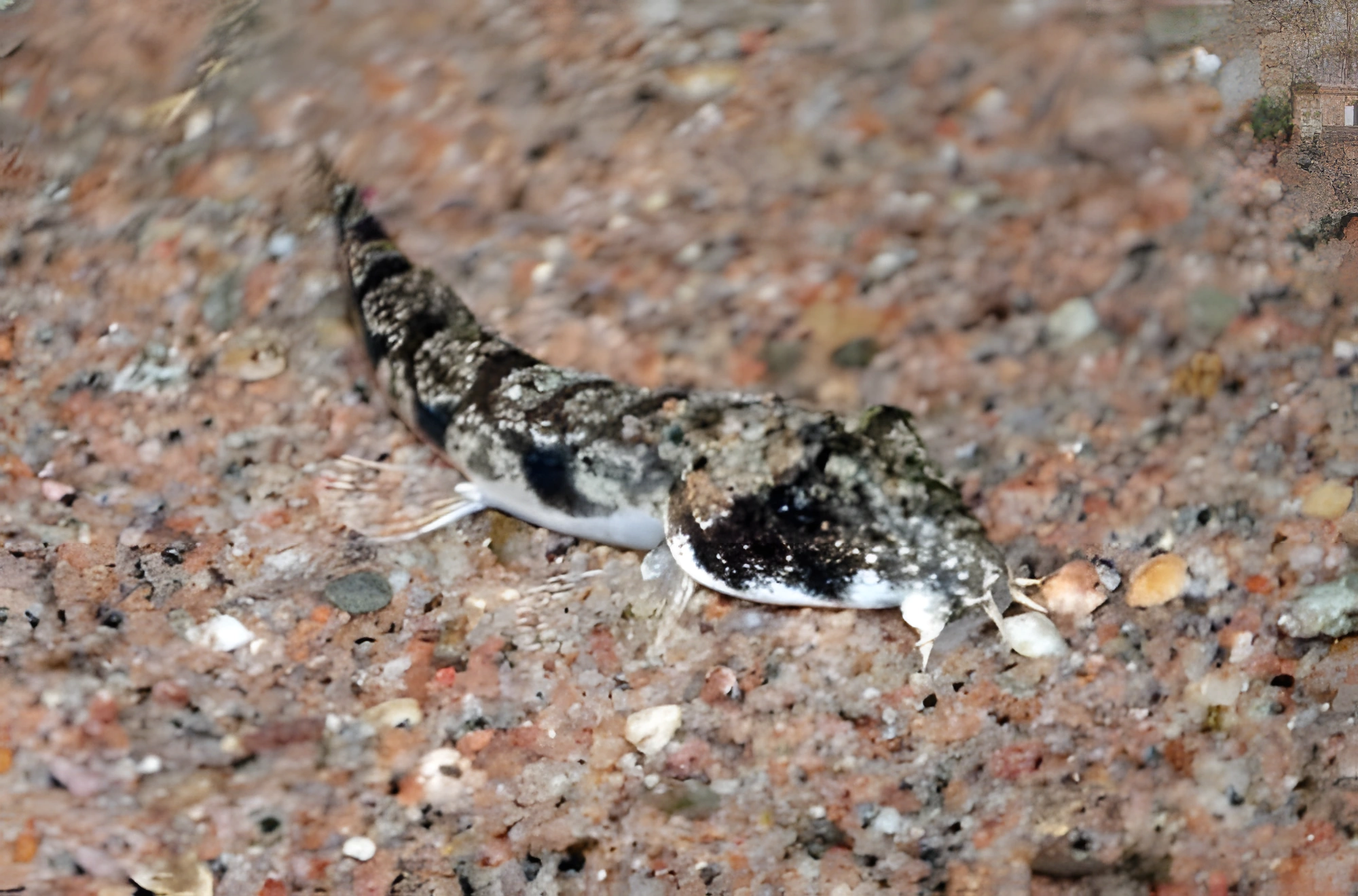
Adults of this fish reach a length of about 13 cm. Their body is elongated, characterized by a rather large head. The eyes are unusually high, almost on the very top of the head, and the mouth is shifted towards the lower part of the head. The fins are short. This body structure, along with its "sandy" coloration, is an excellent adaptation for camouflage in soft substrate, allowing the fish to burrow and leave only its protruding eyes on the surface.
Habitat
The species inhabits the Ganges and Brahmaputra river systems in India, Bangladesh, and Nepal. In nature, it occupies shallow areas of rivers and tributaries with slow currents. It prefers biotopes with soft sandy, silty, or fine gravel substrate, into which the fish often burrows, leaving only its eyes exposed.
Behavior and Compatibility
This fish species is distinguished by its peaceful and calm disposition. For comfortable existence, they prefer to be in a group of 6–8 individuals. Suitable tank mates would be species that inhabit the middle or upper water column.
Care and Maintenance
For a group of 6–8 Gongota Loaches, an aquarium of at least 300 liters is recommended. When setting it up, special attention should be paid to the bottom layer. A mandatory condition is the presence of a soft sandy substrate, which will allow the fish to burrow unhindered; using pebbles as substrate can lead to injuries during their digging activity. Natural driftwood and fallen leaves from certain trees can serve as additional decorations, while other decor, including live plants, is not strictly necessary. Since these fish inhabit flowing waters, they are sensitive to the accumulation of organic waste. It is extremely important to replace 30% to 50% of the water volume weekly with fresh water, combining this procedure with thorough removal of waste products and uneaten food remains. Additionally, it is necessary to ensure high oxygen saturation in the water; additional aeration may be required. The fish tolerate elevated temperatures poorly; comfortable conditions for them will be in the range of 18–22°C. For this reason, a heating system is generally not required. In hot summer months, conversely, cooling the aquarium may become necessary. Gongota Loaches feed in nature by taking in and sifting substrate particles through their gills, which allows them to extract small crustaceans, worms, and other organisms. In a home aquarium, it is acceptable to offer them dry sinking foods, as well as frozen or live brine shrimp, daphnia, and bloodworms. Sources: fishbase.in, seriouslyfish.com.
Diet
The diet of these fish in their natural environment is formed by sifting substrate particles through their gills, which helps them extract small crustaceans, worms, and other organisms. In aquarium conditions, they can be fed sinking dry foods, as well as frozen or live brine shrimp, daphnia, and bloodworms.
Breeding and Reproduction
Based on available sources, a separate block cannot be compiled: the data is insufficient or contradictory. The entry can be updated later when verified information becomes available.
Diseases
The fish is extremely sensitive to water quality and the accumulation of organic waste, which often leads to bacterial infections when kept in biologically immature aquariums. The use of poor-quality or insufficiently cleaned live foods can cause a dangerous growth of pathogenic microflora, potentially leading to rapid death of individuals. The species requires strict adherence to hygiene and stable environmental parameters.
How to choose
When purchasing, active individuals showing interest in foraging should be chosen, as emaciation is a common problem during import. It is important to avoid fish with skin lesions or signs of apathy. Given their secretive lifestyle, in the store, one should pay attention to the condition of their eyes and the absence of visible wounds sustained during transport or attempts to burrow into unsuitable substrate.
Frequently asked questions
The essentials: size, tank volume, water parameters and care
How big does Gongota Loach get?
An adult reaches 13 cm in length. Plan the tank around the maximum size: the fish quickly outgrows a cramped setup.
What size aquarium does Gongota Loach need?
The minimum recommended volume is 300 L. A smaller tank speeds up nitrate build-up and raises stress levels.
What water parameters does Gongota Loach need?
Temperature 18–22 °C, pH 6–7, hardness 2–12 dGH. Stability matters more than exact values: sudden swings are harder on the fish than a small deviation from the ideal.
How long does Gongota Loach live?
Around 5 years when kept properly. Lifespan depends directly on tank volume, water quality and a varied diet.
Is Gongota Loach aggressive?
Temperament: peaceful (regular). Keep this in mind when choosing tank mates.
How many Gongota Loach should be kept together?
Recommended setup: medium group (6–8 individuals). Ignoring this is a common cause of stress and disease.
What does Gongota Loach eat?
Diet type: sinking (any). Feed small portions that are finished within a couple of minutes — overfeeding does more harm than underfeeding.
What is the scientific name of Gongota Loach?
The scientific name of the species is Canthophrys gongota, family Cobitidae (Loaches). It also appears in the literature as: Canthophrys albescens, Canthophrys bispinosa, Cobitis amnicola.